Socio Today
Malaysian Prime Minister Anwar Ibrahim has officially reiterated his government’s uncompromising stance regarding the entry of Israeli citizens into the country, asserting that Malaysia will not bow to external pressures or criticisms from foreign legislators. Speaking at an event in Negeri Sembilan on Wednesday, July 22, 2026, the Prime Minister declared that the long-standing policy of barring Israeli passport holders from entering Malaysian territory remains absolute and non-negotiable. The statement comes as a direct response to a recent wave of criticism from members of the United States Congress, who have characterized Malaysia’s travel restrictions as a violation of international norms and an affront to the principles of global diplomacy.
"We will not allow a single citizen of Israel to set foot in Malaysia," Anwar Ibrahim told a gathering of supporters and officials, underscoring that the policy is a reflection of Malaysia’s sovereign right to determine its own border controls and its moral obligations toward the Palestinian people. The Prime Minister’s remarks highlight a deepening rift between Kuala Lumpur and certain factions within Washington D.C. regarding the geopolitical landscape of the Middle East and the humanitarian crisis in the Palestinian territories.
Defiance Against Congressional Criticism
The controversy was sparked by a formal critique issued by at least eight members of the United States Congress, who argued that Malaysia’s exclusion of Israeli nationals is inconsistent with international law and undermines the spirit of global cooperation. These lawmakers have reportedly urged the U.S. State Department to review the bilateral relationship between the United States and Malaysia, suggesting that such "discriminatory" policies should have consequences for diplomatic and economic cooperation.
Prime Minister Anwar Ibrahim, however, dismissed these criticisms as "illogical" and "unreasonable." He pointed out that Malaysia’s policy is not a recent development but a consistent diplomatic position that has been maintained for decades across various administrations. According to the Prime Minister, the criticism from the U.S. legislators fails to account for the historical context of the Israeli-Palestinian conflict and Malaysia’s principled refusal to recognize the state of Israel since its independence in 1957.
"Our opposition is specifically toward the citizens of the state of Israel—not against the Jewish people as a faith or an ethnicity," Anwar clarified. "We oppose their presence because they are representatives of a state that is actively involved in the systematic killing, oppression, and colonization of the Palestinian people, particularly in Gaza. To allow them entry would be to turn a blind eye to the ongoing atrocities."
A Legacy of Non-Recognition: The Historical Context
Malaysia’s refusal to establish diplomatic ties with Israel is one of the most enduring pillars of its foreign policy. Since the nation gained independence from British colonial rule, it has positioned itself as a staunch advocate for the Palestinian cause, viewing the establishment of the state of Israel as a colonial project that displaced indigenous populations. This stance is reflected on the Malaysian passport itself, which prominently features the inscription: "This passport is valid for all countries except Israel."

Over the years, Malaysia has used its platform in the United Nations, the Organization of Islamic Cooperation (OIC), and the Non-Aligned Movement to advocate for a two-state solution based on pre-1967 borders, with East Jerusalem as the capital of a sovereign Palestinian state. However, as the conflict has evolved and the humanitarian situation in Gaza has worsened, Malaysia’s rhetoric and actions have become increasingly assertive.
In late 2023, following the escalation of violence in the Gaza Strip, the Malaysian government took the significant step of banning all Israeli-owned or Israeli-flagged shipping vessels from docking at its ports. This included a specific ban on ZIM, Israel’s largest shipping company, which had previously been allowed to dock in Malaysia under certain exemptions since 2002. Prime Minister Anwar’s latest declaration is seen as a continuation of this "maximum pressure" policy against the Israeli state.
Strategic Divergence with the United States
The tension between Malaysia and the U.S. Congress reflects a broader strategic divergence. While the United States remains Malaysia’s top source of foreign direct investment and a key security partner in the Indo-Pacific region, the two nations remain diametrically opposed on the issue of Israel.
The U.S. lawmakers’ demand for a review of bilateral relations poses a potential challenge to the "Comprehensive Partnership" established between the two countries in 2014. Malaysia is a critical node in the global semiconductor supply chain and a vital partner for the U.S. in counterbalancing regional influence in the South China Sea. Analysts suggest that while Congressional rhetoric may be sharp, the U.S. executive branch is unlikely to impose significant sanctions on Malaysia, given its strategic importance.
Anwar Ibrahim acknowledged that while some nations choose to remain silent in the face of what he termed "Israeli cruelty," Malaysia views its independence as a mandate to uphold humanitarian values. "As a free and independent nation, we exercise our right to stand on the side of humanity. We will not be intimidated into changing a policy that is rooted in justice," he stated.
Regional Solidarity and the Al-Aqsa Escalation
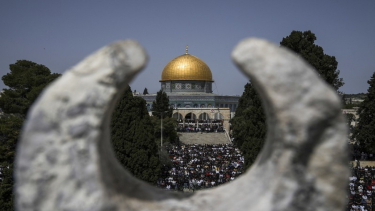
Malaysia’s firm stance is echoed by other Muslim-majority nations in Southeast Asia. Recently, Malaysian foreign policy officials have been working in close coordination with counterparts from Indonesia, Brunei, and other regional allies. On July 24, 2026, Indonesian Foreign Minister Sugiono, along with seven other foreign ministers, issued a joint statement condemning the ongoing Israeli escalations at the Al-Aqsa Mosque in Jerusalem.
The joint statement called for the international community to take a "decisive stand" against violations of the status quo in Jerusalem and the continued expansion of settlements. By aligning its travel ban with these broader diplomatic efforts, the Anwar administration is positioning Malaysia as a leader of the "Global South" voice against Western-backed Israeli policies.
Timeline of Malaysia-Israel Diplomatic Friction
To understand the current impasse, it is necessary to look at the timeline of Malaysia’s restrictive measures against Israel:
- 1957–1966: Following independence, Malaysia chooses not to recognize the state of Israel, following the lead of many Arab and Muslim nations.
- 1994: A brief period of "thaw" occurs under the first Mahathir Mohamad administration, where limited postal and telecommunications links are discussed, though never fully realized.
- 2012: Malaysia denies entry to the Israeli national squash team, leading to international sporting bodies threatening to pull hosting rights from the country.
- 2019: Malaysia is stripped of the right to host the World Para Swimming Championships after the government refuses to allow Israeli athletes to participate.
- December 2023: The Malaysian government officially bans ZIM shipping lines and any vessel carrying the Israeli flag from entering its ports.
- July 2026: Prime Minister Anwar Ibrahim reaffirms the total ban on Israeli citizens, defying pressure from the U.S. Congress.
Domestic Political Implications
Domestically, Anwar Ibrahim’s firm stance is widely popular. In a country where the majority of the population is Malay-Muslim, the Palestinian cause is a deeply emotive and unifying issue. Support for Palestine transcends the typical political divides in Malaysia, with both the ruling Pakatan Harapan-led government and the conservative opposition Perikatan Nasional bloc competing to show the strongest support for Palestinian rights.
By taking a hard line against the U.S. Congressional demands, Anwar is consolidating his domestic base and reinforcing his image as a leader who prioritizes national principles over foreign approval. This "sovereignty-first" approach is a hallmark of his "Malaysia Madani" (Civil Malaysia) framework, which emphasizes ethics, compassion, and social justice on the global stage.
Broader Impact and Global Implications
The refusal to admit Israeli citizens has broader implications for international tourism, sports, and academic exchange. While it limits Malaysia’s ability to host certain international events that require open participation for all nationalities, the government has signaled that it is willing to pay that price.
From a legal perspective, Malaysia argues that as a sovereign state, it has the absolute right to determine who is granted entry. Under the Chicago Convention and various international travel treaties, states maintain the prerogative to deny entry to individuals based on national security or foreign policy grounds. Malaysia’s argument is that the presence of Israeli citizens could provoke domestic unrest or compromise the country’s security posture given the heightened tensions in the Middle East.
As the conflict in Gaza continues to dominate international headlines, the standoff between Malaysia and the U.S. Congress serves as a microcosm of the global divide. While Western powers often prioritize the security and integration of Israel, many nations in the Global South, led by figures like Anwar Ibrahim, are increasingly using their sovereign tools—such as trade bans and travel restrictions—to signal their dissent.
The coming months will determine whether the U.S. government will take formal action based on the recommendations of the eight Congress members or if the strategic necessity of the U.S.-Malaysia partnership will outweigh the diplomatic friction. For now, Prime Minister Anwar Ibrahim has made it clear: the gates of Malaysia remain closed to the state of Israel, and no amount of international pressure is likely to change that reality.