Socio Today
On Thursday, March 18, 2021, President Joko Widodo officially inaugurated the Toraja Airport, formerly known as Buntu Kunik Airport, located in the Tana Toraja Regency of South Sulawesi, Indonesia. The inauguration ceremony, broadcast via the Presidential Secretariat’s YouTube channel, marked a significant milestone in the government’s efforts to improve regional connectivity, stimulate tourism, and catalyze economic development in one of Indonesia’s most culturally rich, yet geographically challenging, regions. The project stands as a testament to the government’s commitment to infrastructure development in remote areas, aiming to bridge the accessibility gap that has long hindered the full potential of Tana Toraja.
A Decade-Long Journey: The Chronology of Development
The realization of Toraja Airport was a complex, decade-long endeavor characterized by engineering ingenuity and political determination. The project was initiated in 2011 to replace the aging and capacity-limited Pongtiku Airport in Ratentayo. However, the initial phase of the construction faced significant setbacks, primarily due to the daunting topography of the region, which is defined by steep hills and rugged terrain.
The project remained largely stalled for several years until the central government, under President Joko Widodo’s administration, prioritized its completion in 2018. The accelerated construction phase saw the central government take a more active role in funding and oversight. By mid-2020, the first phase of the airport—comprising a 1,600-meter runway and supporting infrastructure—was successfully completed, allowing for initial commercial operations.
The transition from the old Pongtiku Airport to the new, modern facility was not merely a change of location but a fundamental upgrade in operational capability. Pongtiku Airport had long struggled with flight cancellations and limitations due to its short runway and proximity to mountains, which restricted the types of aircraft that could safely operate. The development of the new Toraja Airport was designed specifically to overcome these limitations, enabling larger aircraft to serve the region and facilitating a more reliable transportation network for both locals and tourists.
Engineering Feats in High-Altitude Terrain
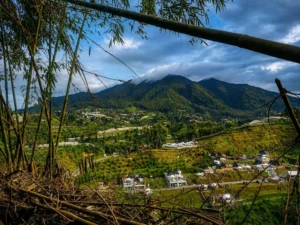
The construction of Toraja Airport is frequently cited by aviation experts and government officials as one of the most challenging infrastructure projects in recent Indonesian history. To create a flat, safe surface for the runway, engineers had to undertake a massive land-clearing operation that involved cutting through three distinct hills in the mountainous landscape of Tana Toraja.
Minister of Transportation Budi Karya Sumadi noted during the construction process that the topography of the site presented unique obstacles that required specialized engineering techniques. The process of "cutting" the hills was essential to ensure the safety of take-offs and landings, as the surrounding terrain would otherwise pose significant navigation hazards for pilots.
The current infrastructure includes a 141-hectare footprint. In its initial state, the airport features a 1,600-meter runway capable of accommodating ATR-72 turboprop aircraft. The apron measures 94.5 meters by 67 meters, and the taxiway is 124.5 meters by 15 meters. The terminal building, spanning 1,000 square meters, is designed to accommodate approximately 150 passengers at a time, providing a modern and comfortable experience compared to the previous facilities.
The government has already outlined a second phase of development, which involves extending the runway to 2,000 meters. This extension is critical, as it will allow the airport to accommodate larger narrow-body jets, such as the Boeing 737 or Airbus A320. Furthermore, ongoing works in 2021 focused on further mitigating terrain-related obstacles to ensure that the airport meets international safety standards for commercial aviation.
The Significance of the Name Change
The renaming of the facility from Buntu Kunik Airport to Toraja Airport was a deliberate move aimed at branding and cultural identity. The process was deeply collaborative, involving extensive consultations between the local district government and traditional leaders representing 19 sub-districts within Tana Toraja.
The consensus reached through these dialogues reflected the community’s desire for the airport to serve as a symbolic gateway to their land. Once the name "Toraja Airport" was agreed upon by the local stakeholders, it was formally proposed to the Regional House of Representatives (DPRD) for ratification in a plenary session. Following the local legislative approval, the proposal was submitted to the provincial government and ultimately to the Ministry of Transportation, which finalized the nomenclature. This process ensured that the airport carries a name that resonates with the heritage and pride of the Tana Toraja people, while also being easily recognizable to domestic and international travelers.
Economic Implications and Strategic Connectivity
The primary objective behind the investment in Toraja Airport is to unlock the economic potential of the region. Tana Toraja is globally renowned for its unique cultural heritage, including its distinct Tongkonan architecture, elaborate funeral rites, and breathtaking highland landscapes. Despite this, the region’s tourism industry has historically been limited by long, arduous travel times from the nearest major city, Makassar.
By enabling direct flight connections between Makassar and Toraja—serviced by carriers such as Wings Air and Citilink—the travel time has been reduced from an eight-hour overland journey to a flight of less than one hour. This improvement is expected to have a profound multiplier effect on the local economy.
- Tourism Growth: The increased accessibility is likely to attract a higher volume of both domestic and international tourists. Tourism is a key pillar of the regional economy, and the airport provides the infrastructure necessary to support high-end travel and luxury tour packages.
- Economic Diversification: Beyond tourism, the airport facilitates the faster movement of goods and services. This is expected to stimulate the growth of new economic centers around the airport and in the surrounding districts, creating job opportunities in sectors such as hospitality, logistics, and retail.
- Regional Integration: The airport serves as a critical node in the national transportation network, integrating Tana Toraja more closely with the provincial capital, Makassar, and the wider Indonesian archipelago.
President Jokowi emphasized during the inauguration that the existence of the airport should be utilized to improve the standard of living for the local population. He urged local authorities to work in tandem with the business sector to promote the region aggressively, ensuring that the infrastructure investment yields tangible dividends in terms of job creation and poverty reduction.
Expert Perspectives and Operational Outlook
While the inauguration is a success, industry analysts observe that the long-term viability of Toraja Airport will depend on sustainable management and the continued expansion of flight routes. The "obstacle removal" mentioned by the Ministry of Transportation remains a priority; even after the official opening, technical crews continue to work on refining the flight path and surrounding environment to ensure the highest levels of safety.
Aviation experts have noted that the success of regional airports in Indonesia often hinges on the cooperation between the local government and airlines. By providing incentives and ensuring a consistent flow of passenger traffic, the Tana Toraja government can encourage more airlines to add the destination to their regular schedules. The current presence of Wings Air and Citilink provides a strong foundation, but the eventual capability to handle larger aircraft will be the real turning point for the airport’s growth trajectory.
Furthermore, the integration of ground transportation is vital. The airport is not just a destination; it is an arrival point. Future development plans likely include improved road access and public transport links to major tourist hubs in Tana Toraja, such as Kete Kesu and the various cultural sites that make the region a UNESCO-recognized heritage area.
Conclusion
The inauguration of Toraja Airport is a milestone for South Sulawesi and a vital piece of the puzzle in Indonesia’s national infrastructure strategy. By overcoming the immense topographical challenges of the region, the government has provided a lifeline to an area with immense potential. The transition from the outdated Buntu Kunik site to a modern, capable aviation hub represents a clear shift toward modernized regional development.
As the airport scales up its operations and the runway extension nears completion, Tana Toraja is poised to become a more accessible and prominent destination on the global tourism map. The success of this project will ultimately be measured by the prosperity it brings to the local community and the ease with which it allows the world to discover the unique, ancient heritage of the Toraja people. The vision set forth by President Jokowi is clear: to build from the periphery, connecting the remote corners of the nation to the center of economic activity, and ensuring that no region is left behind in Indonesia’s march toward development.