Socio Today
The sprawling 500-hectare Manggar Reservoir in Balikpapan, East Kalimantan, currently faces a critical environmental and operational crisis. Massive infestations of invasive aquatic weeds have blanketed significant portions of the water surface, effectively paralyzing the local tourism sector and raising alarms regarding the reservoir’s primary function as a vital source of raw water for the region. As of Wednesday, September 16, 2026, the density of the vegetation has become so severe that traditional tourist boats are unable to navigate the waters, leading to a complete cessation of recreational activities in the Meranti Tourism area.
The Scope of the Environmental Degradation
The Manggar Reservoir serves as a linchpin for the water infrastructure of Balikpapan. Beyond its recreational value, it acts as a primary supply source for municipal water treatment and local agricultural irrigation. The uncontrolled proliferation of aquatic weeds—a phenomenon often triggered by nutrient runoff, specifically nitrogen and phosphorus from surrounding agricultural lands and urban waste—has resulted in more than just an aesthetic blight.
Experts suggest that the current accumulation of biomass is likely a result of eutrophication. As these weeds die and decompose, they consume dissolved oxygen in the water, which creates a hypoxic environment detrimental to indigenous fish populations and biodiversity. Furthermore, the thick mat of vegetation creates a physical barrier that prevents sunlight from reaching sub-surface aquatic plants, fundamentally altering the reservoir’s limnology.
Impact on the Local Economy and Tourism
For the residents of the Meranti area, the reservoir is more than a utility; it is an economic engine. Local boat operators, who rely on daily tourist traffic to earn their livelihoods, have reported a total loss of income since the weeds rendered the water lanes impassable. The visual evidence provided by aerial photography illustrates a landscape transformed from a clear blue expanse into a solid carpet of green.

The cessation of tourism is not merely a temporary inconvenience. It represents a systemic shock to the local micro-economy. Small-scale vendors, tour guides, and transport providers who operate around the perimeter of the Manggar Reservoir have seen their customer base vanish overnight. Without immediate intervention, the duration of this economic stagnation could lead to long-term closures of local businesses that lack the capital reserves to weather an extended period of inactivity.
Sedimentation and Infrastructure Risks
Beyond the immediate visual impact, the presence of these weeds significantly accelerates the process of sedimentation. As the weeds trap organic matter and debris, they create a substrate that raises the bed level of the reservoir. This reduces the total water storage capacity of the reservoir, a critical concern given the increasing demand for water in the rapidly developing Balikpapan region.
Data from regional water management agencies indicate that even minor reductions in capacity during peak dry seasons can lead to water rationing. If the weeds are not cleared, the reservoir may face a dual crisis: a decrease in the volume of water available and a potential decline in the quality of the raw water, which may require more intensive and costly chemical treatment processes to make it potable for public consumption.
Chronology and Environmental Context
While the visible saturation reached a critical point in mid-September 2026, the underlying issues have been brewing for several months. Throughout the summer of 2026, local observers noted an increase in the growth rate of the vegetation. The warmer temperatures and specific hydrological conditions in the Manggar basin have created an "optimal growth zone" for these invasive species.
- June 2026: Initial reports of increased weed density near the shoreline, initially dismissed as seasonal growth.
- July 2026: Increased nutrient loading observed after heavy rainfall washed topsoil and fertilizer runoff from surrounding areas into the reservoir.
- August 2026: Accelerated growth phase, where the weed coverage expanded from isolated patches to connected mats.
- September 16, 2026: The current state of crisis, where navigation is completely blocked, and authorities are forced to evaluate large-scale mechanical removal.
Potential Solutions and Official Response
In similar cases throughout Indonesia, the management of aquatic weeds in reservoirs typically requires a multi-pronged approach. This includes mechanical harvesting, biological control, and, most importantly, long-term watershed management. Mechanical harvesting—using specialized barges to cut and lift the weeds—is the most immediate solution to restore navigation, though it is capital-intensive and time-consuming.
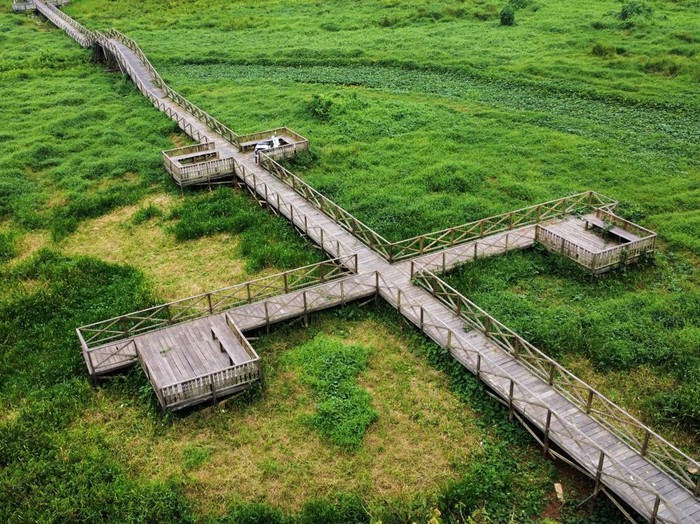
Local stakeholders are currently calling for the regional government to mobilize heavy equipment to clear the waterways. However, there is a broader debate regarding the necessity of a sustainable management plan. This would involve regulating the use of fertilizers in the upper reaches of the reservoir’s catchment area and improving the waste management systems of communities living near the water’s edge to prevent further nutrient influx.
If no action is taken, the reservoir could transition into a swamp-like state, a process known as ecological succession, which would be significantly harder to reverse than the current infestation.
Broader Implications for Balikpapan
The situation at Manggar Reservoir serves as a case study for the challenges facing water infrastructure in rapidly urbanizing areas of Indonesia. As Balikpapan continues to grow—partly due to its proximity to the new national capital project—the pressure on existing natural resources becomes more pronounced.
The incident highlights a lack of integrated water resource management. Without constant monitoring and proactive maintenance, critical infrastructure is left vulnerable to environmental shifts. The economic loss faced by the tourism sector is a tangible reminder that environmental health is intrinsically linked to economic prosperity. If the water quality degrades, the impact will move from the docks of the tourism area to the taps of households across the city.
Long-Term Monitoring and Future Outlook
Moving forward, authorities are expected to face pressure to implement continuous water quality monitoring systems. Technologies such as satellite remote sensing and drone surveillance can provide real-time data on vegetation growth, allowing for interventions long before a reservoir is fully obstructed.
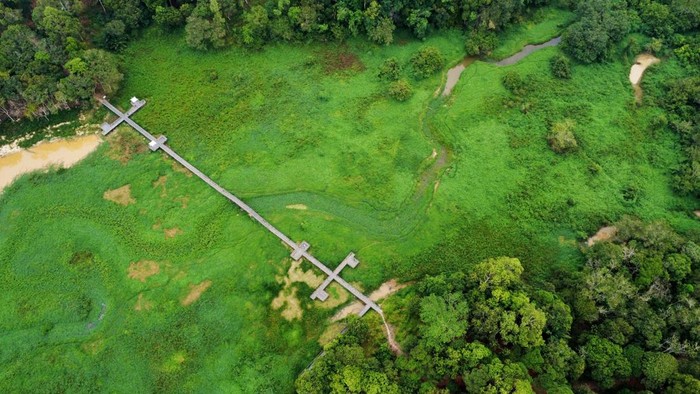
Furthermore, a restoration project may need to be commissioned to dredge the accumulated sediment trapped by the weeds. This is a complex engineering task that involves careful management of the ecological balance to ensure that the process of clearing does not inadvertently harm the remaining aquatic life.
In conclusion, the situation at the Manggar Reservoir in Balikpapan is a multifaceted challenge that requires urgent, science-based intervention. The immediate priority is the restoration of navigational access and the stabilization of the water supply. However, the long-term solution lies in addressing the systemic causes of the weed proliferation. The residents of Balikpapan are currently watching closely, as the outcome of this crisis will determine not only the future of their local tourism but also the reliability of their essential water services for years to come. The incident stands as a stark warning of the fragility of man-made reservoirs and the persistent need for vigilant environmental stewardship.