Socio Today
The rapid transformation of agricultural lands into commercial properties at the foot of Mount Burangrang, Cisarua, West Bandung Regency, reflects a broader global urban phenomenon known as amenity migration, raising critical concerns over ecological degradation and sustainable regional planning.
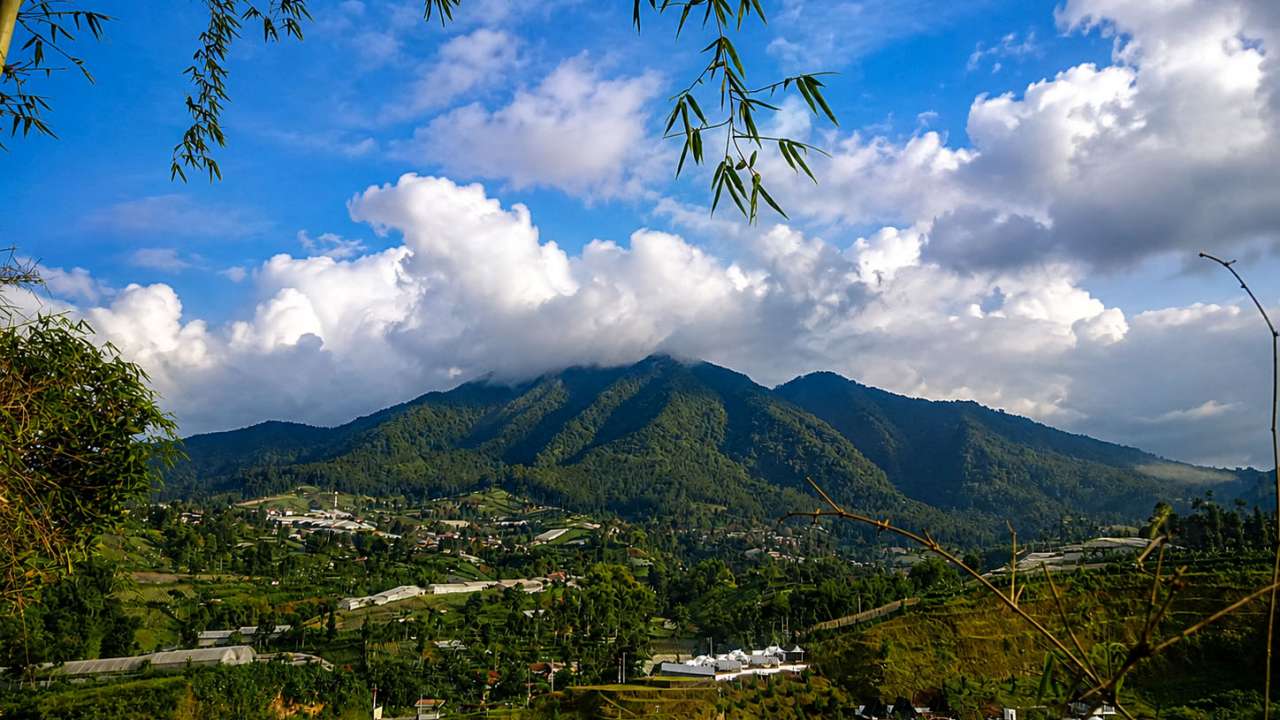
Recent recreational cycling expeditions through the western and southern slopes of Mount Burangrang—traversing routes from Jalan Kolonel Masturi in Cimahi up to Cisarua—reveal a striking visual contrast to the landscape of three to four decades ago. Where continuous patches of agrarian fields and dense canopies once dominated the topography, a proliferation of modern infrastructure has emerged. Cafes, private villas, commercial eateries, and residential housing developments now line the winding mountain roads. While this commercial influx signals localized economic vitality, urban planners and environmental observers warn of the severe ecological tolls accompanying unchecked highland development.
The Mechanics of Amenity Migration in West Java
Mount Burangrang and the surrounding Cisarua district possess all the prerequisite geographic amenities that drive modern lifestyle migration. Situated within proximity to densely populated urban centers such as Bandung and Cimahi, the region offers cooler atmospheric temperatures, panoramic mountain vistas, and relief from urban congestion.
In regional planning literature, amenity migration describes the demographic and capital shift where individuals relocate or invest in areas possessing superior natural environments and recreational qualities. Rather than clustering solely around traditional economic hubs, industrial zones, or administrative capitals, urban populations increasingly commodify nature, seeking clean air, green spaces, and tranquility as essential components of their standard of living.
This demand has fundamentally altered real estate markets across West Java’s highland areas. Land that historically served agricultural production or ecological buffer functions has experienced exponential appreciation in market value. Consequently, local agrarian plots are systematically converted into commercial service hubs designed to cater to urban tourists and second-home buyers.

Economic Benefits Versus Ecological Carrying Capacity
Local governments and business advocates often champion the expansion of highland hospitality and tourism infrastructure as a primary driver of regional economic development. The establishment of cafes, boutique hotels, and restaurants generates direct employment opportunities for local residents, diversifies municipal revenue streams, and increases property tax yields.
However, urban environmental analysts emphasize a fundamental paradox inherent in amenity-driven development: the very attributes that attract investment—scenic beauty, environmental tranquility, and lush vegetation—are progressively undermined by the physical footprint of the development itself.
When construction outpaces ecological carrying capacity, the cumulative impact degrades the landscape. The conversion of permeable agricultural land and forest cover into impermeable concrete structures disrupts local hydrology. Rainwater absorption decreases, surface runoff intensifies, and the risk of soil erosion and landslides multiplies significantly during high-precipitation periods. Furthermore, increased vehicular traffic diminishes the acoustic tranquility and air quality that initially drew migrants and visitors to the region.

The Broader Environmental Implications
Mount Burangrang’s slopes function as an integrated ecological system rather than a mere visual backdrop for urban tourism. The region serves as a vital water catchment area, a biological habitat for diverse native flora and fauna, and a natural buffer protecting lower-lying settlements from environmental hazards.
When local authorities evaluate land-use permits exclusively through the prism of short-term economic gains and real estate taxation, the long-term environmental costs are frequently discounted. Market transaction prices fail to quantify the true value of ecosystem services, such as natural water filtration, carbon sequestration, and slope stabilization.
If unmitigated, the transformation of Cisarua and the Burangrang foothills risks replicating the over-development pressures observed in other saturated mountain tourism destinations across Indonesia. Without stringent spatial planning enforcement, strict adherence to green-belt zonings, and comprehensive environmental impact assessments, the region faces the irreversible loss of its natural capital.

Preserving the viability of West Java’s highland ecosystems does not necessitate the complete prohibition of economic activity or tourism. Instead, sustainable development frameworks must prioritize ecological boundaries—such as slope gradients, hydrological protection zones, and agricultural conservation mandates—over unbridled commercial expansion. Without these guardrails, the very environmental qualities that render the foot of Mount Burangrang economically valuable will vanish, leaving behind an urbanized highland that has lost its fundamental identity.