Socio Today
The escalating global crisis of air pollution has transformed from a primarily outdoor concern into a critical domestic health priority. As urban centers grapple with rising concentrations of particulate matter (PM2.5 and PM10), nitrogen dioxide, and volatile organic compounds (VOCs), the sanctuary of the home is increasingly under siege. While closing windows and doors is often the instinctive response to poor outdoor air quality, modern building science suggests that indoor spaces can paradoxically trap pollutants, leading to a phenomenon known as "indoor air stagnation." This article explores the multifaceted challenge of maintaining high-quality indoor air and outlines actionable, science-backed strategies to safeguard residential health.
The Anatomy of Indoor Air Contamination
Air pollution is no longer confined to industrial zones or major arterial roads. Sources of contamination are increasingly diverse, ranging from vehicular emissions and industrial byproduct to biomass burning and seasonal natural events such as forest fires or volcanic activity. According to the World Health Organization (WHO), air pollution is the single largest environmental health risk, contributing to millions of premature deaths annually.
When outdoor air quality reaches hazardous levels, citizens typically retreat indoors. However, recent environmental studies indicate that indoor air can be two to five times more polluted than outdoor air. This occurs because pollutants infiltrate buildings through structural leaks, ventilation systems, and the simple act of opening doors. Furthermore, internal sources—such as cleaning chemicals, cooking fumes, synthetic building materials, and the accumulation of pet dander or dust mites—create a cocktail of contaminants that persist within enclosed environments.
Chronology of the Modern Pollution Crisis
The recognition of indoor air quality (IAQ) as a distinct public health issue has evolved significantly over the past decade.
- 2015–2018: Early studies in densely populated urban centers began highlighting the correlation between persistent high-traffic congestion and the ingress of microscopic pollutants into residential high-rises.
- 2019–2021: The COVID-19 pandemic necessitated long-term occupancy of homes, bringing unprecedented attention to indoor ventilation standards. Experts began to emphasize that "sealing" a home against external smoke or smog also risks the buildup of exhaled carbon dioxide and airborne pathogens.
- 2022–2024: Climate-driven events, particularly increased wildfire frequency and intensity, have forced a reassessment of residential filtration systems. Homeowners are now moving beyond passive measures toward active air purification technologies.
Analytical Overview: The Impact of Particulate Matter
Particulate matter, particularly particles smaller than 2.5 micrometers in diameter (PM2.5), poses the greatest risk to human health. Because of their minute size, these particles can penetrate deep into the lungs and enter the bloodstream. Clinical analysis shows that prolonged exposure to such pollutants is linked to cardiovascular disease, respiratory inflammation, and impaired cognitive function in children.
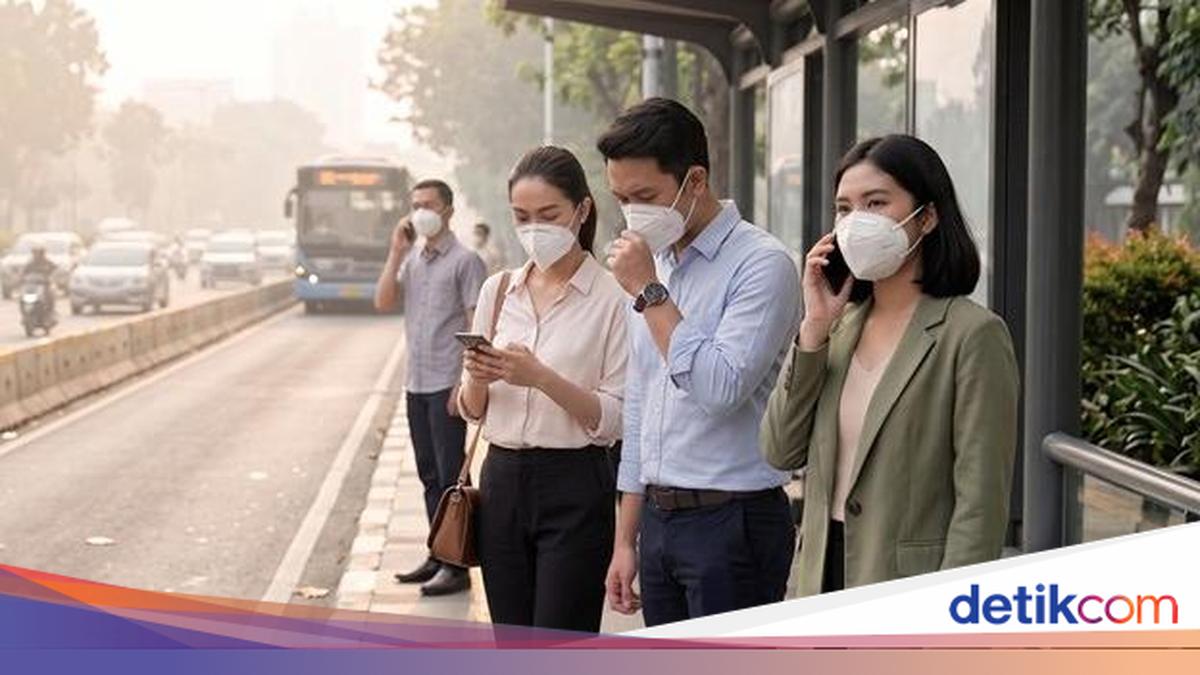
In residential settings, the challenge is not just the volume of particles, but their persistence. Without active circulation and filtration, these particles settle on surfaces, furniture, and flooring, only to be re-suspended by human movement, effectively creating a cycle of continuous exposure.
Strategic Mitigations for Indoor Environments
Maintaining a clean indoor environment requires a multi-layered approach. It is not merely about blocking the outside world, but about managing the internal ecosystem.
1. Personal Protective Measures
While masks are primarily viewed as outdoor protective gear, their utility within the home during periods of extreme poor air quality—or when a household member is suffering from a communicable illness—should not be underestimated. Respiratory protection prevents the inhalation of aerosolized pathogens and residual dust, providing an immediate, low-cost layer of defense.
2. Rigorous Hygiene Protocols
The "cleanliness-health" connection is vital. Particulate matter does not remain suspended indefinitely; it eventually deposits on surfaces. Routine cleaning using damp cloths rather than dry dusting prevents the re-suspension of particles into the breathing zone. Furthermore, the "entryway protocol"—the practice of changing clothes and cleansing skin immediately upon returning from high-pollution areas—significantly reduces the "tracking in" of outdoor contaminants.
3. Intelligent Ventilation Management
The common practice of keeping windows and doors tightly sealed is a double-edged sword. While it keeps external smog out, it leads to oxygen depletion and the concentration of indoor pollutants. A strategic approach involves monitoring local air quality indices (AQI) in real-time. Only during periods of favorable outdoor quality should cross-ventilation be initiated. For those living in high-pollution corridors, installing modular filters on ventilation inlets can provide a compromise between airflow and filtration.
The Role of Advanced Air Purification Technology
When natural ventilation is insufficient and manual hygiene is not enough, mechanical intervention becomes necessary. High-efficiency air purifiers act as the primary defense against indoor airborne threats.
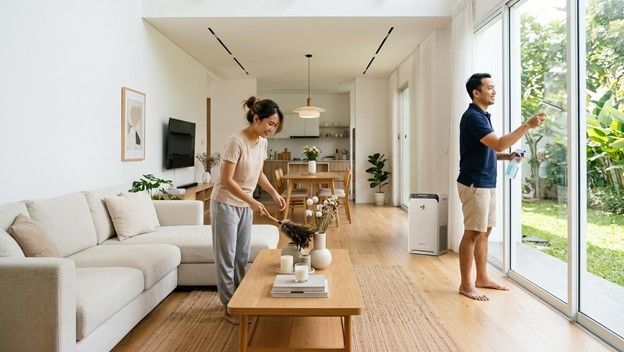
Technological leaders in the climate control industry, such as Daikin, have developed systems that combine multi-stage filtration with active neutralization. For instance, the Daikin MC555AVM4 model utilizes a dual-system approach: a high-performance Electrostatic HEPA filter captures microscopic pollutants, while an integrated "STREAMER" technology works to chemically eliminate captured bacteria, viruses, and allergens.
The importance of such technology lies in its capacity for "continuous remediation." Unlike a one-time cleaning, an air purifier functions as a constant scrubber of the indoor environment. When choosing such devices, critical features include:
- Sensory Adaptation: The ability to automatically adjust cleaning speeds based on real-time pollution detection.
- Targeted Intake: The capacity to pull air from multiple directions, including near the floor, where dust and heavy particles often settle—a crucial feature for households with infants or pets.
- Efficiency Modes: Options like "Econo" modes allow for 24/7 operation without excessive energy consumption or noise, ensuring that air quality remains consistent during sleep or work hours.
Broader Implications and Future Outlook
The transition toward "healthy homes" is an inevitable evolution of urban living. As governments globally struggle to implement large-scale systemic changes to combat outdoor pollution, the burden of health preservation increasingly shifts to the individual level.
The economic implication is significant: investing in air purification is essentially a preventive healthcare expenditure. Data suggests that the long-term cost of treating respiratory and cardiovascular conditions induced by poor air quality far outweighs the investment in domestic purification systems. For example, a unit such as the Daikin MC555AVM4, priced within the mid-range of premium home electronics, provides an essential utility that protects the long-term health of the household.
Conclusion: A Proactive Stance
The reality of modern urbanization is that we cannot fully eradicate external pollution. However, we are not helpless in the face of it. By adopting a systematic approach—combining strict personal hygiene, intelligent ventilation, and the integration of advanced air purification technology—households can create a resilient environment that guards against the unseen dangers of the atmosphere.
As we move toward a future where air quality remains a primary public health concern, the home must evolve from a passive shelter into an active, self-cleaning ecosystem. Whether through the simple habit of cleaning surfaces or the strategic deployment of HEPA-grade purification, individual action remains the most effective tool in the pursuit of respiratory well-being. For those seeking to further understand their specific environmental needs, consulting technical specifications of home air systems—such as those available through the official Daikin resource portals—serves as a necessary step toward informed home management. In this, the goal is simple yet profound: ensuring that the air we breathe within our walls is as clean and safe as possible.