Socio Today
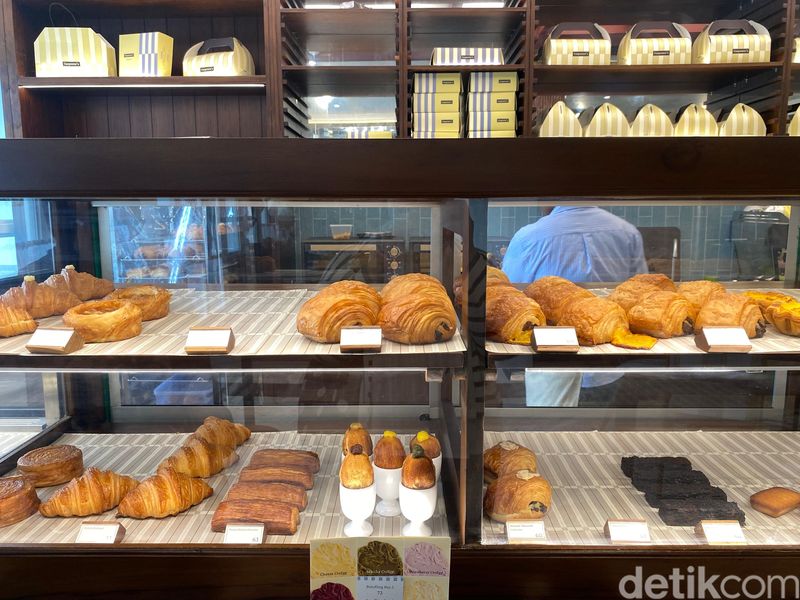
The emergence of Carpenter’s Bakehouse is part of a broader trend in the Indonesian capital where "lifestyle dining" intersects with specialized culinary craftsmanship. Located in the prestigious Kebayoran Baru district, the cafe caters to a demographic that values both the technical precision of a product and the environment in which it is consumed. The interior design reflects a contemporary sensibility, offering a comfortable space for "nongkrong"—the Indonesian social tradition of hanging out—while maintaining a focus on the glass-encased display of golden-brown pastries that serves as the room’s centerpiece.
The driving force behind Carpenter’s Bakehouse is Chef Alex, a culinary professional whose resume reads like a map of North America’s most prestigious kitchens. Before establishing Carpenter’s, Alex gained significant recognition in the local scene with the opening of 49rs Bakery approximately two years ago. However, it is his international experience that provides the foundation for the bakehouse’s superior product quality. According to industry insights and social media documentation from culinary observers, Alex honed his skills in the United States, working at two of the world’s most acclaimed dining institutions. His tenure includes time at Birdsong in San Francisco, a two-Michelin-starred establishment known for its heritage-driven, open-fire cooking, and the legendary The French Laundry in Yountville, California. The latter, helmed by Chef Thomas Keller, holds the rare distinction of three Michelin stars and is widely regarded as one of the most demanding and precise culinary environments in the world.
This background in high-pressure, world-class kitchens is evident in the technical execution of the pastries at Carpenter’s. In the world of baking, the term "viennoiserie" refers to products made from a leavened dough in a manner similar to bread, or from puff pastry, but with added ingredients like eggs, butter, milk, cream, and sugar, which give them a richer, sweeter character. The most famous example is the croissant. Achieving a "super flaky" texture requires a mastery of lamination—the process of folding butter into dough multiple times to create hundreds of microscopic layers. When baked, the water in the butter turns to steam, puffing up the layers and creating the airy, crisp structure that Chef Alex has reportedly perfected.
The menu at Carpenter’s Bakehouse is strategically priced to remain accessible despite its premium origins. Items begin at approximately Rp 20,000, a price point that allows the bakehouse to compete with both high-end patisseries and more commercial chains. The Cheese Roll, priced at Rp 20,909, has emerged as an unexpected favorite among early visitors. Despite its modest price, the pastry exhibits the same sophisticated lamination found in more expensive items. The flavor profile of the Cheese Roll is a complex interplay of savory and sweet, featuring a robust cheese aroma that suggests the use of high-quality aged cheddar or similar varieties, rather than standard commercial alternatives.
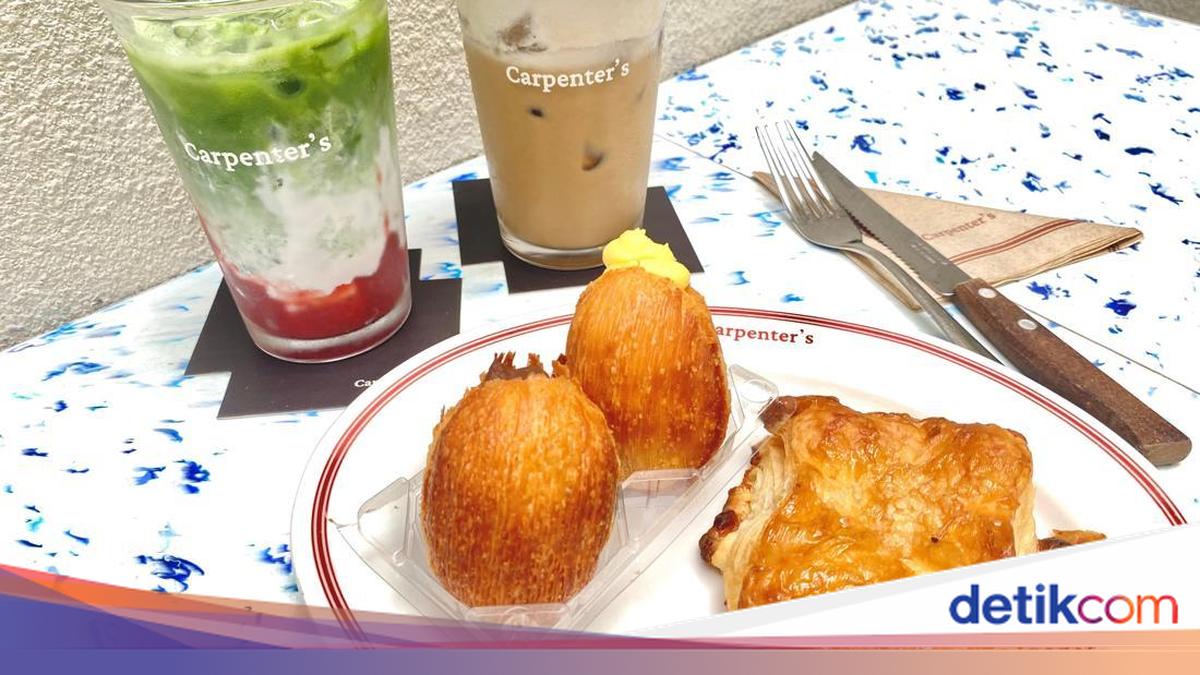
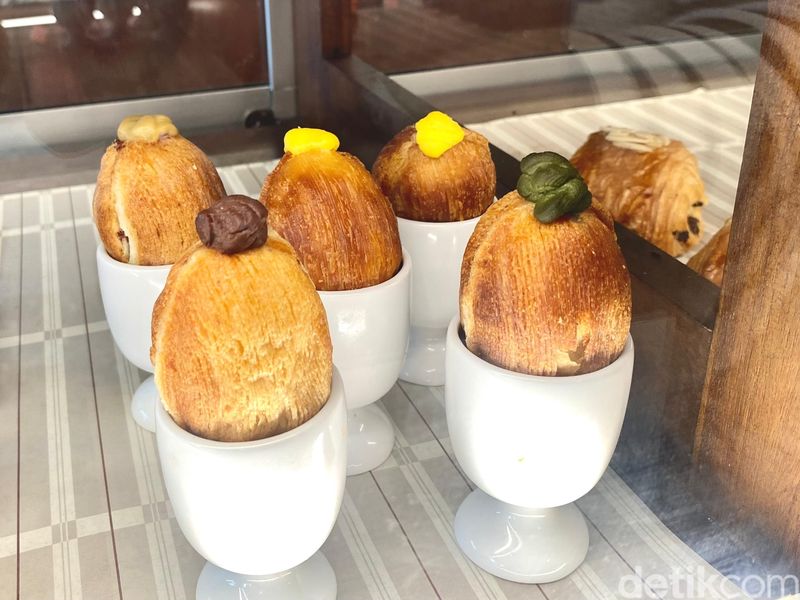
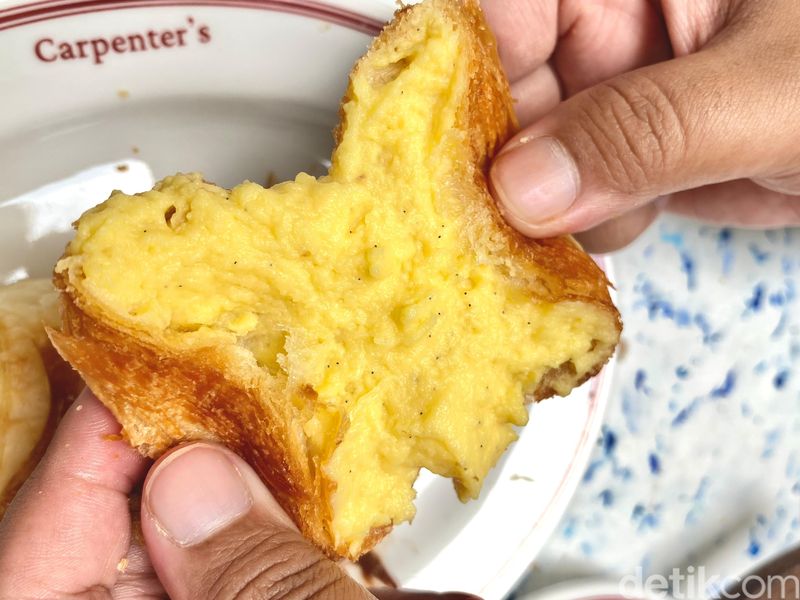
However, the undisputed star of the menu is the "CroEgg." This signature item is a testament to the "hybrid pastry" movement that has swept the global culinary world, following in the footsteps of the Cronut and the Suprême. The CroEgg is a croissant meticulously shaped into a hollow, egg-like shell. This architectural feat of baking is not merely for show; the shape provides a unique vessel for various fillings. The CroEgg must be ordered in pairs, with a price tag of approximately Rp 65,455. The most popular iterations include the Classic Chocolate and Vanilla custard variants.
Technical analysis of the Chocolate CroEgg reveals a sophisticated approach to flavor. The filling is noted for its high cocoa content, evidenced by a distinct acidity and lingering bitterness that balances the richness of the buttery pastry. This suggests the use of single-origin or high-percentage dark chocolate, a hallmark of Michelin-trained chefs who prioritize depth of flavor over simple sweetness. The Vanilla CroEgg, meanwhile, utilizes real vanilla bean specks rather than artificial essence, resulting in a floral, creamy custard that complements the salty, flaky exterior.
The beverage program at Carpenter’s is equally curated, designed to pair specifically with the heavy, buttery nature of the pastries. Two standout offerings are the Sea Salt Coffee Cream Cheese and the Strawberry Matcha Latte. The Sea Salt Coffee Cream Cheese, priced at Rp 55,000, taps into the "savory coffee" trend. The drink features a base of bitter, aromatic coffee topped with a liquid cream cheese foam and a hint of sea salt. The salt acts as a flavor enhancer, cutting through the richness of the cheese and the bitterness of the coffee to create a balanced palate.
The Strawberry Matcha Latte, priced at Rp 65,000, offers a different experience. The matcha used is described as having a deep "umami" profile and a thick consistency, indicating a ceremonial or high-culinary grade of green tea powder. This is paired with a house-made strawberry sauce derived from fresh fruit rather than synthetic syrup, providing a natural acidity that prevents the drink from being cloyingly sweet. Other innovative beverage options include the Mont Blanc—likely inspired by the chestnut dessert—and a Coconut Coffee Cream Cheese, reflecting a localized twist on modern cafe trends.
The opening of Carpenter’s Bakehouse at Jalan Lauser No. 36 comes at a time when Jakarta’s consumers are increasingly discerning. The "bakery boom" in South Jakarta has seen a shift from mass-produced bread to artisanal, small-batch production. By situating itself in Kebayoran Baru, Carpenter’s is positioned to capture a market of affluent professionals, students, and "foodies" who are willing to travel for a specific culinary experience. The operational hours, from 07:00 to 19:00 WIB, align with the morning routine of the neighborhood, positioning the bakehouse as a breakfast destination for those seeking a "Michelin-standard" start to their day.
From a broader economic perspective, the success of ventures like Carpenter’s Bakehouse signifies the continued resilience and evolution of Indonesia’s Food and Beverage (F&B) sector. Despite the challenges of the past few years, there is a clear appetite for "affordable luxury." Consumers may not always be able to afford a full tasting menu at a Michelin-starred restaurant, but they are increasingly willing to pay a premium for a Rp 30,000 croissant if it represents the pinnacle of its craft.
The social impact of such establishments also cannot be overlooked. Carpenter’s provides a space for community interaction, contributing to the "walkable" and "livable" charm of the Kebayoran Baru area. As more chefs with international experience return to Indonesia to open their own ventures, the local culinary standard is raised. This creates a "trickle-down" effect where local bakers are exposed to higher technical standards, and suppliers are pushed to provide better quality butter, flour, and chocolate.
In conclusion, Carpenter’s Bakehouse is more than just a new cafe in South Jakarta; it is a manifestation of global culinary expertise meeting local market demand. With its "super flaky" CroEggs and a price range that welcomes a wide audience, the bakehouse is set to remain a focal point of the Jakarta pastry scene. For Chef Alex, it represents a continuation of a journey that began in the elite kitchens of California and has found a new home in the bustling heart of Jakarta. As the bakehouse continues its operations, it stands as a reminder that in the world of gastronomy, the simplest items—a roll of cheese, a cup of coffee, or a croissant shaped like an egg—can be elevated to art through the hands of a master.