Socio Today
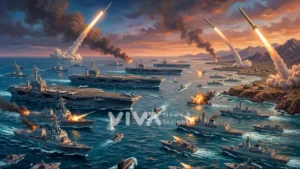
President Donald Trump has publicly disclosed that his administration is weighing the possibility of initiating a large-scale military operation against the Islamic Republic of Iran, asserting that the leadership in Tehran has not yet faced sufficient consequences for its regional activities and non-compliance with international demands. Speaking to reporters and international media outlets on Friday, July 24, 2026, the President indicated that a decision regarding a "massive" kinetic strike is nearing a state of finality, marking one of the most significant escalations in rhetoric and military posturing between Washington and Tehran in recent decades. Trump emphasized that the scale of the proposed operation would be unprecedented, surpassing any previous military engagements involving the two nations, and suggested that the United States military is in a state of full combat readiness to execute the order should he choose to proceed.
The President’s remarks, delivered from a high-stakes environment in Washington, underscored a shift from diplomatic maneuvering to the brink of open conflict. "I am considering a massive attack. Larger than anything there has ever been before," Trump stated, according to reports from Aljazeera and other international news agencies. He further noted that while he is cognizant of the severe consequences such a move would entail for global stability and the domestic economy, he believes the current pressure on Iran has been insufficient. "I have almost made a decision. We are fully prepared for it," he added, though he stopped short of providing a specific timeline or a definitive declaration of war, maintaining a degree of strategic ambiguity while simultaneously heightening the sense of urgency.
The Role of Regional Alliances and the Israeli Factor
Central to the President’s strategic calculus is the involvement of the State of Israel, the United States’ primary security partner in the Middle East. Trump claimed that the coordination between Washington and Jerusalem is so seamless that Israel would mobilize its own military assets almost instantaneously upon a formal request from the White House. "Israel will join in within two minutes if I ask them," Trump asserted, highlighting the deep-seated security architecture that has been reinforced over the past several years. However, the President also acknowledged the complexities of such a partnership, noting that Israeli involvement would carry its own set of geopolitical consequences and could potentially widen the theater of conflict to include multiple fronts across the Levant and the Persian Gulf.
This statement comes at a time when Israeli defense officials have expressed increasing concern over Iran’s nuclear enrichment levels and the continued proliferation of advanced missile technology to proxy groups such as Hezbollah in Lebanon and the Houthi movement in Yemen. While Trump suggested that Iranian officials are eager to return to the negotiating table to avoid a catastrophic military engagement, he maintained that they are not yet prepared to make the fundamental concessions required for a sustainable deal. This "negotiation through strength" approach has been a hallmark of the administration’s foreign policy, though critics argue it brings the world dangerously close to a miscalculation that could trigger a global crisis.
U.S. State Department Issues Emergency Travel Advisories
In a move that signals the seriousness of the President’s threats, the United States Department of State has issued an urgent travel warning for all American citizens currently situated in the Middle East. The advisory, released shortly after the President’s comments, urges citizens to prepare for emergency travel contingencies, citing the high probability of flight cancellations, the closure of regional airspace, and general disruptions to transportation infrastructure. The State Department’s Bureau of Consular Affairs warned that should hostilities break out, the ability of the U.S. government to provide consular services or assist in evacuations could be severely limited.
The advisory specifically highlights the risks of retaliatory strikes by Iran or its affiliates against "soft targets," including commercial aviation and maritime routes. Historically, escalations in the Persian Gulf have led to the disruption of the Strait of Hormuz, a vital chokepoint for global energy supplies. The State Department’s proactive stance is being viewed by geopolitical analysts as a "clearing of the decks," ensuring that civilian casualties are minimized and that the U.S. military has maximum operational freedom in the event of a strike.
A Chronology of Escalation: 2018–2026
The current crisis did not emerge in a vacuum but is the culmination of a decade of deteriorating relations between the United States and Iran. To understand the gravity of the July 2026 announcement, one must look at the timeline of events that led to this juncture:
- May 2018: The United States officially withdraws from the Joint Comprehensive Plan of Action (JCPOA), commonly known as the Iran Nuclear Deal, and reinstates a "Maximum Pressure" campaign of economic sanctions.
- January 2020: The targeted killing of Major General Qasem Soleimani, commander of the Quds Force, in a drone strike in Baghdad leads to a direct Iranian missile attack on U.S. bases in Iraq.
- 2023–2024: Tensions rise following a series of maritime incidents in the Red Sea and the Gulf of Oman, with the U.S. accusing Iran of providing tactical support for drone and missile attacks on commercial shipping.
- 2025: Following a change in administrative posture or a re-election of the "Maximum Pressure" doctrine, sanctions are expanded to include a total secondary boycott of any entity trading with the Iranian energy sector. Reports emerge that Iran has reached 90% uranium enrichment, the threshold for weapons-grade material.
- Early 2026: A series of unclaimed cyberattacks and "mysterious" explosions occur at Iranian industrial and military sites, which Tehran blames on the U.S.-Israeli intelligence apparatus.
- July 2026: President Trump announces that the "Maximum Pressure" campaign has reached its limit and that "massive" military action is the only remaining deterrent.
Economic Implications and Global Market Reaction
The mere suggestion of a "massive" military strike has already begun to ripple through global financial markets. Oil prices saw an immediate spike in futures trading, with Brent Crude jumping by over 8% in the hours following the President’s remarks. Market analysts warn that a full-scale conflict could see oil prices exceed $150 per barrel, potentially triggering a global recessionary period. The Strait of Hormuz, through which approximately 20% of the world’s total oil consumption passes, remains the primary concern for economists. An Iranian blockade or a series of naval skirmishes in the waterway would effectively halt the flow of energy from the Middle East to markets in Asia and Europe.
Furthermore, the potential for cyber warfare remains a significant threat to the domestic U.S. economy. Intelligence agencies have warned that Iran possesses sophisticated offensive cyber capabilities that could be used to target the American financial sector, power grids, or water treatment facilities as a form of asymmetric retaliation.
International Responses and Diplomatic Friction
The international community has reacted with a mixture of alarm and calls for restraint. The United Nations Secretary-General issued a statement urging both Washington and Tehran to "step back from the precipice," warning that a regional war would have catastrophic humanitarian consequences. European allies, particularly those still clinging to the hope of a diplomatic resolution, have expressed deep concern over the unilateral nature of the potential strike.
In Tehran, the response has been one of defiance. Iranian military commanders have stated that any aggression against their soil will be met with a "crushing response" that would target U.S. interests and allies throughout the region. While Trump claims that Iranian officials want to negotiate, the public rhetoric from the Islamic Revolutionary Guard Corps (IRGC) suggests a mobilization for a defensive war.
Strategic Analysis: Brinkmanship or Imminent Conflict?
Military analysts are currently divided on whether the President’s statements represent a final warning designed to force Iran into a lopsided diplomatic deal or a genuine declaration of intent for a kinetic operation. The term "massive attack" suggests more than just a targeted strike on a single facility; it implies a campaign aimed at degrading Iran’s integrated air defense systems, its ballistic missile silos, and its command-and-control infrastructure.
From a strategic standpoint, the U.S. has maintained a significant presence in the region, with carrier strike groups and advanced tactical aircraft stationed in neighboring Gulf states. The logistical readiness mentioned by the President is supported by recent exercises conducted by CENTCOM (U.S. Central Command) which focused on long-range precision strikes and maritime security operations.
However, the "consequences" Trump referred to are not merely military. A large-scale strike could destabilize the fragile governments in Iraq and Lebanon, embolden extremist groups in the vacuum of power, and solidify a "Resistance Axis" between Iran, Russia, and potentially other global adversaries who view U.S. interventionism as a threat to their own interests.
As the world awaits a final decision from the White House, the Middle East remains on a hair-trigger. The coming days will likely determine whether 2026 becomes the year of a new, expansive conflict in Western Asia or if the threat of "massive" force successfully drives Tehran back to a deal that meets the stringent requirements of the Trump administration. For now, American citizens in the region are being told to watch the skies and prepare for the worst, as the rhetoric of war moves closer to the reality of the battlefield.