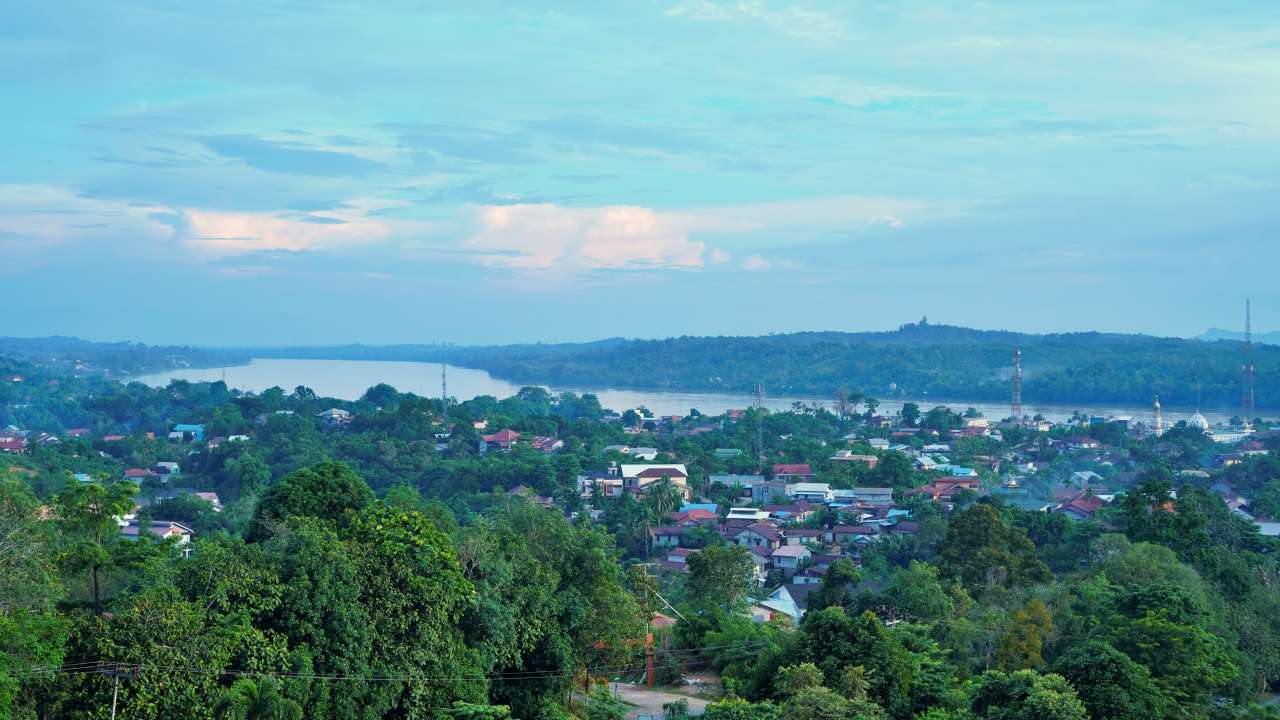
The morning mist still clung softly to the surface of the Kapuas River as the first rays of the tropical sun began to pierce through the damp air, awakening the vibrant ecosystems and human settlements along Indonesia’s longest waterway. Near the concrete embankment of the Surya Negara Palace pier in Sanggau Regency, West Kalimantan, a local resident named Atik stood knee-deep in her daily routine. Wearing a wide woven rattan hat known locally as a tangui and a protective face mask, she skillfully maneuvered a traditional bamboo scoop called a saok to harvest small river fish. Her catch, predominantly belais and seluang fish, was steadily accumulated into a small, repurposed paint bucket. Just a stone’s throw away, another resident named Abo washed clothes on the riverbank while keeping a watchful eye on fishing nets he had cast before dawn.
Despite the serene morning imagery, both residents shared growing anxieties regarding the ecological degradation of the Kapuas River. Abo pointed to mounting domestic waste and the relentless passage of industrial vessels as primary catalysts for the diminishing fish populations. While traditional livelihoods depend on the river’s natural cycles, the waterway now routinely accommodates heavy commercial traffic, including barges transporting crude palm oil, coal, fuel, and timber. This friction between traditional subsistence living and large-scale industrial extraction highlights the complex socio-environmental challenges currently shaping the region. Yet, amidst these pressures, local communities continue to harbor profound resilience and optimism, laying the groundwork for a broader movement toward ecological preservation and cultural continuity.
These grassroots realities and shared aspirations formed the beating heart of Festival Lestari #6, held across West Kalimantan from November 10 to 12, 2026. Organized collaboratively by the Lingkar Temu Kabupaten Lestari (LTKL)—an association of sustainable regencies—alongside local governments, the festival positioned Sanggau as a primary co-host alongside neighboring Sintang and Kapuas Hulu. All three member regencies share a vital geographic and cultural lifeline tied directly to the Kapuas River basin, making regional cooperation essential for addressing shared environmental vulnerabilities.
Intimate Formats in the Wake of Environmental Crisis
Diverging significantly from traditional, high-capacity festivals characterized by massive crowds and commercial spectacles, Festival Lestari #6 adopted a remarkably intimate, community-centric approach. Organizers deliberately scaled down attendance numbers—limiting participation to approximately 40 individuals in Sanggau, 50 in Sintang, and 30 in Kapuas Hulu. This strategic curation was implemented in direct response to the recent ecological and humanitarian challenges faced by the region, notably the lingering grief and recovery processes following severe forest and land fires. By keeping gatherings intimate, the festival cultivated genuine, interactive spaces for dialogue among local residents, indigenous communities, regional governments, civil society organizations, and private sector representatives.
The overarching objective of the multi-stakeholder gathering centered on strengthening regional resilience against environmental crises and disaster risks. Through targeted discussions, workshops, and field immersions, participants explored restorative economic models, advanced mitigation strategies for forest fires, and actionable frameworks for safeguarding critical ecosystems. The intentional shift away from large-scale commercialization toward reflective, dialogue-driven engagement underscored a collective commitment to addressing systemic environmental vulnerabilities at the grassroots level.
Opening remarks delivered by Sanggau Regent Yohanes Ontot during the inauguration ceremony on the evening of November 10, 2026, set a contemplative tone for the multi-day event. Emphasizing the significance of the festival’s guiding theme, "Merawat Arus" or "Nurturing the Current," Regent Ontot noted that the metaphor deeply reflects the current socio-environmental trajectory of Sanggau. He explained that river currents symbolize continuous movement, interconnected communities, and the invaluable traditional knowledge passed down through generations. Furthermore, Ontot stressed that regional development policies must transcend narrow economic growth targets to prioritize environmental carrying capacity and the long-term well-being of future generations. Through Sanggau’s multi-stakeholder platform, known locally as Sabang Merah Berdompu, the regency government sought to synthesize local indigenous wisdom with modern sustainability practices to foster enduring environmental stewardship.
Cultural Expressions and Economic Empowerment at Taman Sentana
Taman Sentana, a public park situated along the banks of the Kapuas River adjacent to the historical Surya Negara Palace, served as the epicenter of Festival Lestari #6 activities in Sanggau. Over the course of three days, the venue hosted a diverse array of public art performances, documentary screenings, policy workshops, and exhibitions showcasing local non-timber forest products and creative industries.
The opening night featured a seamless blend of classical and contemporary artistic performances that highlighted the cultural richness of the region. Traditional Dayak Sape music and Malay oral literature resonated across the park, while modern interpretations of local heritage were brought to life through the energetic Rangkong dance and musical performances by the Sega Ansambel. Adjacent to the main stage, the West Kalimantan youth collective Nusi Ari Kapuas presented an evocative visual storytelling exhibition. Featuring documentary photography of grassroots actors—including teachers, fishermen, dockworkers, traditional artisans, and culinary practitioners—the exhibition captured the daily interplay between human lives and the Kapuas River basin ecosystem.
Collaborative initiatives extended to Samudra Bekudong-k, a Sanggau youth community dedicated to utilizing independent cinema as a medium for social and environmental advocacy. Throughout the festival, the collective hosted nightly screenings of local documentary films exploring cultural preservation and youth-led environmental movements. In partnership with the Sanggau Regency government under the Sabang Merah Berdompu framework, Samudra Bekudong-k also spearheaded incubation programs for sustainable local enterprises. Exhibition booths at Taman Sentana featured an impressive array of certified local crafts and commodities, including kalengkang traditional textiles, tangui pandan-weave sun hats, teripai hunting bags, wooden kitchenware, and culinary specialties such as kelulut honey, lempok durian, and bamboo shoot delicacies.

Complementing the local artisan displays, the Sustainable Coffee Platform of Indonesia (SCOPI) offered complimentary tastings of locally cultivated Robusta and Liberica coffee. By fostering public-private partnerships within the agricultural sector, SCOPI aims to elevate the economic standing of local farmers while simultaneously advancing food security and environmental conservation standards.
Ecological Laboratories and Biodiversity Preservation at Taman Kehati
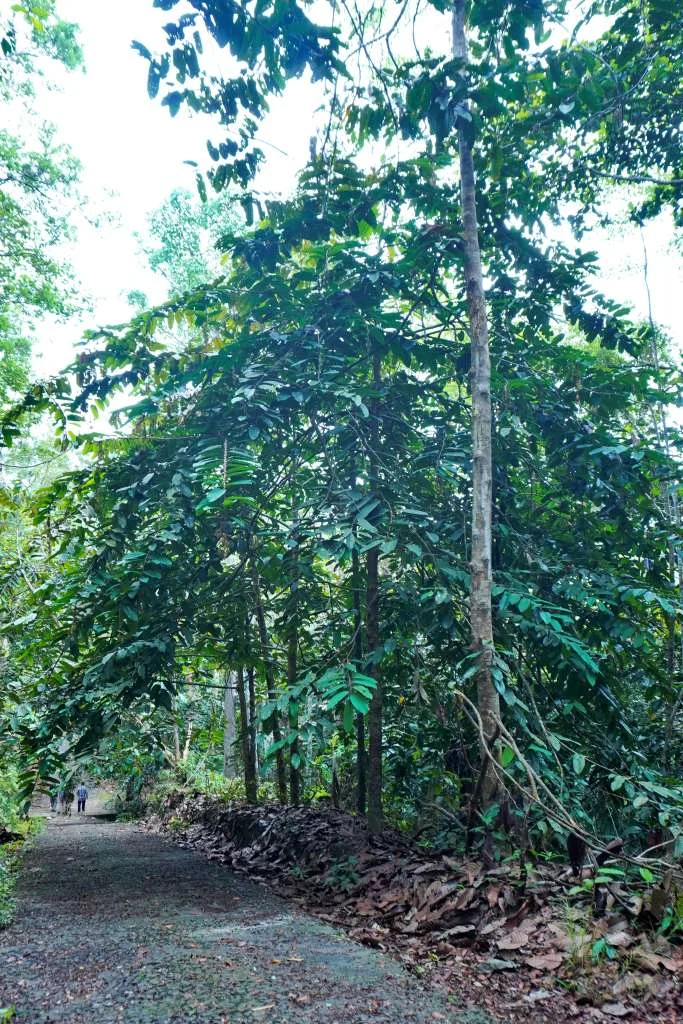
Beyond the aquatic ecosystems of the Kapuas River, Festival Lestari #6 also directed public attention toward terrestrial conservation efforts through a guided expedition to the Sanggau Botanical Garden, commonly known as Taman Kehati (Keanekaragaman Hayati). Established originally in 1991 as an in-situ conservation site for rare flora and local pollinators, the 25-hectare protected area has evolved significantly over the decades. Following its formal designation as a Regional Biodiversity Park in 2019, Taman Kehati functions as both an environmental sanctuary and a living laboratory for agroforestry development, modeled after the traditional Dayak agricultural and forestry system known as tembawang.
According to site guides, the conservation area is divided into five distinct management zones traversed by walking trails and natural streams. Botanical surveys document at least 145 plant species spanning 54 botanical families, including a wide array of native trees, orchids, palms, bamboos, ferns, and pitcher plants. Among these, over a dozen species are recognized as high-value endemics integral to indigenous Dayak civilization. Noteworthy examples include the kapuak (Artocarpus elasticus), tengkawang tungkul (Shorea macrophylla), ironwood or belian (Eusideroxylon zwageri), red meranti (Shorea parvifolia), marau rattan (Calamus plicatus), purang (Macaranga hypoleuca), and jelutong (Alstonia scholaris). These species serve multiple functions within the local economy, ranging from sustainable construction materials and traditional medicine to ecological indicators of forest health.
Marselus Junihardi, Head of the Sanggau Environmental Agency (DLH), emphasized that Taman Kehati plays a critical role in facilitating academic research and environmental education for regional students and university researchers. Furthermore, a one-hectare section of the park has been allocated for camping grounds, successfully balancing ecological preservation with low-impact community recreation and scouting activities.
Environmental organizations such as Sangga Bumi Lestari have repeatedly stressed that the preservation of Taman Kehati is inextricably linked to the broader Mendawak Landscape, which encompasses primary tropical rainforests, mangrove tracts, and peatland ecosystems across Sanggau. Maintaining ecological integrity within these multiple-use landscapes requires rigorous harmonization between regional conservation goals and industrial concessions operating in the surrounding areas, particularly to protect vital wildlife habitats for endangered species such as orangutans.

Synthesizing History, Policy, and Long-Term Collaboration
The conceptual underpinning of Festival Lestari #6 finds strong resonance in historical frameworks of civilization development. Prominent British historian Arnold Toynbee famously posited in his "challenge and response" theory that human civilizations originate and flourish along river valleys. As communities settle near riverine systems, they inevitably encounter natural environmental challenges—such as seasonal flooding, resource scarcity, and climate variability—prompting them to innovate sophisticated socio-economic, political, and technological structures to ensure survival. Just as ancient societies along the Nile, Tigris-Euphrates, Yellow River, and Indus valleys established the foundations of human history, contemporary communities along the Kapuas River must navigate industrial-era pressures while preserving their cultural and ecological identity.
To bridge traditional heritage with modern policy implementation, Sanggau Regency Regional Secretary and Festival Chairman Aswin Khatib underscored the critical need for sustained, multi-stakeholder collaboration. "We are firmly committed to ensuring that this agenda does not simply conclude as a ceremonial event report, but is systematically translated into tangible partnership programs and actionable steps that can be collectively monitored," Khatib stated during the closing sessions.
Echoing this sentiment, Adinda M. Aksari, Deputy Head of the LTKL Secretariat, emphasized that cross-sector collaboration remains the definitive cornerstone for achieving systemic structural change. She noted that the grassroots initiatives showcased throughout Sanggau and neighboring regencies during the festival serve as powerful catalysts for ongoing regional transformation. "Building sustainable systemic change is undoubtedly complex and demands unwavering support from all segments of society," Aksari remarked.
Ultimately, Festival Lestari #6 provided a vital platform for amplifying the voices of local residents, indigenous guardians, and regional policymakers committed to safeguarding the ecological integrity of West Kalimantan. By anchoring regional development within the principles of environmental carrying capacity and cultural preservation, stakeholders across Sanggau, Sintang, and Kapuas Hulu continue to embody their foundational philosophical oath—Adil ka’ talino, bacuramin ka’ saruga, basengat ka’ jubata—affirming a lifelong commitment to justice toward humanity, society, and the natural environment.