Socio Today
Despite persistent global pressures from a memory chip crisis that has constrained various sectors of the technology industry, the foldable smartphone market has demonstrated remarkable resilience and growth, with shipments increasing by an impressive 21 percent in the first half of 2026 compared to the same period last year. This robust expansion signals a pivotal shift in consumer preferences and a burgeoning confidence among manufacturers in the advanced form factor. Industry analysts are closely monitoring the landscape, particularly with the highly anticipated entry of tech giant Apple into the foldable segment, a move poised to fundamentally reshape the competitive dynamics and accelerate mainstream adoption of flexible display technology.
The Foldable Market’s Ascent Amidst Economic Headwinds
The first half of 2026 has been a period of contrasting narratives within the broader smartphone industry. While the conventional smartphone market has grappled with plateauing growth rates, exacerbated by global economic uncertainties and the lingering effects of the semiconductor shortage, the foldable segment has emerged as a beacon of innovation and consumer demand. This growth trajectory is particularly significant given the ongoing memory chip crisis, which has led to increased component costs and supply chain bottlenecks across the electronics sector. Manufacturers of foldable devices, often positioned in the premium segment, appear to have strategically navigated these challenges, prioritizing supply allocation for their high-margin, innovative products.
According to the latest Foldable Smartphone Market Forecast report by Counterpoint Research, the 21 percent year-on-year growth in shipments is driven by several key factors. Foremost among these is the escalating consumer demand for premium, book-style foldable smartphones, which offer an expansive screen real estate for enhanced productivity and immersive content consumption. Furthermore, the intensifying competition among existing manufacturers, coupled with continuous advancements in durability, software optimization, and price accessibility, has contributed significantly to market expansion. The most impactful catalyst, however, is projected to be the imminent arrival of Apple, with its rumored "iPhone Ultra," which is expected to launch later this year.
Samsung’s Enduring Legacy and Strategic Evolution
For several years, South Korean conglomerate Samsung has been the undisputed pioneer and market leader in the foldable smartphone space. Its consistent investment in research and development, coupled with a well-executed product strategy, has allowed it to define the category and educate consumers on the benefits of flexible displays. This year, Samsung is projected to maintain its dominant position, largely propelled by the successful launch of its latest flagship foldable devices: the Galaxy Z Flip8, Galaxy Z Fold8, and the ultra-premium Galaxy Z Fold8 Ultra. These devices represent the culmination of years of iterative improvements, addressing earlier concerns regarding durability, hinge mechanisms, and software integration.
Samsung’s strategic advantage lies not only in its technological head start but also in its extensive global distribution network and a mature software ecosystem tailored specifically for flexible screens. This experience has allowed Samsung to refine the user experience, offering intuitive multitasking capabilities and applications optimized for the unique form factors of its Z Fold and Z Flip series. The company’s deep understanding of the foldable supply chain, from display manufacturing to component sourcing, further solidifies its market stronghold.
Apple’s Game-Changing Entry: The iPhone Ultra
However, Counterpoint’s report unequivocally signals a forthcoming disruption to Samsung’s seemingly unassailable lead. The entry of Apple into the foldable segment is anticipated to be a seismic event, immediately altering the competitive landscape. While details surrounding the "iPhone Ultra" remain under wraps, consistent rumors and supply chain leaks suggest a premium foldable device that adheres to Apple’s stringent design and performance standards. Analysts project that Apple’s foldable offering will capture a substantial 25 percent global market share in 2026, directly challenging Samsung’s projected 32 percent share.
The significance of Apple’s entry extends beyond mere market share figures. As Associate Director at Counterpoint Research, Liz Lee, articulates, "The presence of a foldable iPhone is expected to dramatically elevate overall consumer awareness for the foldable category, simultaneously raising the bar for premium foldable smartphones." Apple’s reputation for meticulous engineering, intuitive software, and a robust ecosystem has the potential to legitimize the foldable form factor in the eyes of a broader, more conservative consumer base, particularly in Western markets where Apple commands significant brand loyalty. Historically, Apple’s entry into any new product category, from MP3 players to tablets and smartwatches, has often been a watershed moment, accelerating market growth and setting new industry benchmarks.
Competitive Landscape: Beyond the Giants
While the narrative of 2026 is largely dominated by the Samsung-Apple rivalry, other significant players continue to carve out their niches in the burgeoning foldable market. Huawei, despite facing ongoing geopolitical challenges and restrictions, is projected to secure the third position with a 24 percent market share. Huawei’s strength remains primarily concentrated in its home market of China, where it continues to be a dominant force in the premium smartphone segment, leveraging its strong brand recognition and robust domestic supply chain for foldable components. The company’s focus on innovative hinge designs and advanced camera technologies has resonated well with Chinese consumers.
Motorola, a brand undergoing a resurgence under Lenovo, is estimated to capture 8 percent of the global foldable market. Its Razr series, particularly the clam-shell design, has garnered attention for its nostalgic appeal combined with modern foldable technology, especially in North American and European markets. Following closely is Honor, projected to hold 3 percent of the market, primarily expanding its presence in Asia and parts of Europe with competitively priced foldable offerings. The remaining market share will be contested by a diverse array of brands, including Xiaomi, Oppo, and Vivo, all of whom have introduced their own foldable models, contributing to the segment’s overall vibrancy and innovation.
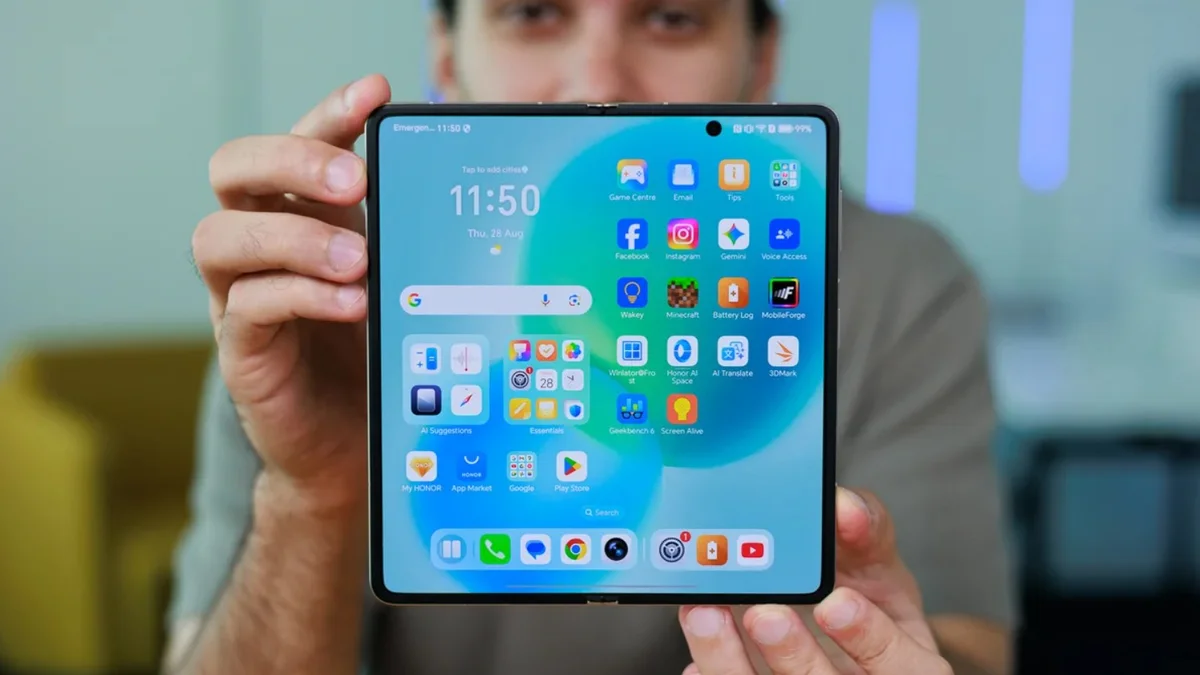
Galaxy Z Fold8: Samsung’s Strategic Response
Central to Samsung’s strategy for maintaining its leadership in the face of Apple’s challenge is the Galaxy Z Fold8. This latest iteration represents a significant design evolution from its predecessor, the Galaxy Z Fold7. Moving away from the previously elongated form factor, the Z Fold8 adopts a wider, more book-like design. This ergonomic shift has been critically acclaimed by analysts, who note that the wider external screen offers a more natural and conventional smartphone experience when the device is closed, mitigating a common criticism of earlier Fold models where the cover screen felt too narrow for comfortable typing and interaction.
When unfolded, the wider internal display of the Z Fold8 provides substantially more screen real estate, a design choice that is particularly pertinent in the current technological climate. The growing integration of artificial intelligence (AI) into smartphone functionalities demands larger, more versatile screens. Modern AI applications on smartphones extend far beyond simple chatbot interactions; they now encompass complex tasks such as summarising extensive documents, advanced content editing (both text and multimedia), sophisticated schedule management, and seamless information transfer between multiple applications. These demanding tasks require the ability to run two or more applications concurrently on a single screen without compromise, a capability that the Z Fold8’s expansive display is uniquely positioned to deliver.
Liz Lee of Counterpoint Research further elaborated on this design philosophy: "With its wider design, Samsung’s latest device can make the foldable experience feel significantly more natural, especially for users who need to keep multiple tasks visible on a single screen, monitor progress, and leverage AI features across various applications." This emphasis on multitasking and AI-driven productivity underscores a strategic vision where the foldable form factor is not just a novelty but a fundamental enabler of next-generation smartphone computing.
Technological Advancements and the AI Imperative
The rapid evolution of foldable technology extends beyond display mechanics. Innovations in hinge durability, ultra-thin glass (UTG), and flexible battery technologies have all contributed to the enhanced robustness and functionality of these devices. Manufacturers are continually refining these components to make foldables thinner, lighter, and more resilient to the rigors of daily use.
The intersection of foldable design and artificial intelligence is perhaps the most compelling trend of 2026. As AI models become more sophisticated and capable of on-device processing, the utility of a larger, adaptable screen becomes paramount. Imagine an AI assistant that can summarize a lengthy email in one panel while allowing the user to draft a response in another, or an AI-powered image editor that provides real-time suggestions on a vast canvas. The ability to seamlessly transition between a compact phone and a tablet-like interface allows users to maximize the potential of these advanced AI capabilities, making foldables not just a luxury item but a productivity powerhouse. This synergy positions foldables at the forefront of the smart device revolution, offering a glimpse into the future of mobile computing.
Addressing the Chip Crisis and Supply Chain Resilience
The resilience of the foldable market in the face of the global memory chip crisis is a testament to both strategic planning by manufacturers and the premium positioning of these devices. The crisis, largely driven by surging demand from data centers and the automotive industry, coupled with production disruptions and geopolitical tensions, has led to shortages and price hikes for critical components like DRAM and NAND flash memory. While this has impacted the supply of lower-margin conventional smartphones, high-end foldable devices, with their significantly higher average selling prices (ASPs), often receive preferential allocation of scarce components.
Manufacturers like Samsung, with integrated supply chains that include memory chip production, possess a distinct advantage in navigating these constraints. They can internally prioritize component allocation for their flagship foldable lines, ensuring a more stable supply compared to brands heavily reliant on external suppliers. This strategic depth allows them to mitigate some of the broader market pressures, enabling continued innovation and production even in challenging economic environments.
The Broader Implications and Future Outlook
The projected growth of the foldable market in 2026, fueled by technological advancements, increasing consumer demand, and the entry of a major player like Apple, signifies a critical turning point for the smartphone industry. The competition is expected to drive further innovation in display technology, hinge design, and software optimization, ultimately benefiting consumers with more durable, versatile, and feature-rich devices.
The shift towards larger, more adaptable screens, particularly with the integration of advanced AI, suggests a future where smartphones transcend their traditional roles, becoming truly intelligent, multi-functional computing hubs. The foldable form factor is uniquely positioned to lead this evolution, offering an unparalleled user experience that adapts to various needs, from communication and content consumption to intensive productivity and creative tasks.
While challenges such as component costs, ongoing supply chain volatility, and the need for continued consumer education remain, the trajectory for foldable smartphones appears undeniably positive. As more manufacturers enter the fray and technology continues to mature, foldables are poised to move from a niche premium segment to a more mainstream offering, fundamentally redefining what a smartphone can be and setting new standards for mobile innovation for years to come.