The French Republic is currently grappling with one of the most volatile domestic crises of the decade, as widespread protests that erupted in mid-October 2026 have spiraled into violent civil unrest across major urban centers. What began as localized student and teacher grievances regarding the crumbling state of the national education system has rapidly metastasized into a broad-based anti-establishment movement. The fervor on the streets reflects a profound societal exhaustion with the rising cost of living, widening economic inequality, and the perceived deterioration of essential public services.
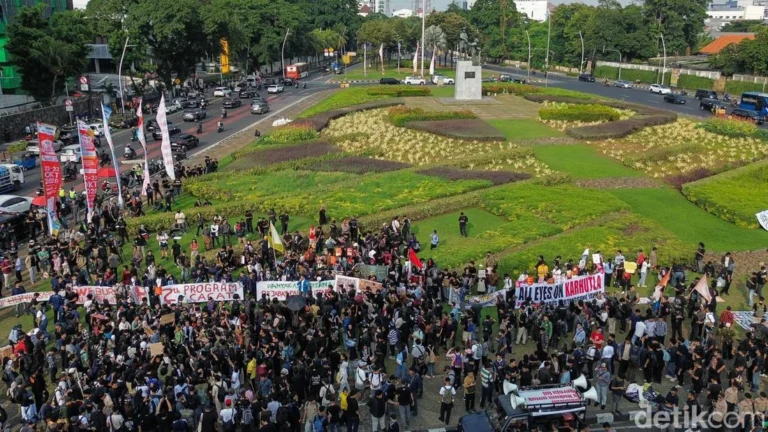
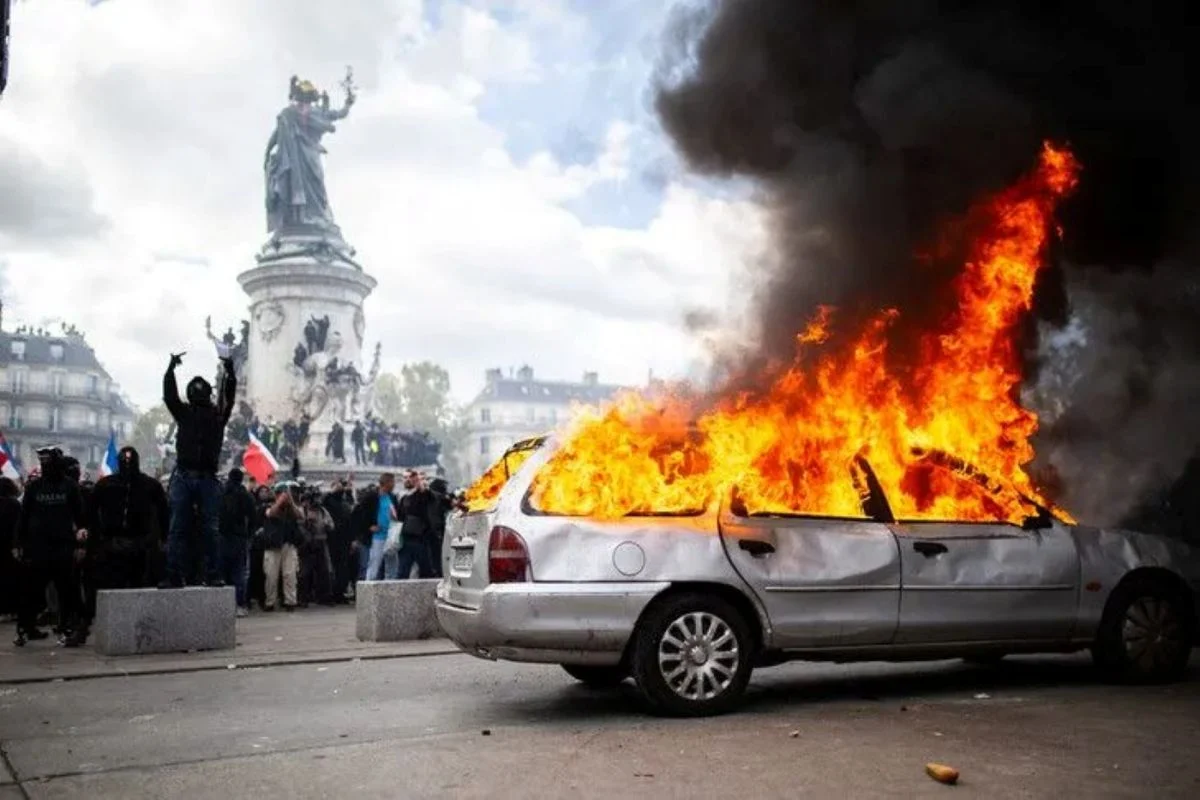
By Saturday, October 17, 2026, the situation reached a boiling point. Hundreds of thousands of demonstrators flooded the thoroughfares of Paris, Marseille, Lyon, Lille, and Bordeaux. While the vast majority of participants initially sought to express their frustrations through peaceful marches, the atmosphere darkened as night fell. Reports from the ground indicate that agitators infiltrated the ranks of protesters, leading to widespread looting, the torching of vehicles, and the destruction of significant public infrastructure.
A Chronology of Escalation
The roots of this unrest can be traced back to mid-September 2026, when school staff at the Lycée Saint-Exupéry in Créteil initiated a strike. Their demands were focused on chronic underfunding, a severe shortage of teachers, and the hazardous state of school buildings. This specific spark found dry tinder in a public already weary of inflation.
- September 17: Initial walkouts at the Lycée Saint-Exupéry signal the start of a localized education-sector labor dispute.
- Early October: Protests spread to universities as students align with faculty, broadening the scope of the grievances to include budget cuts and systemic neglect.
- October 15-16: As word of the protests spreads via social media, labor unions and low-income community groups begin to organize, framing the education crisis as a symptom of a failing social contract.
- October 17: The "Day of Massive Action." Estimates suggest between 550,000 and 800,000 citizens participate nationwide. By evening, significant rioting occurs in multiple cities, including the burning of the Limoges City Hall.
- October 18: Government officials confirm the arrest of 2,400 individuals. The death of one protester in Paris due to cardiac arrest during the chaotic scenes adds a tragic dimension to the weekend’s violence.
The Economic Catalyst: The "Gilets Jaunes" Echo
Economists and sociologists have been quick to draw parallels between the current unrest and the 2018-2019 "Yellow Vests" (Gilets Jaunes) movement. In 2018, it was a proposed fuel tax that served as the catalyst for months of nationwide disruption. In 2026, the frustration is more diffuse but arguably deeper. The cost of living crisis—driven by persistent energy price fluctuations and stagnant wage growth—has left middle- and lower-income families in a precarious position.
For many, the 2026 protests represent an accumulation of grievances that were temporarily masked by short-term fiscal relief measures during the early 2020s. Today, those measures have expired, and the inflationary pressure on daily essentials—groceries, electricity, and transport—has eroded the purchasing power of the average French household. The sense of being "left behind" has transformed the education protest into a wider socio-economic indictment of the current administration’s fiscal priorities.
The Education Crisis as a Symbolic Failure
The focus on the education system is not merely about salaries or building repairs; it is a battle over the future of the French youth. Teachers argue that the lack of resources is not a temporary oversight but a structural failure that creates a two-tier society. When schools in suburbs like Créteil are compared to those in more affluent districts, the disparity becomes a rallying cry for equality.
The involvement of students is particularly significant. Generation Z in France has become increasingly politically active, viewing the lack of investment in their education as a betrayal of the republican promise of social mobility. The convergence of student activists, trade unions, and marginalized workers has created a diverse but potent coalition that is increasingly difficult for the government to ignore or categorize into a single political box.
Official Responses and the Security Challenge
President Emmanuel Macron, addressing the nation on October 18, called for immediate calm while attempting to draw a sharp moral line between legitimate protest and criminal activity. "We must distinguish between the citizen exercising their right to speak and those who seek to use this moment to incite violence and destroy our common heritage," Macron stated.
The Ministry of the Interior, under Laurent Nuñez, has taken a hard-line approach to security. The deployment of thousands of riot police, the use of tear gas, and the mass arrests reflect a government determined to restore order before the situation reaches the scale of an existential threat to the state. However, the sheer number of arrests—2,400 in a single weekend—suggests that the government is facing a challenge that police tactics alone may not resolve.
The government has also begun to blame "far-left extremists" and opportunists for the looting of businesses, including major retailers like Carrefour. While there is evidence that certain groups have exploited the protests, political analysts warn that labeling all protesters as "criminals" risks further radicalizing the moderate participants who feel their economic struggles are being dismissed by the state.
Implications for the 2027 Presidential Horizon
The timing of this unrest is arguably the most critical factor for the French political landscape. With the 2027 presidential election on the horizon, these protests serve as a barometer for the electorate’s mood. Every day that the government fails to provide a viable path to resolving the cost-of-living crisis, the political opposition—both on the far-right and far-left—gains leverage.
The challenge for the current administration is to balance the need for fiscal responsibility with the urgent requirement for social appeasement. If the government opts for austerity to manage national debt, it risks further alienating the working class. If it increases spending to meet the demands of the protesters, it risks upsetting international financial markets and European Union fiscal mandates.
Broader Societal Impact
Beyond the immediate damage to property and the strain on law enforcement, the long-term impact on the French social fabric remains to be seen. The protests have highlighted a growing disconnect between the elite political class in Paris and the realities of life in the provinces.
Furthermore, the scale of the unrest has ripple effects across Europe. With similar frustrations boiling over in other major cities, such as the recent unrest in Milan, the European Union is watching closely. There is an increasing concern that the "European social model"—characterized by strong public services and social safety nets—is under severe strain, and that the inability to maintain this model will lead to a surge in populism across the continent.
Conclusion: A Turning Point for the Republic
The events of mid-October 2026 are more than a series of riots; they are a manifestation of a nation at a crossroads. The government’s ability to move beyond reactive security measures and toward proactive policy engagement will determine whether this period is a temporary bout of turbulence or the beginning of a prolonged political crisis.
As the smoke clears from the streets of Lyon, Paris, and beyond, the fundamental question remains: Can the state address the economic anxieties of its people without compromising the stability of its institutions? For now, the streets remain tense, and the path forward is obscured by a lack of trust between the governed and the governing. The coming weeks will be a definitive test for the resilience of the French democracy, as it struggles to reconcile the demands for social equity with the realities of a globalized, inflationary economy. The silence in the streets, should it come, will be deceptive unless it is accompanied by concrete actions that address the deep-seated grievances of the French people.