Socio Today
The international security landscape has been thrust into a state of acute instability following a series of high-stakes military and diplomatic incidents across the Middle East, Eastern Europe, and South America. On Monday, July 20, 2026, the Islamic Revolutionary Guard Corps (IRGC) of Iran confirmed that two oil tankers were disabled by explosions in the southern reaches of the Strait of Hormuz. This maritime crisis coincides with an unprecedented aerial assault on the Russian capital, where over 400 Ukrainian drones targeted Moscow in a single night, marking one of the largest coordinated UAV strikes in the history of modern warfare. Simultaneously, the diplomatic rift between Washington and Teheran has widened to a perilous gap following a lethal wave of American airstrikes on Iranian soil and defiant rhetoric from Iranian officials comparing their national resilience to that of Venezuela.
Maritime Crisis in the Strait of Hormuz
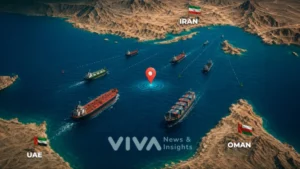
The IRGC issued a formal statement in the early hours of Monday, reporting that two commercial oil tankers suffered catastrophic explosions while attempting to navigate what the Iranian military described as an "unsafe shipping lane" in the southern sector of the Strait of Hormuz. According to the report, which was disseminated via the Anadolu Agency and Reuters, the vessels are currently immobilized and unable to continue their journeys. The IRGC has blamed the incident on the "pressure and coercion" exerted by the United States military, alleging that American naval forces forced the tankers into hazardous corridors to bypass Iranian maritime protocols.
The Strait of Hormuz remains the world’s most important oil transit chokepoint, with approximately one-fifth of the world’s total oil consumption passing through the narrow waterway daily. Any disruption in this region sends immediate shockwaves through global energy markets. The IRGC claimed that a total of four vessels initially ignored Iranian warnings, purportedly acting under the protection of U.S. naval assets. While two of the ships eventually complied with Iranian directives and altered their course, the remaining two continued on their trajectory before the explosions occurred.
Maritime security analysts suggest that this incident represents a significant escalation in the "shadow war" between Teheran and Washington. The Iranian narrative suggests that the explosions were a direct consequence of following U.S. tactical guidance in contested waters, while international observers are calling for an independent investigation to determine if the explosions were caused by external mines, torpedoes, or internal sabotage. The immobilization of these tankers not only threatens local ecology due to potential oil spills but also signals a high risk for commercial shipping in the Persian Gulf.
Unprecedented Drone Offensive on Moscow
While the Middle East grappled with maritime instability, the conflict in Eastern Europe reached a new fever pitch. Moscow Mayor Sergei Sobyanin reported that the Russian capital was the target of a massive, coordinated drone offensive involving more than 400 Ukrainian unmanned aerial vehicles (UAVs). The attack, which began late Sunday evening and continued into the early hours of Monday morning, represents a dramatic shift in Ukraine’s capability to project power deep into Russian territory.
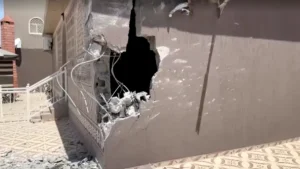
According to Sobyanin, the majority of the drones were intercepted by Russian air defense layers at a significant distance from the city center. However, the sheer volume of the swarm tested the limits of the capital’s "Iron Shield" defense system. Official reports from the Russian government-backed platform MAX indicated that 85 UAVs were destroyed in the immediate vicinity of Moscow. The Mayor’s office emphasized that while the psychological impact of the sirens and interceptions was profound, the military’s response prevented a total catastrophe.
The scale of this attack—utilizing over 400 units—suggests a significant evolution in drone manufacturing and deployment tactics. Military analysts believe that such a "saturation strike" is designed to overwhelm electronic warfare systems and physical interceptors by forcing them to engage hundreds of targets simultaneously. This allows a small percentage of the swarm to potentially slip through the defenses. The Kremlin has vowed a "harsh response" to the incursion, while Kyiv has maintained its policy of strategic ambiguity regarding operations inside Russian borders, though the intent to bring the cost of the war home to the Russian populace remains clear.
The Rising Human Toll of US-Iran Hostilities
The situation within Iran has turned increasingly grim as the Iranian Ministry of Health released updated casualty figures following a series of U.S. airstrikes that began on June 27, 2026. The latest reports indicate that the death toll has surpassed 50 individuals, with 517 others sustained injuries of varying severity.
Hossein Kermanpour, the spokesperson for the Iranian Ministry of Health, detailed the demographic breakdown of the victims to emphasize the humanitarian impact of the strikes. Among the dead are five women and two children. Of the 517 injured, 35 are women and 19 are children. The strikes, which Washington claims are targeted at IRGC infrastructure and proxy coordination centers, have reportedly hit areas in close proximity to civilian populations, leading to the reported collateral damage.
The United States government has characterized these military actions as "precision defensive strikes" intended to degrade Iran’s ability to launch attacks against U.S. interests in the region and to deter further interference with international shipping lanes. However, the mounting civilian casualties have sparked international condemnation and calls for a ceasefire from the United Nations. The Iranian government has utilized these figures to bolster its domestic narrative of "American state terrorism," further entrenching the hardline stance of the current administration in Teheran.
Diplomatic Defiance: Iran is Not Venezuela
In the wake of the military strikes, Iranian Foreign Minister Abbas Araghchi delivered a blistering critique of U.S. foreign policy. In an interview with the Mehr News Agency, Araghchi dismissed the notion that Teheran could be bullied into submission through military force or economic sanctions. He specifically addressed recent comparisons made by American officials between the current situation in Iran and the U.S. intervention in Venezuela.
Araghchi’s comments were a direct response to the January 2026 military operation in which the United States facilitated the removal and arrest of Venezuelan President Nicolas Maduro. Araghchi asserted that the geopolitical and domestic realities of Iran are fundamentally different from those of the South American nation. "The United States must understand that Iran is not Venezuela," Araghchi stated. "Our system of governance is not built upon a single pillar of power. The removal or targeting of one leader will not lead to the collapse of the Islamic Republic."
The Foreign Minister emphasized that Iran’s "strategic depth" and its decentralized power structures—including the IRGC and various clerical councils—ensure that the state can function even under extreme external pressure. By drawing this line, Araghchi is signaling to Washington that the "regime change" playbook used in the Western Hemisphere will not yield the same results in the Middle East. This rhetoric underscores the total breakdown of diplomatic channels, as Teheran prepares for a long-term confrontation.
Argentina’s National Holiday Amidst World Cup Heartbreak
In a stark contrast to the kinetic conflicts in Eurasia, South America focused on the cultural and emotional aftermath of the 2026 FIFA World Cup. Following a grueling final at MetLife Stadium in New Jersey, the Argentine national team fell to Spain with a score of 0-1. Despite the loss, Argentine President Javier Milei took the unconventional step of declaring a national holiday to honor the team’s efforts.
The announcement, made via the social media platform X, praised the "Albiceleste" for their resilience and for "fighting until the very last breath." Milei’s decision to grant a day of rest and reflection to the nation, despite the failure to defend their championship title, was seen by some as a populist move to maintain national morale during a period of economic transition. For many Argentinians, the defeat marked the end of an era, but the President’s declaration sought to transform the mourning of a loss into a celebration of national identity.
While the holiday provided a brief respite for the Argentine public, it stood in sharp relief against the backdrop of the global crises occurring simultaneously. The world of 2026 appears increasingly bifurcated between the spectacle of global sport and the brutal reality of escalating regional wars.
Strategic Implications and Analysis
The convergence of these events suggests a world teetering on the edge of a broader global conflict. The explosions in the Strait of Hormuz and the drone swarms over Moscow are not isolated incidents; they are symptoms of a shifting world order where non-traditional warfare—ranging from drone swarms to maritime sabotage—has become the primary tool of statecraft.
- Energy Security: The disruption in the Strait of Hormuz, if continued, will likely lead to a surge in global oil prices, impacting inflation rates in the West and potentially slowing the global economy. This provides Iran with significant leverage, as it can effectively "hold the world’s gas tank hostage" without declaring a full-scale war.
- The New Face of War: The 400-drone strike on Moscow proves that mass-produced, relatively low-cost technology can now threaten the heart of a nuclear-armed superpower. This forced reassessment of air defense doctrines worldwide will lead to a new arms race centered on electronic warfare and automated interception.
- The Failure of Deterrence: The fact that U.S. strikes in Iran have not led to a de-escalation, but rather to more aggressive maritime actions and defiant rhetoric, suggests that traditional military deterrence is failing. The "Venezuela model" of regime change has evidently hardened the resolve of the Iranian leadership rather than intimidating them.
As the international community moves past July 20, 2026, the focus will remain on whether these flashpoints can be contained or if they are the opening salvos of a more comprehensive global realignment. The coming weeks will be critical as diplomatic bodies attempt to navigate the wreckage in the Strait of Hormuz and the debris on the streets of Moscow.