Socio Today
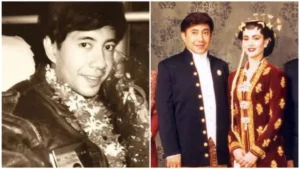
The Indonesian arts community is in deep mourning following the passing of legendary artist and cultural icon Mohammad Guruh Irianto Soekarnoputra. The esteemed composer, choreographer, and multi-disciplinary artist breathed his last at the MRCCC Siloam Hospitals Semanggi in Jakarta on Saturday, September 26, at 4:16 a.m. Western Indonesia Time (WIB), at the age of 73.
The heartbreaking news was officially confirmed to the public by Hasto Kristiyanto, Secretary-General of the Indonesian Democratic Party of Struggle (PDI-P), through a written statement released early Saturday morning. As the youngest son of Indonesia’s founding father and first president, Ir. Soekarno, and former First Lady Fatmawati, Guruh occupied a unique space in the nation’s socio-political and cultural landscape. However, rather than relying solely on his prominent lineage, Guruh forged an entirely independent path as a creative titan, dedicating his entire life to the elevation, preservation, and modernization of Indonesian arts.
His demise marks the end of an era for the archipelago’s creative industry. For over five decades, Guruh stood as a towering pillar of innovation, working seamlessly across music composition, songwriting, choreography, theatrical direction, and large-scale cultural production. His enduring legacy is defined by a relentless dedication to bridging the gap between ancient Indonesian traditions and contemporary Western artistic forms.
A Lifetime Dedicated to the Arts: The Early Years and Cultural Immersion
Guruh’s profound affinity for the arts manifested at an exceptionally young age. According to historical archives from the National Archives of the Republic of Indonesia (ANRI), he began rigorously studying classical and regional traditional dances—spanning Java, Sunda, Bali, Minangkabau, and other cultural regions—long before reaching adolescence.
By the time he was in elementary school, his artistic inclinations had already begun to formalize; he frequently performed on the state television network TVRI alongside a musical ensemble he had personally founded. As he transitioned into his teenage years, Guruh’s focus expanded into songwriting. In 1965, he established the musical group The Beat-G, marking his early entry into contemporary popular music composition.
His artistic evolution accelerated exponentially into the 1970s. In 1970, he formed another musical collective named The Flower Poetman. Concurrently, he deepened his immersion in traditional arts, actively participating in a Balinese gamelan group, engaging in theatrical training, and organizing student-led angklung and Javanese gamelan troupes within the educational institution Perguruan Cikini.
When he traveled to the Netherlands in the early 1970s to pursue higher education at the Universiteit van Amsterdam, his commitment to Nusantara arts did not wane. Instead, it intensified. Guruh integrated himself into the Javanese and Balinese gamelan groups operating out of the Tropen Museum in Amsterdam. Demonstrating a level of mastery that transcended mere appreciation, he took on the role of an instructor, teaching Balinese gamelan and traditional dance to European audiences.
This international exposure profoundly shaped his creative philosophy. It cemented his conviction that modern music and global artistic expressions did not require the erasure or abandonment of local cultural heritage. Rather, tradition could serve as the bedrock for modern innovation.
The Groundbreaking Era of Guruh Gipsy
Upon returning to Indonesia in 1975, Guruh embarked on what would become one of the most defining chapters in the history of Indonesian popular music: the creation of the avant-garde experimental project, Guruh Gipsy.
Collaborating with the progressive rock band Gipsy, Guruh spearheaded an unprecedented fusion of traditional Balinese gamelan and Western progressive rock. The supergroup featured a stellar lineup of Indonesian musical royalty: Keenan Nasution on drums and vocals, Chrisye on bass and vocals, Roni Harahap on piano and keyboards, Oding Nasution on guitars, and Abadi Soesman on synthesizers. Guruh himself anchored the project by playing the piano and traditional gamelan while concurrently steering the lyrical and conceptual direction.
The self-titled album, Guruh Gipsy, was released in 1976 after an intensive production period that began the year prior. Featuring monumental tracks such as "Geger Gelgel," "Barong Gundah," "Smaradhana," "Indonesia Maharddhika," "Janger 1897 Saka," and "Chopin Larung," the record is universally acknowledged by music historians as a watershed moment in Indonesian music history.
Crucially, the project transcended mere sonic experimentation. Guruh utilized the platform to articulate deep philosophical reflections on national identity, cultural preservation, and the anxieties of a rapidly modernizing society. "Indonesia Maharddhika" emerged as a towering anthem of national pride, while "Smaradhana" achieved widespread commercial and critical acclaim largely propelled by the ethereal vocals of the late Chrisye.
The enduring cultural resonance of this project was underscored decades later at Synchronize Fest 2025. In a poignant reunion, Guruh—alongside surviving core members Keenan Nasution and Abadi Soesman—took to the stage to perform selections from Guruh Gipsy. Supported by a new generation of musicians and artists, the performance served as both a celebration of Indonesia’s musical heritage and a moving tribute to departed members such as Chrisye, Roni Harahap, and Oding Nasution.
Expanding the Canon: From Pop Anthems to Disco-Traditional Fusions
Guruh’s creative output extended far beyond progressive rock experiments. In 1976, his compositional mastery was recognized when his song "Renjana" won the National Pop Song Festival, subsequently earning Indonesia a spot at the prestigious World Popular Song Festival in Tokyo, Japan.
This victory opened the floodgates for a prolific songwriting career that permanently enriched the Indonesian pop canon. He penned timeless classics that defined generations, including "Galih dan Ratna," "Gita Cinta," "Anak Jalanan," "Lenggang Puspita," "Sendiri," and "Marlina."
Another crowning achievement of this era was the track "Kembalikan Baliku," performed brilliantly by Jopie Latul. The song once again carried Guruh’s name to the National Pop Song Festival and the World Popular Song Festival in Tokyo. In this specific composition, Guruh achieved a seamless hybrid of traditional Balinese instrumentation with upbeat disco and rock arrangements—a structural pattern that would become his artistic signature: fiercely modern yet unmistakably Indonesian.
Swara Maharddhika and the Birth of Colossal Stage Productions
In 1977, demonstrating visionary institutional leadership, Guruh established Swara Maharddhika, an organization designed to cultivate the artistic talents of Indonesian youth.
Under this banner, Guruh’s expansive visions for music, dance, and theatrical performance evolved into grand, large-scale stage productions. He pioneered a distinct aesthetic that harmonized traditional Indonesian choreography with modern Western dance forms, packaging them in accessible formats that resonated deeply with the broader public.
This initiative gave birth to a legendary series of landmark concerts known as the Pergelaran Karya Cipta Guruh Soekarno Putra. Beginning with the inaugural concert in 1979, the series continued with monumental productions such as "Untukmu Indonesiaku" (1980), "Cinta Indonesia" (1984), and "Gilang Indonesia Gemilang" (1986).
These productions shattered conventional boundaries by refusing to treat music as an isolated medium. Instead, they integrated live music, intricate choreography, avant-garde costume design, elaborate stage architecture, and deep theatrical storytelling into a unified, cohesive spectacle. In these massive productions, Guruh routinely wore multiple hats: composer, lyricist, choreographer, and artistic director.
His collaborative prowess and capacity for colossal staging led to national commissions, including the opening ceremonies of the 10th National Sports Week (PON) in Jakarta in 1981, the Jakarta Fair in 1982, Gempita Swara Maharddhika in 1987, and the monumental theatrical presentation "JakJakJakJak Jakarta" in 1989.
Institutional Growth and Mentorship of Industry Icons
As Swara Maharddhika expanded its influence, it transitioned into the Swara Maharddhika Foundation in 1988. Simultaneously, Guruh established PT Gencar Semarak Perkasa (GSP Productions) to professionalize and commercialize the performing arts sector.
Under his guidance, GSP Productions took Indonesian culture to the global stage, executing high-profile international tours across Singapore, Morocco, Tunisia, Jordan, Germany, Belgium, Denmark, Sweden, Switzerland, and Australia.
Beyond his creative output, Guruh’s most enduring institutional legacy may well be the human capital he nurtured. The ecosystem of Swara Maharddhika served as an incubator for countless artists who would go on to dominate the Indonesian entertainment landscape. Notable alumni nurtured under his wing include Titi DJ, Deni Malik, Dewi Gita, Memes, Irianti Erningpraja, Euis Dahlia, and Rico Tampatty. Through these mentorships, Guruh ensured that his artistic ethos would be transmitted to future generations of performers and cultural workers.
Ventures into Cinema and Comprehensive Artistic Mastery
Guruh’s creative footprint also left an indelible mark on Indonesian cinema. He made significant contributions as a film scorer, composing memorable musical illustrations for iconic cinematic works such as Ali Topan Anak Jalanan, Gita Cinta dari SMA, and Puspa Indah Taman Hati. His contributions to film were officially recognized in 1977 when he won the Citra Award for Best Musical Arrangement at the Indonesian Film Festival (FFI).
Expanding his physical presence in the arts, Guruh stepped in front of the camera to portray the revered historical figure Sunan Muria in the 1985 biographical film Wali Songo.
As a choreographer, he was tireless in his mission to bridge classical indigenous movement vocabularies with contemporary idioms. His foundational training under renowned Balinese masters—such as I Wayan Diya, I Wayan Rindi, Anak Agung Ayu Oka, Ni Ketut Reneng, I Nyoman Kakul, and I Gusti Kompyang Raka—alongside musical tutelage from maestros like Mochtar Embut and Ismail Marzuki, ensured that his modern output remained deeply rooted in authentic technical mastery.
Cross-Generational Resonance and Lasting Legacy
Guruh’s vast catalog of work possessed a timeless quality that consistently found renewed relevance across subsequent generations of listeners and performers.
In 2014, the tribute concert Salute to Guruh Soekarno Putra breathed new life into 25 of his classic compositions, reinterpreted through contemporary arrangements by a diverse roster of modern Indonesian artists. Tracks like "Zamrud Khatulistiwa," "Kembalikan Baliku," "Galih dan Ratna," and "Gita Cinta dari SMA" were introduced to a younger demographic.
Further cementing his cross-generational appeal, Musica Studios released a compilation album in 2020 titled Puspa Ragam Karya Guruh Sukarno Putra 2020. The album featured ten of his most celebrated compositions reimagined by contemporary heavyweights of the Indonesian music industry, including Noah, Iwan Fals, D’MASIV, Kahitna, Afgan, Geisha, Sheryl Sheinafia, and Vidi Aldiano. The tracklist included enduring standards such as "Kala Cinta Menggoda," "Aji Mumpung," "Sendiri," "Kala Sang Surya Tenggelam," and "Zamrud Khatulistiwa." These modern renditions proved unequivocally that Guruh’s songwriting was not bound to a single decade, but possessed an organic elasticity capable of adapting to evolving musical sensibilities.
True to his lifelong dedication, Guruh remained an active voice in cultural discourse until his final days. As recently as January 2026, he made a public appearance at a media gathering for the theatrical musical Bukan Cinta Galih/Ratna, where he passionately articulated the vital role of the arts as an indispensable medium for character-building and value transmission among the nation’s youth.
The trajectory of Guruh Soekarnoputra’s life offers a clear, unwavering thematic thread: a lifelong crusade to embed Indonesian cultural identity into contemporary artistic mediums that could capture the spirit of the times. He steadfastly rejected the false dichotomy that tradition and modernity must exist in opposition, instead proving that they could coexist harmoniously within a single melody, choreography, or theatrical production.
Though Guruh Soekarnoputra has left the physical stage, the expansive cultural architecture he built remains vibrantly alive. For the Indonesian arts community, his legacy transcends the impressive inventory of hit songs, theatrical spectacles, and awards. He leaves behind the profound ideological framework that popular culture can—and should—serve as a sanctuary for national identity, a vehicle for traditional heritage, and a dynamic language with which to converse with the modern world.