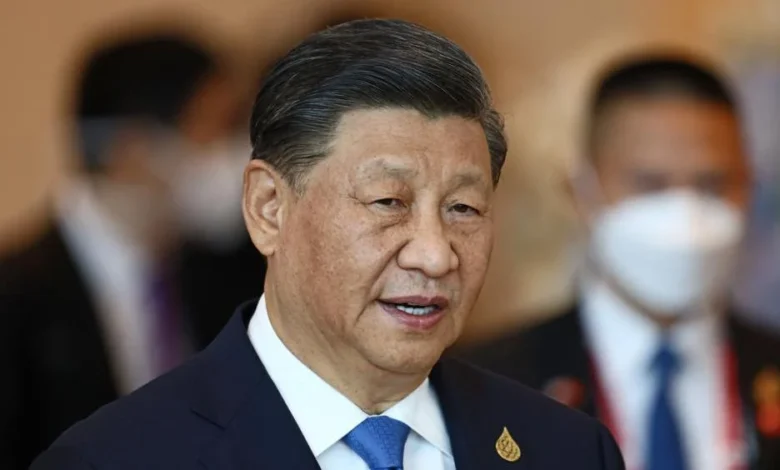
President Xi Jinping of China has issued a high-level appeal for the absolute respect of national sovereignty and territorial integrity among Middle Eastern nations, signaling Beijing’s intent to deepen its diplomatic footprint in the region as tensions between Washington and Tehran reach a critical breaking point. Speaking through state media following a weekend of failed diplomatic efforts in South Asia, President Xi emphasized that China would maintain a "constructive role" in facilitating peace talks and de-escalating the volatile situation that currently threatens global energy security and regional stability.
The Chinese leader’s remarks come at a moment of acute international anxiety. On Tuesday, April 14, 2026, reports from Beijing confirmed that Xi’s administration is closely monitoring the fallout from the collapse of a highly anticipated round of peace negotiations between the United States and Iran. These talks, held in Pakistan over the previous weekend, were intended to bridge the gap between Washington’s demands for nuclear concessions and Tehran’s requirements for sanctions relief. However, the discussions ended without a consensus, triggering a swift and aggressive shift in American foreign policy.
In the immediate aftermath of the failed negotiations, United States President Donald Trump ordered a comprehensive naval blockade of the Strait of Hormuz and key Iranian ports. This move, which began on Monday, April 13, was characterized by the White House as a necessary response to Tehran’s refusal to abandon its nuclear ambitions. The blockade aims to halt all maritime traffic associated with Iranian trade, effectively attempting to sever the Islamic Republic’s economic lifeline.
The Escalation of Naval Hostilities
The imposition of the naval blockade has transformed the Persian Gulf into a potential theater of direct military confrontation. President Trump’s administration has signaled that the "maximum pressure" campaign has entered a kinetic phase, citing the failure of the Pakistan summit as proof that traditional diplomacy has reached its limits. The U.S. Navy’s Fifth Fleet, based in Bahrain, has reportedly been tasked with enforcing the perimeter around the Strait of Hormuz, a narrow waterway through which roughly one-fifth of the world’s total oil consumption passes.
Tehran’s response was immediate and defiant. The Iranian military issued a stern warning that if its ports are rendered unusable by foreign intervention, no other port in the Gulf region—including those of U.S. allies—will be safe from retaliation. Iranian officials have condemned the blockade as an act of "maritime piracy" and a violation of international law. The rhetoric from Tehran suggests a willingness to engage in asymmetric warfare to break the siege, raising the specter of mine-laying, drone strikes, and missile deployments in the congested shipping lanes.
In this context, President Xi’s statement, broadcast by CCTV, serves as both a critique of unilateral military action and a proposal for a multilateral diplomatic alternative. "The sovereignty, security, and territorial integrity of the Gulf countries in the Middle East must be sincerely respected," Xi stated. He reiterated that China’s preference remains rooted in dialogue rather than conflict, positioning Beijing as a stabilizing force capable of communicating with all parties involved.
A Chronology of the Crisis
To understand the gravity of the current situation, one must look at the rapid sequence of events that led to the April 2026 blockade:
- Early April 2026: Under the mediation of Islamabad, representatives from the U.S. State Department and the Iranian Foreign Ministry agreed to meet in Pakistan for a "final attempt" at reviving a framework for regional stability and nuclear oversight.
- April 11-12, 2026: The Pakistan talks took place. Despite initial optimism, the parties remained deadlocked over the verification process for nuclear decommissioning and the timeline for the lifting of petroleum sanctions.
- April 12, 2026 (Evening): The talks were officially declared a failure. President Trump released a statement expressing "extreme dissatisfaction" with the Iranian delegation’s stance.
- April 13, 2026: The White House issued an executive order authorizing the U.S. Navy to intercept and turn back vessels entering or exiting Iranian territorial waters. The blockade was implemented by midday.
- April 14, 2026: President Xi Jinping and the Chinese Ministry of Foreign Affairs issued their formal response, calling for a return to the negotiating table and the protection of sovereign rights.
China’s Strategic and Economic Interests
China’s vocal involvement is not merely a matter of diplomatic principle; it is a necessity driven by economic reality. As the world’s largest importer of crude oil, China is heavily dependent on the stability of the Middle East. Any prolonged disruption to the flow of oil through the Strait of Hormuz would have catastrophic effects on the Chinese industrial sector and the broader global economy.
Data from energy analysts suggests that a total closure of the Strait could send Brent crude prices soaring above $150 per barrel within days. For China, which sources nearly 50% of its oil from the Persian Gulf, such a price spike would threaten its post-pandemic economic recovery and the viability of its Belt and Road Initiative (BRI) projects across Eurasia and Africa.
Furthermore, Beijing has spent the last several years cultivating a reputation as a "neutral arbiter" in the Middle East. Following its successful mediation of the Saudi-Iran rapprochement in 2023, China has sought to present its "Global Security Initiative" as a more viable alternative to the Western model of security alliances. By calling for the respect of sovereignty, Xi is directly challenging the legitimacy of U.S.-led blockades while reinforcing the idea that regional issues should be solved by regional players with the support of responsible global powers.
Official Reactions and Diplomatic Maneuvers
Adding detail to the President’s remarks, Chinese Ministry of Foreign Affairs spokesperson Guo Jiakun held a press briefing in Beijing to outline the specific expectations of the Chinese government. Guo expressed deep concern that the collapse of the Pakistan talks could ignite a full-scale war.
"China hopes that the relevant parties will abide by the previous temporary ceasefire agreements and continue to resolve disputes through political and diplomatic means," Guo told reporters. He emphasized the need to "avoid the resurgence of war and create conditions for the return of peace and tranquility in the Gulf region as soon as possible."
Crucially, Guo also called for "unimpeded navigation" through the Strait of Hormuz. This is a pointed message to both the United States and Iran. It signals to Washington that its blockade is viewed as a disruption to international trade, and it signals to Tehran that any attempt to close the Strait in retaliation would be viewed unfavorably by Beijing.
International reactions have been divided. European Union officials have expressed "grave concern" over the blockade, urging both sides to exercise restraint, while some regional allies of the United States have quietly bolstered their own maritime defenses in anticipation of Iranian counter-strikes. In Pakistan, the government expressed regret that the talks on its soil did not yield a breakthrough, reaffirming its commitment to hosting future dialogues if requested.
Analysis of Implications
The current standoff represents a significant test of the "Constructive Role" doctrine that President Xi Jinping has championed. If China can successfully leverage its economic influence over Iran and its diplomatic channel with Washington to pause the blockade, it would solidify its status as a top-tier global mediator. However, the risks are immense.
A brief analysis of the potential implications reveals several critical paths:
- Global Energy Crisis: If the U.S. blockade continues and Iran retaliates by targeting tankers from other nations, the resulting insurance hikes and physical risks could halt maritime traffic entirely, leading to a global energy shortage.
- Military Miscalculation: With U.S. and Iranian naval assets operating in close proximity under aggressive rules of engagement, the risk of an accidental skirmish escalating into a regional war is at its highest point in decades.
- Shift in Alliances: The blockade may push Iran further into the strategic embrace of the BRICS nations, particularly China and Russia, as it seeks alternative economic routes and political protection against Western pressure.
- Erosion of International Norms: China’s emphasis on "sovereignty" highlights a growing divide in international law interpretations. While the U.S. views the blockade as a tool of enforcement against a non-compliant state, China views it as a violation of the UN Charter’s principles of non-interference.
Conclusion and Future Outlook
As of the afternoon of April 14, the maritime blockade remains in effect, and the world waits to see if the U.S. will allow any exceptions for humanitarian goods or if the "total blockade" will be strictly enforced. President Xi’s call for respect of sovereignty serves as a reminder that the Middle East is no longer a region where Western powers can act without considering the interests and reactions of a multi-polar world.
The "constructive role" promised by Beijing will likely manifest in the coming days through intense "shuttle diplomacy" between Beijing, Tehran, and Washington. For now, the focus remains on preventing the first shot from being fired in a conflict that neither the global economy nor the regional population can afford. The success or failure of this diplomatic intervention may well define the geopolitical landscape of the late 2020s.