Socio Today
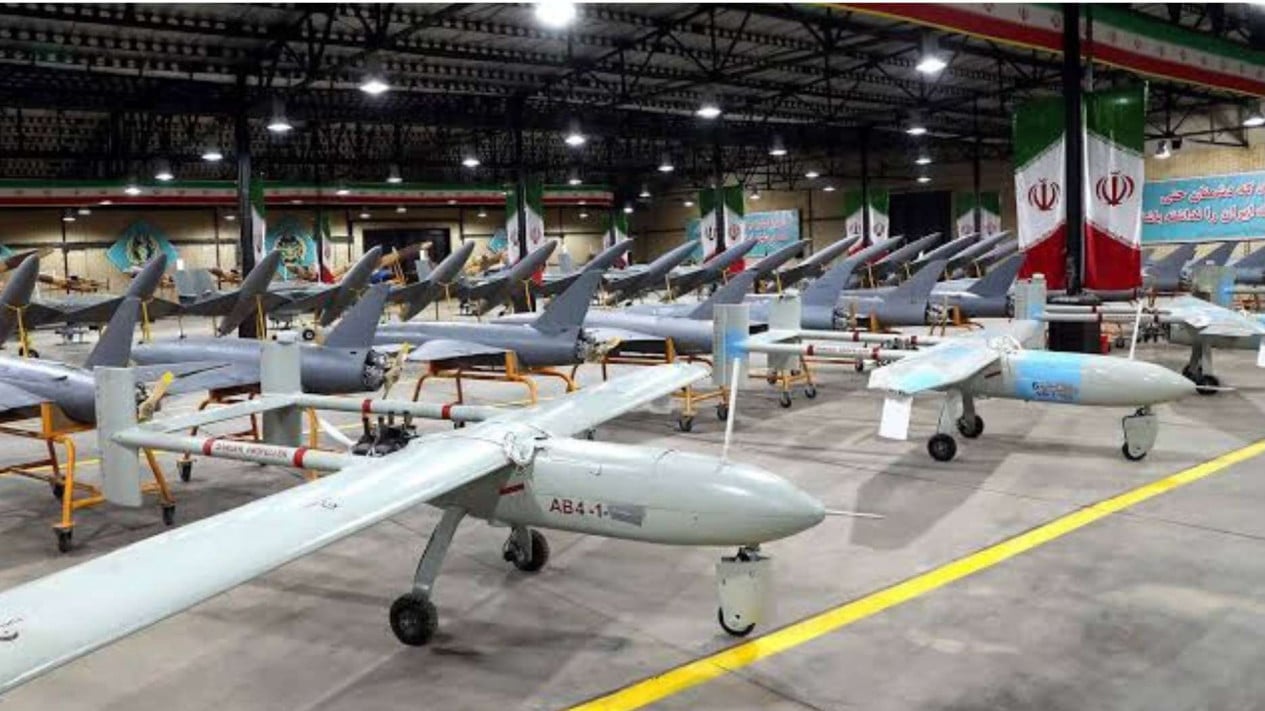
The Iranian military has officially announced a series of large-scale drone strikes targeting two critical United States military installations located within Kuwaiti territory. This significant escalation, confirmed via Iranian state media outlets including IRIB and reported by Anadolu, marks a sharp departure from recent diplomatic efforts and signals a dangerous new phase in the ongoing confrontation between Tehran and Washington. According to the Iranian military’s statement, the coordinated offensive utilized a "large-scale" swarm of unmanned aerial vehicles (UAVs) to strike high-value targets, specifically focusing on logistics and defensive infrastructure utilized by American forces in the Persian Gulf region.
The announcement specified that the primary targets were a major ammunition warehouse located at Camp Al Adiri and the sophisticated defense systems stationed at the Ali Al Salem Air Base. The latter reportedly included Patriot missile batteries and advanced air defense radar installations. This move is seen by regional analysts as a direct challenge to the United States’ defensive umbrella in the Middle East and an attempt to degrade the logistical capabilities of the U.S. Central Command (CENTCOM) in the wake of recent American strikes on Iranian soil.
Details of the Aerial Offensive
On the afternoon of Sunday, July 19, 2026, residents in the vicinity of the targeted bases reported hearing multiple explosions and seeing streaks of interceptor missiles in the sky. The Iranian military claimed that their drone swarm successfully bypassed several layers of electronic warfare and kinetic defenses to reach their objectives. At Camp Al Adiri—a facility often used for joint training and as a staging ground for U.S. armored units—the strike focused on a munitions storage area, leading to secondary explosions that were reportedly felt several kilometers away.
Simultaneously, the Ali Al Salem Air Base, which serves as a pivot point for U.S. Air Force operations in the region, came under heavy fire. Tehran claims its drones specifically targeted the radar arrays necessary for the operation of the MIM-104 Patriot surface-to-air missile systems. By targeting these assets, the Iranian military aims to create "blind spots" in the regional surveillance network, potentially making future sorties more difficult for coalition forces to detect and intercept.
Kuwait’s Defensive Response and Public Safety
The Kuwaiti military issued a separate, urgent statement confirming that its armed forces were actively responding to "missile and drone threats" appearing in their airspace. The Kuwaiti Ministry of Defense, communicating via the social media platform X, clarified that the thunderous booms heard across the northern and central districts of the country were the result of active air defense systems engaging "hostile targets."
"Any explosions that may be heard are the result of air defense systems intercepting enemy targets," the Kuwaiti armed forces stated, urging the civilian population to remain calm but vigilant. The government has implemented emergency protocols, advising citizens and residents to follow all safety directives issued by the Ministry of Interior and to avoid areas surrounding military zones. For Kuwait, a nation that has long attempted to maintain a delicate balance between its strategic partnership with the United States and its proximity to Iran, this direct spillover of conflict represents a worst-case security scenario.
The Fragile Peace: The Failure of the Pakistan-Mediated MOU
The current hostilities are particularly jarring given the diplomatic breakthrough that occurred just weeks ago. In June 2026, representatives from Tehran and Washington met in Islamabad, Pakistan, to sign a Memorandum of Understanding (MOU). This agreement, facilitated by the Pakistani government and supported by several international observers, was intended to establish a framework for a lasting ceasefire and a roadmap toward a comprehensive peace treaty.
The MOU had stipulated a cessation of direct attacks on sovereign territories and a freeze on the expansion of military footprints in contested zones. However, the "Islamabad Accord" proved to be short-lived. Throughout early July, both sides exchanged accusations of "bad faith" and technical violations of the agreement. Iran claimed that the U.S. continued to conduct covert operations against its nuclear and missile research facilities, while Washington accused Tehran of continuing to fund and arm proxy groups targeting maritime traffic in the Strait of Hormuz.
Chronology of the July 2026 Escalation
The path to the July 19 drone strikes was paved by a week of intense military exchanges:
- July 12, 2026: Tensions spiked when the U.S. Navy intercepted an Iranian-flagged vessel allegedly carrying advanced guidance systems for ballistic missiles. Tehran condemned the seizure as "piracy."
- July 14, 2026: CENTCOM announced that U.S. aircraft had launched "precision strikes" against several locations inside Iran, targeting what they described as "command and control centers" responsible for recent maritime harassment.
- July 16, 2026: Iran’s Supreme National Security Council vowed a "crushing response" at a time and place of their choosing, declaring the June MOU null and void due to American "aggression."
- July 18, 2026: Reports emerged of significant Iranian troop and drone movements along the northern coast of the Persian Gulf.
- July 19, 2026 (16:59 WIB): The Iranian military officially declares the commencement of strikes against U.S. assets in Kuwait, citing them as retaliation for the American strikes earlier in the week.
Technical Analysis: The Shift to Asymmetric Drone Warfare
Military analysts suggest that Iran’s choice to use drones rather than ballistic missiles in the Kuwait strikes was a calculated strategic move. Drones, particularly "suicide" or loitering munitions, offer a higher degree of deniability and can be launched in swarms to overwhelm even the most advanced air defense systems like the Patriot.
"By targeting the radar and the Patriot batteries themselves, Iran is attempting to demonstrate that the U.S. ‘shield’ is not impenetrable," said Dr. Elias Thorne, a senior fellow at the Middle East Security Institute. "Using drones allows them to navigate around traditional radar signatures and strike at the very systems designed to protect the bases. It is a classic asymmetric tactic designed to maximize psychological impact while minimizing the cost to the attacker."
Furthermore, targeting bases in Kuwait—rather than those in more distant locations—serves as a warning to other Gulf Cooperation Council (GCC) members. Tehran is effectively signaling that any nation hosting U.S. military assets is liable to become a theater of war if the U.S. continues its strikes against Iranian territory.
Geopolitical Implications and Host Nation Dilemmas
The strikes place the Kuwaiti government in an incredibly difficult position. Kuwait has historically served as a logistical hub for the U.S. military since the 1990s, but it also shares a maritime border with Iran and a complex history of regional diplomacy. The involvement of Kuwaiti airspace and territory in a direct U.S.-Iran kinetic conflict risks destabilizing the domestic economy and threatening the safety of its citizens.
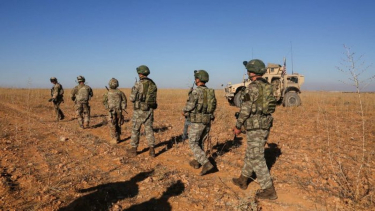
Across the region, other host nations such as Qatar, Bahrain, and the United Arab Emirates are likely reviewing their security protocols. If Iran continues to target "facilities and bases used by the U.S. military" in neighboring countries, the diplomatic pressure on these nations to limit U.S. operations will undoubtedly increase. This could lead to a fracturing of the regional security architecture that has been a cornerstone of American influence in the Middle East for decades.
Global Economic and Humanitarian Concerns
The immediate impact of the July 19 strikes was felt in the global energy markets. As news of the explosions at Ali Al Salem and Camp Al Adiri broke, Brent crude oil prices jumped by 4.5%, reflecting fears of a broader disruption in the Persian Gulf’s shipping lanes. The proximity of the strikes to major oil infrastructure in Kuwait—one of the world’s leading oil exporters—has put traders on high alert.
On the humanitarian front, international organizations are expressing concern over the potential for civilian casualties. While the strikes were aimed at military installations, the use of drone swarms carries an inherent risk of "collateral damage" if a drone is intercepted over a populated area or if it veers off course. The Kuwaiti government’s call for public adherence to security directives underscores the very real danger posed to the millions of civilians living in the metropolitan areas near these military hubs.
The Role of International Mediators
With the Pakistan-mediated MOU now in tatters, the international community is scrambling to prevent a total descent into regional war. The United Nations Security Council is expected to hold an emergency session to address the breach of Kuwaiti sovereignty and the breakdown of the peace process.
Pakistan, as the previous mediator, has expressed "deep regret" over the escalation and has called on both parties to exercise maximum restraint. However, the effectiveness of diplomatic intervention is currently at its lowest point in years. The "tit-for-tat" nature of the current conflict—where every U.S. strike is met with an Iranian counter-strike on regional allies—creates a cycle of violence that is notoriously difficult to break.
Future Outlook
As the sun sets on July 19, 2026, the situation remains extremely volatile. CENTCOM has yet to release a full damage assessment of the strikes in Kuwait, but sources suggest that the U.S. is already preparing a "proportional response." If the U.S. chooses to strike Iranian territory again, the cycle will likely repeat, potentially drawing in more regional actors and leading to a conflict that the June MOU was specifically designed to avoid.
The Iranian military’s bold move to strike Kuwaiti bases signifies a "no-holds-barred" approach to their defense strategy. By broadening the battlefield to include third-party host nations, Tehran is gambling that the political cost for the U.S. to stay in the region will eventually outweigh the strategic benefits. For now, the world watches the Persian Gulf with bated breath, as the shadow of a wider war looms larger than ever before.