Socio Today
The geopolitical landscape of the Middle East has entered a period of unprecedented volatility following reports that Hamshahri, a prominent media outlet closely affiliated with the Iranian government, has published a "retaliation list" featuring 13 high-ranking global political figures. This development comes in the immediate wake of the reported death of Iran’s Supreme Leader, Ayatollah Ali Khamenei, an event that has fundamentally shifted the power dynamics within the Islamic Republic and escalated tensions with Western powers to a boiling point. The publication, presented as a detailed infographic, explicitly names leaders from the United States, Israel, and several European nations, labeling them as the primary targets for "divine revenge" and national retribution.
The infographic, which has circulated widely on social media and state-aligned digital platforms, depicts the 13 individuals in orange jumpsuits—imagery historically associated with captives and detainees—and features crosshair overlays on the portraits of several prominent figures, including U.S. President-elect Donald Trump and Israeli Prime Minister Benjamin Netanyahu. This provocative visual message is accompanied by text asserting that these individuals bear direct responsibility for the joint military action that led to the demise of Ali Khamenei. While the Iranian government has not formally adopted this list as an official diplomatic document, its appearance in a publication controlled by the municipality of Tehran and aligned with the hardline establishment suggests a coordinated effort in strategic communication and psychological warfare.
The Transition of Power and the Vow of Vengeance
The publication of the target list coincides with the ascension of Ayatollah Mojtaba Khamenei, the son of the late Supreme Leader, who has reportedly assumed the mantle of leadership in a swift transition. In his inaugural address to the nation, Mojtaba Khamenei emphasized that the blood of his father would not go unavenged, describing the pursuit of those responsible as a "sacred national demand." His rhetoric indicates a continuation, and perhaps an intensification, of the "Axis of Resistance" policy that characterized his father’s decades-long rule.
The context of this escalation is rooted in a reported joint operation between the United States and Israel. While details of the strike remain classified and subject to varying accounts, the Iranian leadership has characterized the event as a direct violation of sovereignty and an act of war. The transition to Mojtaba Khamenei’s leadership is seen by analysts as a move to ensure continuity within the clerical establishment, though it also signals a potential shift toward a more aggressive military posture as the new leader seeks to consolidate his domestic authority through a display of strength.
Profiles of the Thirteen Targeted Figures
The list published by Hamshahri is notable for its breadth, targeting not only the primary military adversaries in Washington and Tel Aviv but also key European leaders who have supported sanctions or military cooperation against Tehran. The 13 individuals identified in the report include:
- Donald Trump (President of the United States): Cited for his historical "Maximum Pressure" campaign and his perceived role in authorizing the operations that culminated in the recent strike.
- Benjamin Netanyahu (Prime Minister of Israel): Identified as the primary architect of regional opposition to Iran and the leader of the military forces directly involved in the escalation.
- Israel Katz (Defense Minister of Israel): Targeted for his oversight of the Israeli Defense Forces (IDF) and strategic planning against Iranian interests.
- Pete Hegseth (U.S. Secretary of Defense): Named as a key figure in the American military hierarchy responsible for coordinating operations in the Middle East.
- Marco Rubio (U.S. Secretary of State): Included for his long-standing hawkish stance on Iran and his role in shaping American foreign policy and sanctions.
- Emmanuel Macron (President of France): Targeted due to France’s diplomatic pressure on Iran and its support for maritime security initiatives in the Persian Gulf.
- Keir Starmer (Prime Minister of the United Kingdom): Listed for the UK’s continued military presence in the region and its alignment with U.S. strategic goals.
- Friedrich Merz (Chancellor of Germany): Cited for Germany’s role in European Union sanctions and its firm stance against Iran’s nuclear program.
- Giorgia Meloni (Prime Minister of Italy): Included as part of the broader European coalition supporting Western security interests in the Mediterranean and Middle East.
- Mike Huckabee (U.S. Ambassador to Israel): Targeted for his diplomatic role in strengthening the U.S.-Israel alliance.
- Brad Cooper (Commander of CENTCOM): As a top military commander, he is seen as the operational face of American military power in the region.
- Gideon Sa’ar (Foreign Minister of Israel): Named for his role in mobilizing international support against the Iranian government.
- Additional High-Ranking Officials: The list also includes secondary figures within the defense and intelligence communities of the mentioned nations.
The inclusion of European leaders like Macron, Starmer, and Merz suggests that Tehran is attempting to hold the entire Western alliance accountable, moving beyond its traditional focus on the "Great Satan" (USA) and the "Little Satan" (Israel).
Chronology of Escalation and Regional Instability
The current crisis did not emerge in a vacuum. It is the culmination of a multi-year trajectory of deteriorating relations.
- Phase One: The Breakdown of Diplomacy. Following the collapse of various attempts to revive the Joint Comprehensive Plan of Action (JCPOA), Iran significantly increased its uranium enrichment levels, prompting heightened surveillance and covert operations by Western intelligence agencies.
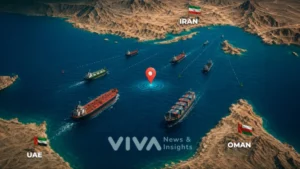
- Phase Two: Maritime Confrontations. Tensions spiked in the Strait of Hormuz, a critical chokepoint for global oil supplies. Recent reports indicate that India has prohibited its citizens from working on vessels transiting the strait due to the high risk of seizure or missile attacks by Iranian-backed forces.
- Phase Three: The Fatal Strike. The reported joint U.S.-Israeli operation that resulted in the death of Ali Khamenei served as the ultimate catalyst. This event shattered the status quo and forced a leadership transition in Tehran under the most pressurized circumstances imaginable.
- Phase Four: The New Leadership’s Response. The rise of Mojtaba Khamenei and the subsequent release of the "retaliation list" by Hamshahri mark the beginning of a new, more dangerous phase of the conflict.
Security Implications and International Reactions
The publication of such a specific target list has immediate and profound security implications. Intelligence agencies in the United States and Europe are likely to increase the security details for the named individuals. Furthermore, the use of "crosshair" imagery is viewed by security experts as an incitement to "lone wolf" attacks or operations by proxy groups such as Hezbollah or various militias in Iraq and Syria.
While Western governments have largely dismissed the list as "crude propaganda," they are not ignoring the threat. A spokesperson for the U.S. State Department, while not commenting directly on the Hamshahri report, emphasized that the United States would take "all necessary measures" to protect its officials and allies. In Israel, the security cabinet has reportedly met to discuss the potential for increased asymmetric threats following the change in Iran’s leadership.
The broader impact on global markets is also evident. The threat of instability in the Persian Gulf has led to fluctuations in global oil prices. Analysts warn that if Iran attempts to follow through on its rhetoric by targeting maritime commerce or regional infrastructure, the economic fallout could be felt worldwide. The Iranian parliament has already signaled that "security in the Strait of Hormuz depends on the arrangements made by Tehran," a thinly veiled threat to use the waterway as a geopolitical lever.
Analysis: Propaganda vs. State Policy
It is crucial to distinguish between the inflammatory rhetoric of state-affiliated media and the actual strategic policy of the Iranian government. Hamshahri, while influential, serves as a mouthpiece for the hardline elements of the Tehrani establishment. By publishing this list, the outlet achieves several domestic objectives:
- Projecting Strength: It reassures the domestic population and the "Axis of Resistance" that the leadership remains defiant despite the loss of Ali Khamenei.
- Defining the Enemy: It provides a clear set of targets for public anger, channeling grief into a focused political narrative.
- Strategic Ambiguity: By allowing a media outlet to publish the list rather than issuing it through the Ministry of Foreign Affairs, the Iranian state maintains a degree of "plausible deniability" while still conveying a threatening message to the world.
However, the risk of miscalculation is high. When a state-affiliated entity calls for the assassination of world leaders, it narrows the window for diplomatic de-escalation. If the new leadership under Mojtaba Khamenei feels compelled to act on this rhetoric to maintain its domestic legitimacy, the region could be drawn into a full-scale conventional war.
Conclusion and Future Outlook
The publication of the "retaliation list" by Hamshahri is a stark reminder of the volatile state of international relations in the post-Khamenei era. As Mojtaba Khamenei begins his tenure, the world is watching closely to see if the rhetoric of revenge translates into military action. The inclusion of 13 global leaders in a "target list" marks a significant escalation in Iranian political communication, signaling that the new leadership may be willing to take greater risks than its predecessor.
For now, the international community remains on high alert. The focus remains on the Strait of Hormuz and the various proxy theaters across the Middle East. Whether this list remains a piece of political theater or becomes a blueprint for future conflict will depend on the internal deliberations within Tehran’s halls of power and the robustness of the international response. The death of Ali Khamenei has not brought the "end of an era" in the way some might have hoped; instead, it has opened a new, perhaps more unpredictable chapter in the long-standing confrontation between Iran and the West.