As agricultural communities across the occupied West Bank prepared for what should have been a season of sustenance, economic relief, and cultural continuity, farmers in the town of Beit Rima faced a devastating blow. In a swift and forceful operation conducted just weeks before the annual olive harvest, the Israeli military destroyed more than 400 olive trees situated on private Palestinian agricultural land. This incident has reignited deep-seated concerns among human rights organizations, local residents, and international observers regarding the systematic destruction of Palestinian agriculture, property rights, and livelihoods in the West Bank.
The sweeping uprooting of the orchards in Beit Rima, located northwest of Ramallah, is not an isolated occurrence but rather part of a broader, long-standing pattern of agricultural degradation that intensifies systematically during the autumn months. For Palestinian families in the West Bank, the olive harvest is far more than an agricultural undertaking; it is a vital economic lifeline, a cornerstone of rural resilience, and a generational heritage deeply rooted in the land. The sudden loss of hundreds of fruit-bearing trees represents a severe economic setback for the affected landowners, many of whom rely entirely on the seasonal yield of olive oil and olives to sustain their households throughout the year.
Main Facts and Immediate Aftermath of the Incident
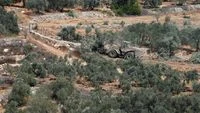
The operation in Beit Rima unfolded in the early morning hours, catching local farmers and landowners by surprise. According to local municipal sources and eyewitness accounts, Israeli military bulldozers accompanied by armed personnel entered the agricultural sector of the town. Without prior formal warning that would allow landowners to seek legal recourse or harvest the imminent yield, heavy machinery proceeded to level terraced hillsides and uproot hundreds of mature olive trees.
Local agricultural committees reported that the targeted trees varied in age, with many being decades old and possessing significant agricultural and sentimental value. In Mediterranean agriculture, olive trees take years to reach full fruitfulness, making the destruction of mature trees an irreparable loss that sets back agricultural productivity for generations. In addition to the uprooted trees, the operation caused substantial damage to agricultural infrastructure, including stone retaining walls, irrigation pipes, and access pathways crucial for tending the land.
Landowners arrived at the scene shortly after the heavy machinery departed, finding rows of uprooted trees strewn across the dust and shattered earth. For families who had cultivated these plots for generations, the visual devastation was profound. The timing of the operation—precisely as the fruit was ripening on the branches—was noted by community leaders as particularly calculated to maximize economic hardship and psychological distress among the local population.
Background and Context of the West Bank Olive Economy
To fully comprehend the significance of the destruction in Beit Rima, one must understand the central role that olive cultivation plays in Palestinian society. According to data compiled by the United Nations Office for the Coordination of Humanitarian Affairs (OCHA) and the Palestinian Central Bureau of Statistics (PCBS), olive groves cover nearly half of the cultivable land in the West Bank, comprising approximately 10 million trees. The sector supports the livelihoods of roughly 100,000 families, either directly through farming and processing or indirectly through related commercial and industrial activities.
For generations, the olive harvest has served as a unifying cultural event, bringing together extended families, volunteers, and community members to pick the fruit in a communal atmosphere. However, over the past several decades, this vital economic sector has faced escalating pressures due to the expansion of Israeli settlements, the construction of the separation barrier, and the enforcement of strict military zoning regulations in Area C, which comprises over 60 percent of the West Bank.
Human rights organizations have consistently documented how agricultural land in the West Bank is vulnerable to confiscation, restriction of access, and direct destruction under various administrative and military pretexts. Landowners frequently face severe bureaucratic hurdles in obtaining permits to farm their own land if it falls near settlements, security roads, or designated closed military zones. When access is denied or delayed, orchards often fall into disrepair, making them even more susceptible to neglect, vandalism, or state-sanctioned clearing operations.
Chronology of Escalating Agricultural Targeting
The systematic destruction of Palestinian trees in the West Bank follows a predictable yet alarming seasonal trajectory. A chronological examination of agricultural violations over recent years reveals distinct patterns tied to the agricultural calendar:
- Pre-Harvest Preparation Phase (August – September): During this period, military and settler activities often escalate around rural communities. Incidents of tree vandalism, arson, and preemptive clearing operations are frequently reported as the harvest season approaches. Landowners attempting to clear brush or tend to their trees near sensitive areas often report harassment or denial of entry.
- The Harvest Season (October – November): This is the peak period of vulnerability. Palestinian farmers harvesting their crops often require special coordination with the Israeli military to access lands located behind the separation barrier or near settlements. Reports of settler violence, physical assaults on harvesters, theft of crops, and the cutting down of fruit-bearing trees peak during these months.
- Post-Harvest and Winter Pruning (December – March): Following the harvest, military incursions often target agricultural infrastructure under the guise of zoning violations or security clearance operations. Land leveling, road widening, and the expansion of nearby settlement outposts frequently encroach upon private agricultural parcels.
- Spring Growth and Maintenance (April – July): Throughout the spring, restrictions on water access, grazing rights, and land reclamation projects continue to constrain the ability of Palestinian farmers to expand or maintain their agricultural output, setting the stage for subsequent seasonal losses.
Official Responses and Stakeholder Reactions
Following the incident in Beit Rima, local authorities, Palestinian government bodies, and international advocacy groups issued strong condemnations of the military action.
The Palestinian Ministry of Agriculture released a stern statement denouncing the uprooting of the olive trees, characterizing the operation as part of a systematic state policy aimed at crippling the Palestinian rural economy and forcing farmers off their ancestral lands. The ministry emphasized that targeting agricultural assets is a violation of international humanitarian law, which protects private property and prohibits the destruction of civilian infrastructure in occupied territories.
Local municipal officials in Beit Rima called upon international human rights organizations and foreign diplomatic missions to document the violations and hold Israeli authorities accountable. Representatives of the local farmers’ union stressed that the economic impact of losing hundreds of productive trees extends far beyond individual landowners, affecting local press facilities, oil-pressing plants, and regional markets that depend on a robust olive yield.
On the other side, official explanations from the Israeli military regarding operations of this nature typically cite administrative regulations, lack of proper building permits, or security imperatives. Under the complex legal framework governing Area C of the West Bank, structures and agricultural developments deemed unauthorized by the Israeli Civil Administration are frequently subjected to demolition or removal orders. However, human rights advocates and legal experts frequently challenge the legitimacy and proportionality of these measures, arguing that the stringent permit regime is implemented in a discriminatory manner that systematically denies Palestinians the right to develop their own land while facilitating the expansion of adjacent Israeli settlements.
Broader Impact and Socioeconomic Implications
The ramifications of the events in Beit Rima extend well beyond the immediate loss of property, carrying profound socioeconomic and geopolitical implications for the occupied territories.
Economically, the cumulative loss of thousands of olive trees annually inflicts millions of dollars in damages on the Palestinian agricultural sector. In an economy constrained by movement restrictions, high unemployment, and limited industrial development, agriculture serves as a crucial buffer against poverty. When orchards are destroyed, households lose not only their immediate harvest income but also a long-term productive asset that took decades to cultivate. This economic disenfranchisement often accelerates rural-urban migration and increases economic dependency.
Psychologically and culturally, the destruction of ancient olive groves inflicts a deep wound on the collective identity of Palestinian communities. The olive tree is widely regarded as a universal symbol of peace, steadfastness (sumud), and deep roots in the land. Ancient trees that have survived multiple political regimes and historical upheavals being felled by modern military machinery carries a powerful symbolic resonance that deepens feelings of insecurity and despair among rural residents.
From a geopolitical perspective, the gradual erosion of Palestinian agricultural presence in strategic areas of the West Bank contributes to a shifting demographic and territorial landscape. Human rights monitors have repeatedly warned that the clearance of agricultural lands often serves as a precursor to the expansion of settlement outposts, the creation of buffer zones, or the consolidation of territorial control by occupying authorities. By severing the physical and economic ties of communities to their peripheral lands, these operations create vacuums that are frequently exploited for infrastructural or settlement development.
As the international community continues to monitor developments in the West Bank, incidents like the one in Beit Rima highlight the urgent need for robust protective mechanisms for civilian populations and their livelihoods. Without effective accountability and a halt to the systematic destruction of agricultural assets, rural communities in the West Bank will continue to bear the heavy human and economic toll of a protracted conflict that reaches into the very roots of their soil.