Socio Today
Karawang, Indonesia – Isuzu Astra Motor Indonesia (IAMI) has officially announced a significant production achievement, reaching the 300,000-unit mark at its Isuzu Karawang Plant (IKP) in Karawang, West Java. This landmark accomplishment comes approximately a decade after the state-of-the-art manufacturing facility commenced operations in 2015, solidifying IAMI’s position as a key player in Indonesia’s automotive sector.
Masayasu Hideshima, President of IAMI, emphasized that this milestone is a testament to the collaborative efforts and enduring partnerships forged with the company’s business associates throughout the plant’s operational history. "The production of 300,000 units at the Isuzu Karawang Plant represents a crucial turning point in Isuzu’s journey in Indonesia," Hideshima stated during a press briefing on Monday, July 20th. "Since its inauguration in 2015, this plant has evolved into a globally benchmarked manufacturing facility, now serving as an integral component of Isuzu’s worldwide production network."
The strategic importance of the Karawang facility extends beyond its production capacity. It plays a pivotal role in fulfilling the demand for commercial vehicles not only within the Indonesian domestic market but also for export destinations. Furthermore, IAMI asserts that the plant’s presence significantly contributes to the national automotive industry through several key avenues: the enhancement of local component utilization (Tingkat Komponen Dalam Negeri – TKDN), the creation of employment opportunities, and the bolstering of export activities.
A Look Inside the Isuzu Karawang Plant
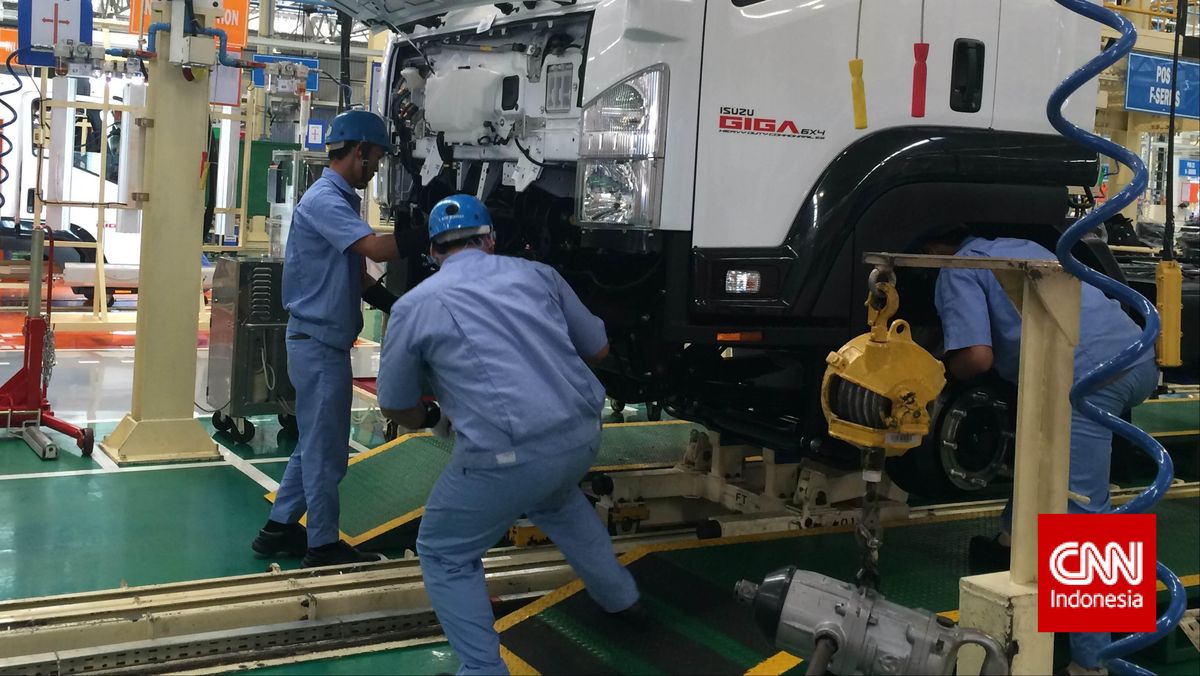
The Isuzu Karawang Plant is currently responsible for the manufacturing of several high-demand models, including the versatile Isuzu ELF light-duty truck, the robust Isuzu GIGA heavy-duty truck, and the popular Isuzu Traga light commercial vehicle. Notably, the Traga has emerged as the model with the highest production volume among the three, reflecting its strong market appeal and widespread adoption by businesses across Indonesia.
In addition to its Isuzu-branded offerings, the Karawang facility also produces vehicles under the UD Trucks brand, specifically the UD Quester and UD Kuzer models, catering to the specific needs of the domestic market. This dual-brand production capability underscores the plant’s adaptability and its comprehensive role in serving diverse segments of the commercial vehicle landscape.
Driving Local Content and Employment
IAMI is committed to maximizing the use of locally sourced components, a strategy that not only enhances cost-effectiveness but also stimulates the growth of domestic suppliers and the broader Indonesian economy. The company has reported impressive TKDN figures for its key models manufactured at the Karawang plant:
- Isuzu Traga: 46.45 percent
- Isuzu ELF: 33.04 percent
- Isuzu GIGA: 38.07 percent
These figures demonstrate a substantial reliance on Indonesian-made parts and materials, directly contributing to the development of the national automotive supply chain. The emphasis on local procurement has a direct and tangible impact on job creation. The Isuzu Karawang Plant currently employs a dedicated workforce of 884 individuals. This figure does not include the indirect employment generated through the extensive network of local vendors and suppliers who contribute to the plant’s operations. This commitment to local sourcing and employment reinforces IAMI’s role as a responsible corporate citizen.
Global Reach from Indonesian Shores
Since 2019, the Isuzu Karawang Plant has also served as a vital hub for the export of commercial vehicles. This strategic move has allowed IAMI to leverage its manufacturing capabilities to compete on a global stage, showcasing the quality and reliability of vehicles produced in Indonesia. To date, vehicles manufactured in Karawang have been dispatched to an impressive 25 countries worldwide. Key export markets include Japan, South Africa, the Philippines, and Panama, among others. This expanding export footprint not only generates valuable foreign exchange for Indonesia but also enhances the country’s reputation as a capable automotive manufacturing nation.
Hideshima articulated a forward-looking vision for the Karawang plant and IAMI’s operations in general. "We are committed to continuously improving product quality, strengthening the competitiveness of national manufacturing, expanding our export contributions, and delivering commercial vehicles that serve as the best business partners for our customers, both in Indonesia and in the global market," he affirmed.
A Decade of Growth and Contribution
The establishment of the Isuzu Karawang Plant in 2015 marked a significant investment by IAMI into Indonesia’s industrial landscape. The plant was designed with advanced manufacturing technologies and adheres to stringent global quality standards, enabling it to produce vehicles that meet international specifications. The decision to locate in Karawang was strategic, capitalizing on the region’s robust industrial infrastructure, skilled labor pool, and proximity to major transportation networks, including ports for export.
Prior to the Karawang plant, Isuzu vehicles sold in Indonesia were largely imported or assembled through different arrangements. The establishment of a full-scale manufacturing facility represented a commitment to local production and a deeper integration into the Indonesian economy. This transition allowed IAMI to be more responsive to local market demands, tailor products to specific Indonesian conditions, and enhance its supply chain efficiency.
The growth in production volume from the plant’s inception to the current 300,000-unit milestone reflects a consistent upward trajectory. This growth can be attributed to several factors:
- Growing Demand for Commercial Vehicles: Indonesia’s economic development, particularly in sectors like logistics, construction, and agriculture, has fueled a sustained demand for reliable and efficient commercial vehicles. Isuzu’s product portfolio, known for its durability and fuel efficiency, has been well-positioned to meet this demand.
- Product Innovation and Adaptation: IAMI has continuously introduced and adapted its models to suit the Indonesian market. The success of the Traga, for instance, highlights the company’s ability to develop vehicles that address the specific needs of small and medium-sized enterprises (SMEs) and individual entrepreneurs.
- Strategic Partnerships: The strong relationships with suppliers, dealers, and financial institutions have been crucial in supporting Isuzu’s market penetration and growth. The mention of "partnerships" by President Hideshima underscores the collaborative ecosystem that underpins the company’s success.
- Export Market Expansion: The successful foray into export markets has not only diversified revenue streams but also provided valuable feedback and international validation for the quality of vehicles produced in Karawang. This export success story is a significant contributor to Indonesia’s trade balance and its standing in the global automotive arena.
Broader Implications for the Indonesian Automotive Sector
The achievement of 300,000 production units at the Isuzu Karawang Plant has several broader implications for the Indonesian automotive industry:
- Increased Local Value Addition: The high TKDN percentages indicate a growing capacity within Indonesia to produce sophisticated automotive components, fostering technological advancement and specialized manufacturing skills.
- Job Creation and Skill Development: The direct employment of nearly 900 individuals, along with the indirect jobs created, signifies a substantial contribution to the local economy. Furthermore, working in a globally benchmarked facility provides employees with opportunities to develop advanced manufacturing skills.
- Enhanced Export Competitiveness: The successful export of vehicles to diverse international markets demonstrates that Indonesian-made vehicles can compete on quality, performance, and cost with global counterparts. This boosts Indonesia’s profile as an automotive manufacturing hub.
- Strengthened Supply Chain Resilience: A robust domestic production base, supported by local suppliers, enhances the resilience of the automotive sector against global supply chain disruptions, as evidenced during recent worldwide challenges.
- Attracting Further Investment: Milestones like this often signal a stable and growing market, potentially attracting further foreign and domestic investment into the automotive sector and related industries.
As IAMI looks to the future, the focus remains on sustained growth, innovation, and an unwavering commitment to contributing to Indonesia’s industrial development. The 300,000-unit production milestone at the Karawang Plant is not merely a numerical achievement but a powerful symbol of Isuzu’s enduring commitment to the Indonesian market and its growing prowess as a manufacturing nation. The company’s continued efforts in quality enhancement, export expansion, and local content integration are poised to further solidify its position and contribute to the dynamic evolution of the automotive landscape in Indonesia and beyond.