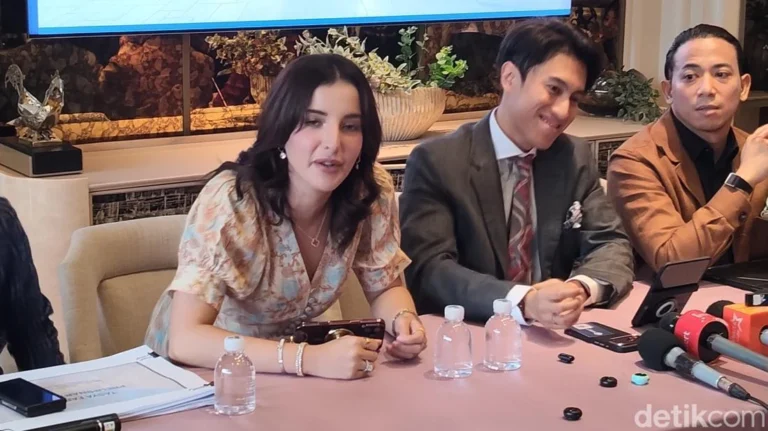
The public discourse surrounding male contraception recently gained renewed attention following the candid testimony of Indonesian actor Krisjiana Baharudin. After undergoing a vasectomy in September 2026, the husband of renowned dangdut singer Siti Badriah has publicly addressed widespread misconceptions regarding the procedure. In a press engagement held in Jakarta on Wednesday, November 25, 2029, Baharudin provided a firsthand account of his post-operative life, categorically refuting claims that the minor surgical procedure leads to diminished vitality, reduced libido, or a decline in professional productivity.
A Candid Clarification on Post-Procedural Health
For many men, the prospect of a vasectomy is often clouded by societal stigmas and unfounded medical myths. During his interview, Baharudin addressed these concerns with clinical directness. He emphasized that his physiological capabilities and general stamina remained entirely unaffected since the procedure took place over three years ago.
"There have been absolutely no significant changes," Baharudin stated. "I have heard the rumors—that men supposedly lose their drive or become lethargic and unmotivated to work. I can confirm, from my own experience, that these claims are entirely unfounded."
Baharudin went a step further, offering a pragmatic perspective on the relationship between psychological disposition and physical outcomes. He suggested that if an individual experiences a lack of motivation or diminished professional output following such a procedure, it is likely unrelated to the surgery itself. "If someone claims they lack the ‘drive’ after a vasectomy, they likely lacked the drive to begin with," he remarked, reinforcing that his own physical strength and daily performance metrics have remained consistent with his pre-surgical baseline.
Understanding the Procedure: Medical Context and Global Trends
A vasectomy is a permanent form of male contraception that involves the surgical cutting or sealing of the vasa deferentia—the tubes that carry sperm from the testicles to the urethra. Despite its simplicity—often performed under local anesthesia in an outpatient setting—it remains one of the most misunderstood medical procedures globally.
According to data from the World Health Organization (WHO) and various urological associations, a vasectomy does not involve the removal of the testicles, nor does it interfere with the production of testosterone. Consequently, the procedure does not alter a man’s secondary sexual characteristics, voice, muscle mass, or sexual performance. Medical experts consistently reiterate that the primary, and only, physiological change is the prevention of sperm release during ejaculation.
In many parts of the world, there is a persistent "machismo" culture that equates vasectomies with a loss of masculinity. However, health professionals argue that the procedure is increasingly becoming a standard choice for couples who have completed their family planning goals. In Indonesia, while traditional views on contraception have historically centered on female-led methods, there has been a slow but perceptible shift toward shared responsibility in family planning, a transition underscored by public figures like Baharudin who opt for the procedure.
The Chronology of Decision-Making
The decision for Baharudin to undergo the procedure was not a sudden impulse but rather the culmination of extensive family planning discussions. Following the birth of their two daughters, Baharudin and his wife, Siti Badriah, entered into a period of deep deliberation regarding their long-term family structure.
The couple, who have been vocal about their parenting journey, determined that they had achieved their ideal family size. This led to a series of consultations, not only with medical professionals to understand the surgical risks and recovery times but also with members of their inner circle who had previously undergone the procedure.
The timeline of their decision-making process highlights the importance of informed consent and spousal communication:
- Early 2026: The couple begins formal discussions regarding permanent contraception options after the birth of their second child.
- Mid-2026: Baharudin seeks professional medical advice to address concerns regarding post-operative side effects and long-term health implications.
- September 2026: Baharudin undergoes the elective vasectomy procedure.
- 2026–2029: A three-year observation period during which the couple experiences no negative changes to their health or relationship dynamics, leading to the recent public disclosure.
Addressing the Stigma: A Societal Analysis
The reluctance of many men to undergo vasectomies is often rooted in a lack of health literacy. Sociologists note that in patriarchal societies, the "burden of prevention" is frequently placed on women. By choosing to speak openly about his experience, Baharudin is participating in a broader trend of "responsible fatherhood" that seeks to normalize the role of men in reproductive health.
The implications of such public endorsements are significant. When a high-profile individual confirms that their "stamina" and "drive" remain intact, it provides a powerful counter-narrative to the toxic myths that prevent many men from seeking similar medical solutions. Medical experts suggest that as more public figures share their positive experiences, the uptake of vasectomies may increase, leading to more equitable distribution of contraceptive responsibilities within households.
Clinical Perspectives and Safety Profiles
From a clinical standpoint, the procedure performed on Baharudin is considered low-risk. Modern techniques, such as the "no-scalpel vasectomy," have made the recovery process even faster and less invasive. The complication rate for vasectomies is exceptionally low, with the most common issues being minor bruising or temporary discomfort—none of which carry the long-term systemic risks that some rumors suggest.
Furthermore, the psychological impact of a vasectomy is often positive for couples. By removing the anxiety associated with unplanned pregnancies, many partners report an improvement in their intimate relationships. The freedom from hormonal contraceptives, which some women may find physically taxing, is another advantage that is increasingly being recognized in family planning counseling.
Broader Implications for Family Planning in Indonesia
The discussion initiated by Baharudin touches on the larger framework of Indonesia’s National Population and Family Planning Board (BKKBN) goals. While the government has long promoted family planning, the involvement of men remains a critical area for improvement. Programs that emphasize "Vasectomy for Men" (MOP or Metode Operasi Pria) have faced historical hurdles due to cultural misconceptions.
Baharudin’s openness serves as a form of social advocacy. By framing the vasectomy as a responsible choice that supports his wife and their shared future, he helps transition the narrative from one of "loss" to one of "empowerment."
Conclusion: Moving Forward
As Krisjiana Baharudin continues his professional career in the entertainment industry, his transparency regarding his personal health serves as a case study in dismantling gendered health myths. The evidence provided—that his professional output, physical strength, and general quality of life remain unchanged—aligns with decades of urological research.
As the conversation around male reproductive health continues to evolve, the impact of such testimonials cannot be understated. By treating the vasectomy as a routine, healthy, and responsible medical choice, Baharudin has contributed to a more informed public discourse, potentially encouraging other men to prioritize their health and their family’s well-being through evidence-based decision-making. The conclusion remains clear: the myths surrounding vasectomies are a byproduct of cultural inertia, not medical reality. For those considering the procedure, the consensus from both the medical community and experienced individuals is that the decision is a safe, effective, and sustainable path toward controlled family planning.