The ongoing crisis at Manchester United deepened significantly on Saturday, November 28, 2026, as the club suffered a humiliating 4-0 defeat against Brentford at Old Trafford during the 12th fixture week of the 2026-2027 Premier League season. This latest setback not only extends the club’s dismal run of form but also places them precariously in the relegation zone, igniting intense scrutiny regarding the squad’s construction, defensive frailties, and overall strategic direction.
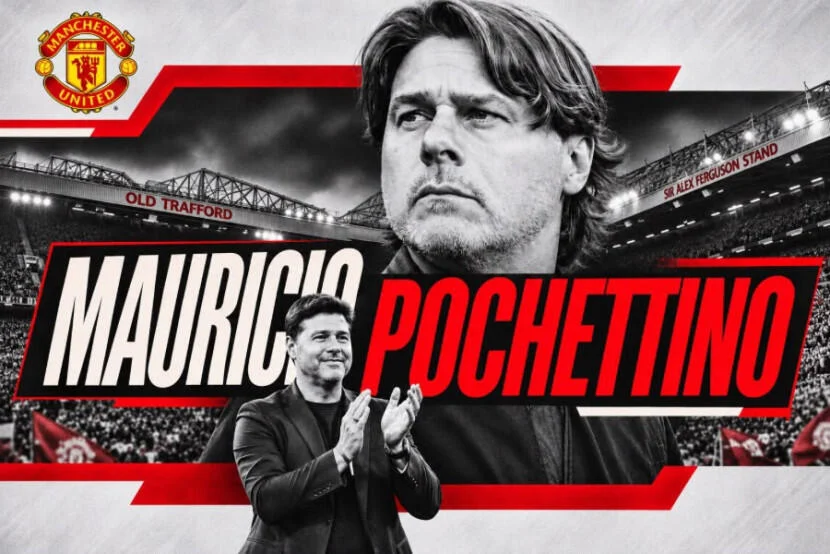
The comprehensive defeat in front of their home supporters represents a new low for a team struggling to find its footing under newly appointed manager Mauricio Pochettino. As the club hovers dangerously near the foot of the Premier League table, the ramifications of this result extend far beyond a single afternoon, threatening to define one of the most turbulent campaigns in the modern history of English football’s most decorated club.
Chronology of the Match and Immediate Fallout
The afternoon unfolded in disastrous fashion for the hosts. Brentford capitalized on chaotic defensive organization and a lack of collective cohesion from the opening whistle. The Bees systematically dismantled the Manchester United backline, netting four unanswered goals that left the Old Trafford faithful stunned and disillusioned.
By the final whistle, the scoreline accurately reflected the gulf in performance between the two sides. The defeat leaves Manchester United languishing in 19th place in the Premier League standings. More alarmingly, their status in the relegation zone remains precarious, with the club facing the genuine threat of dropping to the absolute bottom of the table depending on the outcome of subsequent fixtures involving their relegation rivals.
The atmosphere inside Old Trafford at the conclusion of the match was characterized by profound despondency. Boos echoed from the stands, directed both at the dismal on-field display and the broader institutional failures that have allowed a perennial title contender to plummet into a relegation battle.
Anatomy of a Historic Defensive Collapse
While the entire team has struggled to adapt to the tactical demands of the coaching staff, the primary catalyst for Manchester United’s alarming slide is an unmitigated defensive crisis. Statistical analysis reveals a backline in complete disarray, shattering unwanted club and league records week after week.
A thorough examination of the metrics highlights the depth of the defensive deterioration:
- Cascading Goals Conceded: Since securing a 1-1 draw against Leeds United on October 18, Manchester United has played eight matches across all competitions, conceding a staggering 25 goals. The recent trajectory is even more alarming, with the team shipping 14 goals in their last four outings alone.
- The Clean Sheet Drought: The defeat to Brentford marked the 12th consecutive league match of the season in which Manchester United failed to keep a clean sheet. This unwanted milestone establishes a new club record for the longest run without a shutout from the start of a top-flight campaign, echoing memories of the 1930-1931 season when the club ultimately finished at the bottom of the division.
- Conceding in Pairs and Multiples: The Red Devils achieved an unwanted Premier League first by becoming the first team in the history of the competition to concede at least two goals in seven consecutive halves of football. Furthermore, the club has surrendered four or more goals in three consecutive league matches for the first time since the winter months of 1961.
- Unenviable Managerial Parallels: For Mauricio Pochettino, the start to his tenure has been nothing short of catastrophic. He joins an exclusive and unwanted list as only the second manager in Premier League history to lose his first two league games in charge by a margin of four goals or more, matching the unfortunate feat endured by Dave Jones with Wolverhampton Wanderers in August 2003.
Structural Failures and Squad Construction
The roots of this defensive crisis extend far beyond the recent managerial transition. Analysts and supporters alike have pointed to persistent negligence in squad planning by the club’s hierarchy. Despite finishing the previous Premier League campaign having conceded 50 goals—a defensive record well below the standards required for European qualification—the club’s decision-makers elected not to sign a single specialist defender during the summer transfer window.

This failure to inject fresh talent and athleticism into the backline has left the coaching staff with severely limited options. The structural deficiency was starkly illustrated during the match against Brentford, where four of the five defensive players deployed in the starting lineup were the exact same individuals who started when Manchester United suffered an identical 4-0 defeat to the same opponent more than four years prior. The lack of squad evolution and defensive reinforcement has left the team heavily reliant on an aging core incapable of sustaining the physical and tactical demands of modern Premier League football.
Historical Precedents of Relegation Threats
The mathematical reality of Manchester United’s league position has sent shockwaves through the footballing world. Historical data from the Premier League era paints a grim picture for clubs enduring such dismal starts. Among the 27 teams in league history that managed to accumulate only eight points from their opening 11 matches, an overwhelming 17 ultimately suffered relegation to the second tier.
For a club of Manchester United’s global stature, commercial power, and historical prestige, the prospect of a relegation battle is no longer a distant theoretical concern but an immediate and tangible danger. The psychological burden on the players, many of whom are unaccustomed to fighting at the wrong end of the table, complicates the path to recovery.
Mauricio Pochettino Addresses the Crisis
Speaking to the media in the aftermath of the defeat, Mauricio Pochettino offered a candid assessment of the situation. The Argentine manager acknowledged that the challenges he inherited upon taking the job are far more severe than initially anticipated, though he fiercely defended his players against external criticism.
"Это is a difficult moment, certainly," Pochettino stated. "If you ask me, ‘Is it harder than you expected?’ Of course, yes, because we never expected results like this. But that is the reality, and we have to accept that reality. We are here for that."
Addressing the unrealistic expectations surrounding his brief tenure—having taken charge less than two weeks prior—Pochettino emphasized the impossibility of immediate wholesale changes.
"What do people expect from a coach who arrived 10 days ago?" Pochettino continued. "Are we going to change 25 or 26 players? Do you think we will help Manchester United by blaming the players for the situation that we are living in now?"
Broader Implications and the Road Ahead
The immediate future for Manchester United hinges on an urgent stabilization of their defensive structure and a swift recovery of collective confidence. The international and domestic fixtures ahead offer no respite, with crucial matches against direct relegation rivals and upwardly mobile mid-table teams looming on the horizon.
The Board of Directors faces immense pressure to provide clarity, support, and potential solutions during the upcoming January transfer window. Without strategic reinforcements and a fundamental tactical reset, Manchester United risks translating an abysmal start into a permanent stain on the club’s illustrious history. As the pressure mounts at Old Trafford, the response from the players, management, and hierarchy in the coming weeks will determine whether the club can engineer a miraculous escape from the relegation mire or succumb to an unprecedented sporting catastrophe.