 Socio Today
Jakarta — Eggs remain an undisputed staple in households worldwide, celebrated globally for their affordability, dense nutritional profile, and exceptional versatility in culinary applications. From simple boiling to intricate baking, this protein-rich ingredient serves as the foundation for countless daily meals. Among the myriad preparation methods, scrambled eggs stand out as a perennial favorite, prized for their comforting warmth and perceived simplicity. Yet, despite their widespread popularity, achieving the ideal consistency—one characterized by a velvety, melt-in-your-mouth texture rather than a dry, overcooked scramble reminiscent of a hastily thrown-together stir-fry—often eludes even enthusiastic home cooks. Culinary science reveals that the transformation of liquid eggs into a luscious, creamy dish depends entirely on precise temperature control, fundamental chemistry, and disciplined technique.
The culinary appreciation of eggs dates back centuries, evolving from a basic survival food into a canvas for high gastronomy. Historically, eggs were consumed out of immediate necessity due to their abundance and high concentration of essential amino acids, fats, and vitamins. As global culinary techniques advanced during the 19th and 20th centuries, chefs began to scrutinize the physical behavior of proteins under thermal stress. The scrambled egg, once treated merely as a way to utilize surplus eggs before spoiling, transformed into a standard benchmark of a chef’s fundamental competency in professional kitchens. Culinary institutions around the globe frequently test novice cooks on their ability to produce a flawless, soft-curd scramble, underscoring that simplicity in ingredients does not equate to simplicity in execution.
Understanding the underlying mechanics of cooking eggs requires a brief examination of food science. Both culinary references and modern food laboratories emphasize that the white and yolk of an egg possess entirely different compositions and, consequently, coagulate at different temperatures. The albumen, or egg white, primarily consists of water and various proteins that begin to set at approximately 62 degrees Celsius (144 degrees Fahrenheit), while the yolk contains fats and emulsifiers that thicken at a slightly higher temperature range of around 65 to 70 degrees Celsius (149 to 158 degrees Fahrenheit). When an unblended egg hits a hot pan, these disparate setting points cause uneven cooking, resulting in a fractured, rubbery texture where parts of the white are overly firm before the yolk has integrated properly.
To circumvent this unevenness, the foundational step of professional preparation demands thorough incorporation. Culinary experts advise vigorous whisking prior to cooking until the yolks and whites are completely homogenized and the mixture incorporates a slight volume of air. This aeration creates a uniform matrix that allows heat to disperse evenly throughout the liquid. Furthermore, introducing specific ingredients at strategic moments alters the chemical bonding of the proteins. Adding salt to the beaten eggs just before they hit the heat—rather than at the end of cooking—serves a vital biochemical function. Salt acts as a tenderizer by breaking down dense protein strands, preventing them from tightly binding and squeezing out moisture as they heat up. This simple preseasoning technique retains natural hydration, yielding a noticeably moister and more tender final product.
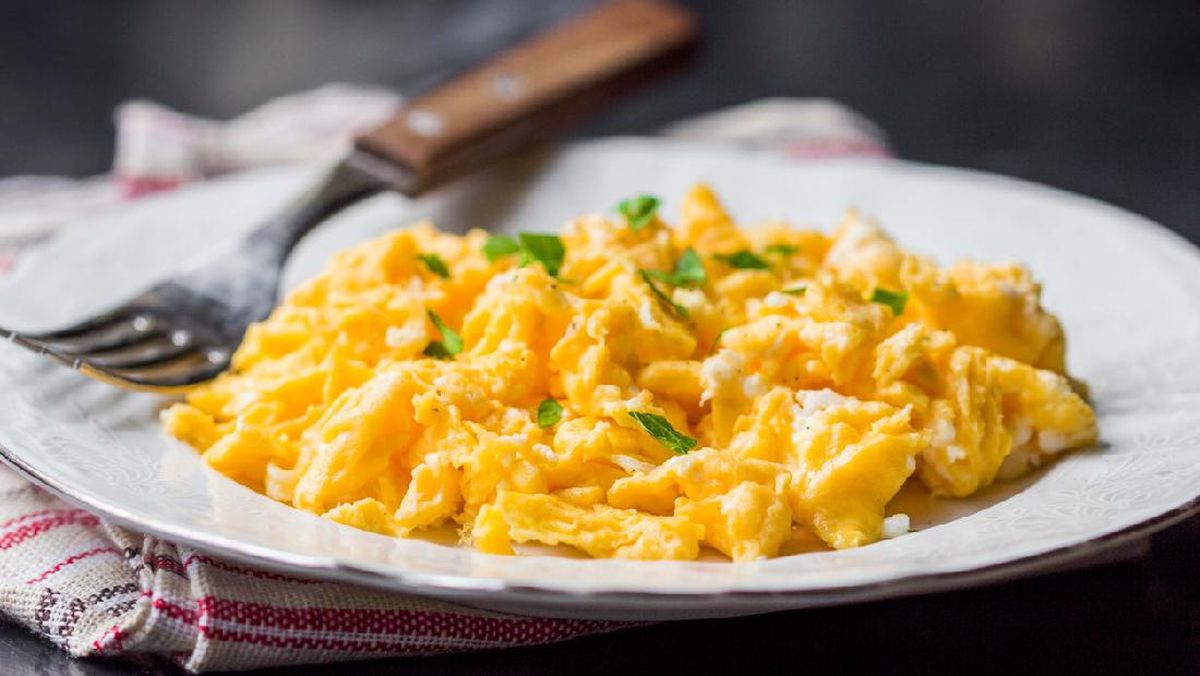
Beyond seasoning and aeration, the integration of dairy products plays a transformative role in achieving a luxurious mouthfeel. While purists may argue that authentic French scrambled eggs rely solely on eggs, butter, and gentle heat, incorporating a splash of heavy cream or whole milk introduces additional fat globules and moisture. These liquids physically dilute the protein concentration within the egg, effectively raising the overall coagulation temperature. This elevated threshold provides the cook with a larger margin of error, delaying the point at which the eggs seize up and become dry. Simultaneously, the added dairy enriches the flavor profile, imparting a velvety, creamy consistency that mirrors the offerings of high-end breakfast establishments.
Fat is another critical variable, with butter reigning supreme in professional breakfast stations. Utilizing a generous amount of high-quality butter does more than just prevent sticking; it contributes directly to the rich emulsion that defines a superior scramble. Professional techniques often involve melting a substantial portion of butter in the pan over low heat, cooking the eggs slowly within the melting fat, and then whisking in a small, raw pat of cold butter just before plating. This final addition, known in culinary terminology as mounting the sauce or monte au beurre, drops the temperature of the pan slightly and adds an exquisite gloss and richness to the curds.
Temperature management remains the ultimate arbiter of success or failure when scrambling eggs. High heat applied to eggs causes moisture to evaporate rapidly and protein bonds to contract violently, squeezing out water and leaving behind tough, rubbery curds. Conversely, maintaining a low flame forces a slow, controlled denaturation of the proteins. As heat gently penetrates the pan, the liquid egg mixture slowly transforms into delicate, suspended sheets of micro-curds. This gradual process requires patience and continuous, gentle agitation, ensuring that the curds remain small, tender, and evenly cooked throughout the entire mass.
The final crucial step in producing restaurant-quality scrambled eggs involves understanding residual carryover cooking. Because eggs continue to cook from retained thermal energy even after being removed from the direct heat source, leaving them on the burner until they look "done" guarantees they will be overcooked by the time they reach the table. Professional chefs consistently pull the pan off the heat while the eggs still appear slightly wet, glossy, and underdone. By the time the dish is transferred to a plate and served, the residual heat finishes the cooking process, locking in peak moisture and tenderness without sacrificing texture.
The broader implications of mastering these fundamental cooking techniques extend far beyond a single breakfast dish. In an era where home cooking has experienced a significant global resurgence, understanding the science behind everyday ingredients empowers consumers to reduce food waste, elevate their nutritional intake, and derive greater satisfaction from home-prepared meals. As culinary education continues to democratize through digital platforms, traditional professional secrets are increasingly accessible to the general public, bridging the gap between institutional gastronomy and domestic kitchens. By treating basic ingredients with scientific precision and intentional care, home cooks can consistently replicate the elevated dining experiences found in professional establishments right in their own kitchens.


