Socio Today
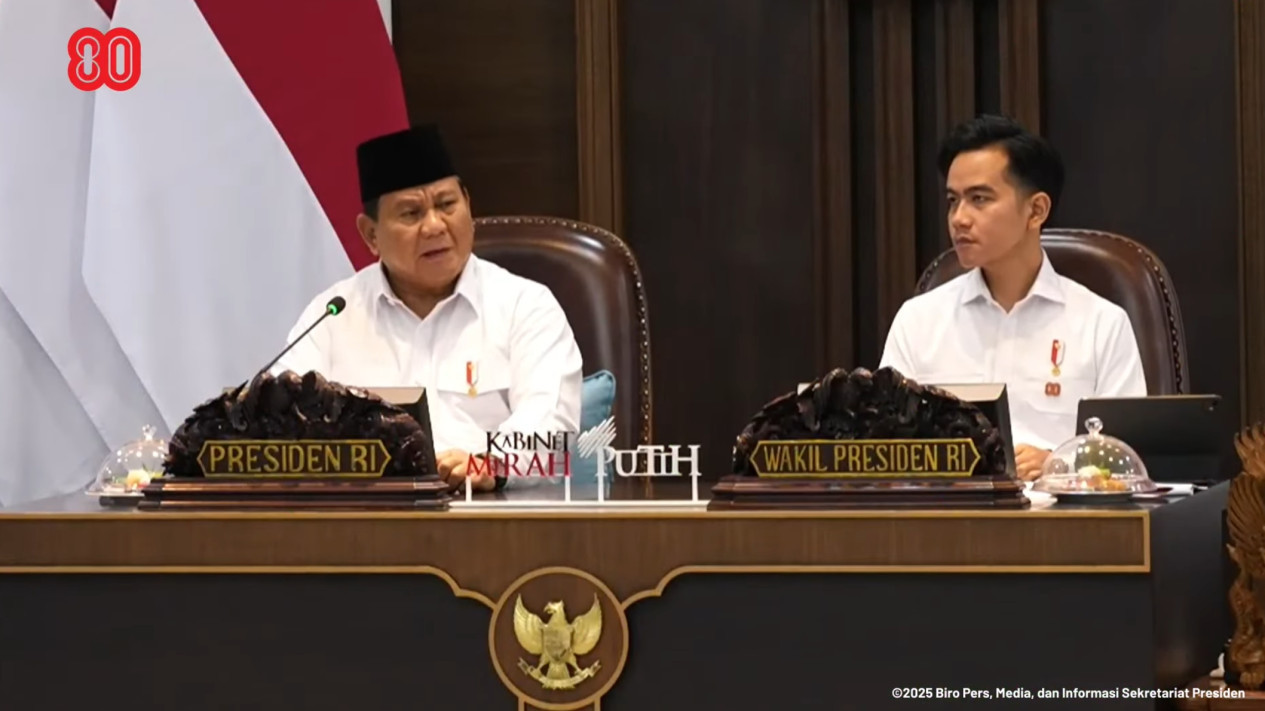
JAKARTA — Approaching the significant milestone of their first full year in office on October 20, 2025, the administration of Indonesian President Prabowo Subianto and Vice President Gibran Rakabuming Raka has garnered a strong mandate from the public, according to the latest comprehensive nationwide survey released by Poltracking Indonesia. The data, presented during a virtual press conference by Poltracking Indonesia Executive Director Hanta Yuda on Sunday, October 19, 2025, reveals that public satisfaction with the executive leadership remains exceptionally high, crossing the 78 percent threshold.
The survey findings reflect public sentiment gathered during a critical window of governance, highlighting the successes, challenges, and policy impacts that have defined the initial phase of the Prabowo-Gibran administration. As Indonesia navigates complex domestic economic reforms and ambitious social welfare initiatives, the findings provide an essential empirical baseline for evaluating public trust in the current state apparatus.
Overall Performance Metrics and Approval Breakdown
According to the survey metrics, an overwhelming 78.1 percent of respondents expressed satisfaction with the combined performance of President Prabowo Subianto and Vice President Gibran Rakabuming Raka over their inaugural year. Conversely, 19.3 percent of respondents stated they were dissatisfied with the administration’s trajectory, while a minor 2.6 percent chose not to answer or indicated they did not know.
When the executive leadership is evaluated individually, President Prabowo Subianto commands a personal approval rating of 78.3 percent. A detailed breakdown of this figure indicates that 9.7 percent of respondents felt "very satisfied" with his leadership, while 68.6 percent reported being "quite satisfied." Opposition or dissatisfaction toward the president sat at 19.2 percent cumulatively, which was divided between 17.5 percent who felt "less than satisfied" and 1.7 percent who were outright "dissatisfied."
Vice President Gibran Rakabuming Raka similarly secured a strong mandate, recording a 71.4 percent public satisfaction rate. The strong performance numbers for both leaders underscore a broad-based consensus among the Indonesian populace regarding the direction of the current executive branch, reflecting positively on the structural division of labor and policy implementation between the president and vice president.
Methodology and Survey Parameters
The data underpinning these findings was gathered through a meticulously structured nationwide study conducted between October 3 and October 10, 2025. Poltracking Indonesia deployed a sample size of 1,220 respondents distributed across the country’s various provinces, ensuring a representative demographic cross-section.
The survey maintained a margin of error of approximately +/- 2.9 percent at a 95 percent confidence interval. To maintain data integrity, interviews were conducted directly face-to-face by a team of professionally trained surveyors, minimizing sampling biases and ensuring accurate capture of qualitative and quantitative responses from citizens across urban and rural settings.
Key Drivers of Public Satisfaction
To understand the catalysts behind the high approval ratings, the survey asked satisfied respondents to identify the primary reasons for their positive assessment of the administration, with a particular focus on the leadership of President Prabowo Subianto.
The leading rationale cited by respondents, accounting for 22.9 percent of answers, was the president’s resolute, decisive, and courageous leadership style coupled with a strong sense of accountability. This suggests that the public places high value on a firm governance approach, particularly in addressing systemic national challenges.
Social assistance programs emerged as the second most influential factor, with 13.4 percent of respondents attributing their satisfaction to the tangible benefits of state-backed aid. These welfare mechanisms have historically played a vital cushioning role for lower-income households amidst global economic fluctuations.
Securing the third position, cited by 11.4 percent of respondents, was the perceived populist appeal and accessibility of President Prabowo. Many citizens view the president as a figure closely aligned with the interests of ordinary citizens, dedicated to championing the concerns of the grassroots populace.
Legal Reform and Anti-Corruption Measures
In fourth place, capturing 9.2 percent of respondent sentiment, was progress made in law enforcement and anti-corruption initiatives. Strengthening the rule of law and restoring institutional integrity have consistently been primary policy objectives demanded by the Indonesian electorate. The inclusion of anti-corruption metrics among the top reasons for approval indicates that early structural or judicial efforts under the Prabowo administration have begun registering positively with the public.
Free Nutritious Meal Program as a Policy Anchor
Rounding out the top five reasons for public approval, at 8.2 percent, is the implementation of the Free Nutritious Meal (Makan Bergizi Gratis – MBG) program. As one of the flagship social and nutritional policies championed during the Prabowo-Gibran presidential campaign, the MBG program has been systematically rolled out to target nutritional deficiencies among school-aged children and pregnant women nationwide.
Although positioned fifth among the specific qualitative reasons cited by respondents in this survey, the inclusion of the MBG program highlights its early visibility and initial positive reception among households benefiting directly from the intervention.

Chronology of Governance and Fiscal Stewardship
The release of these survey numbers arrives just ahead of the administration’s one-year anniversary on October 20, 2025, a temporal landmark that invites broader national reflection on the executive branch’s policy execution. Over the past twelve months, the administration has been tasked with stabilizing macroeconomic fundamentals, executing complex budgetary allocations, and managing high-profile cabinet transitions designed to optimize state performance.
A notable example of the administration’s ongoing institutional adjustments includes executive oversight of key financial portfolios, such as the focus on maintaining robust and disciplined state finances. The administration has consistently emphasized the necessity of structural fiscal prudence to insulate the national economy from external shocks, a strategy supported by strategic appointments within the economic and financial ministries.
Broader Implications and Analytical Outlook
The high public approval rating documented by Poltracking Indonesia carries significant political and economic implications as the Prabowo-Gibran administration transitions into its second year in office.
Politically, a 78.1 percent combined satisfaction rate provides the executive branch with a substantial foundation of legislative leverage and public trust. This strong political capital can facilitate smoother cooperation with the House of Representatives (DPR RI) in passing critical national development bills, accelerating infrastructure projects, and implementing long-term structural reforms without facing debilitating partisan gridlock.
Economically, sustained public confidence is vital for maintaining investor sentiment, both domestically and internationally. High approval ratings coupled with visible social programs such as the MBG and targeted welfare distributions help sustain domestic consumption levels—the traditional backbone of Indonesia’s gross domestic product (GDP) growth.
However, political analysts note that maintaining these high marks will require sustained execution, particularly in addressing ongoing concerns regarding legal predictability, inflationary pressures on basic commodities, and equitable economic distribution. While the first year has been marked by strong public goodwill driven by decisive leadership and social safety nets, the subsequent phases of the administration will face the test of institutionalizing these gains into permanent structural improvements.
As Prabowo and Gibran mark their first year at the helm of Southeast Asia’s largest economy, the mandate reflected in the Poltracking Indonesia survey demonstrates that the administration’s initial policy mix resonates with a decisive majority of the Indonesian population. The challenge ahead lies in translating this robust public trust into enduring, systemic prosperity for the nation.