Socio Today
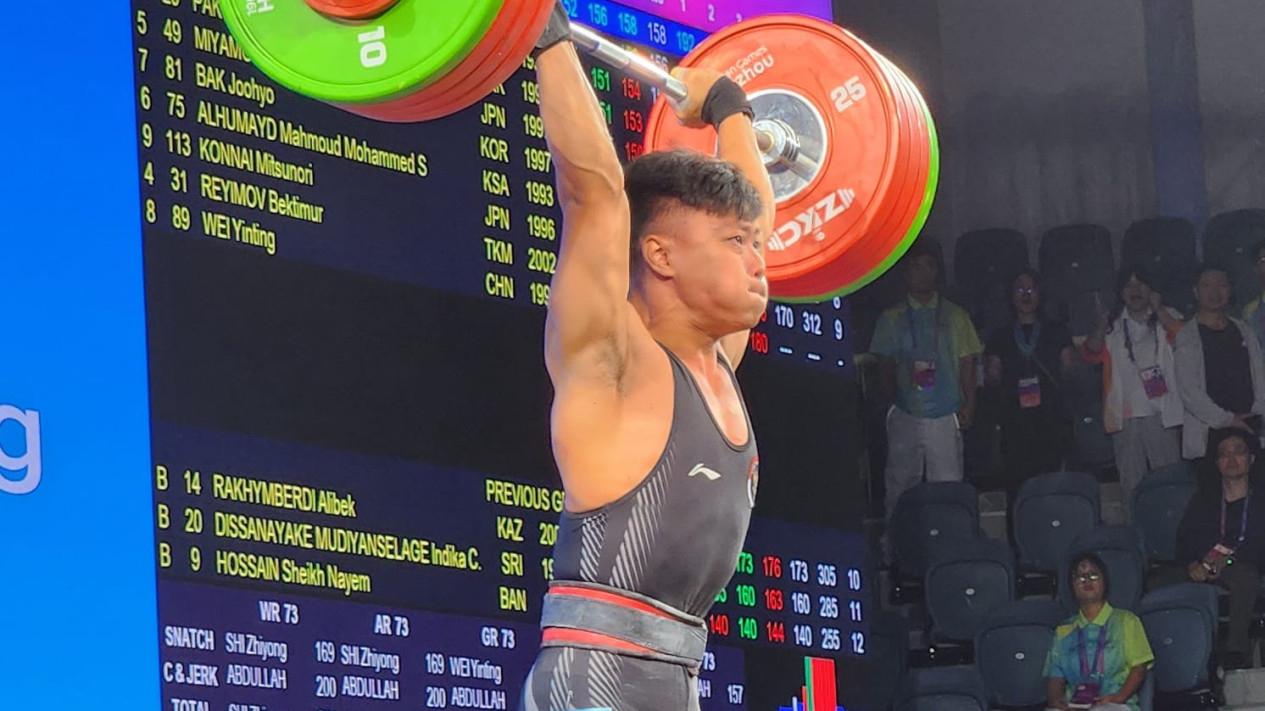
In a breathtaking display of physical dominance and tactical precision, Indonesian weightlifter Rahmat Erwin Abdullah secured the gold medal in the men’s 75-kilogram category at the 2026 Asian Games. Competing at the Nagoya City Trade and Industry Centre in Japan on Saturday, September 26, 2026, the 25-year-old athlete not only climbed to the top of the podium but also rewrote the record books by shattering two world records. This monumental achievement serves as a significant turning point for the Indonesian contingent, providing a critical boost to their standing in the regional multi-sport event.
A Historic Performance in Nagoya
The atmosphere at the Nagoya City Trade and Industry Centre was electric as Rahmat Erwin Abdullah stepped onto the platform for the final round of the 75-kilogram division. Known for his technical proficiency and nerves of steel, Rahmat maintained his composure under immense pressure from international competitors. His performance was characterized by an explosive clean and jerk, followed by a total aggregate weight that surpassed all previous benchmarks in the weight class.
By establishing new world records in both the clean and jerk discipline and the overall total, Rahmat demonstrated a level of training and preparation that sets him apart as one of the premier lifters in the world today. This victory marks a career-defining moment for the Indonesian athlete, who has consistently shown progress on the international circuit over the past several years. His triumph is not merely a personal milestone but a testament to the evolving standards of Indonesian weightlifting, a sport that has historically been the nation’s most reliable source of Olympic and Asian Games success.
Contextualizing the Asian Games 2026
The 2026 Asian Games, hosted in the Aichi-Nagoya region of Japan, represent a major milestone in the post-pandemic sporting calendar. With thousands of athletes from 45 nations competing across various disciplines, the level of competition has reached unprecedented heights. For Indonesia, the journey in these games began with a historic victory in the men’s badminton team event, where the squad clinched gold after a grueling 3-2 victory over the formidable Chinese team.
Prior to Rahmat’s success, the Indonesian team had been working hard to climb the medal table, which was dominated by traditional powerhouses like China, Japan, and South Korea. Before Saturday’s final, Indonesia sat at 19th place in the overall standings, with one gold, four silver, and 17 bronze medals. The addition of Rahmat’s gold brings the total count to 23 medals—two gold, four silver, and 17 bronze—providing a much-needed morale boost to the entire Indonesian delegation.
Chronology of the Medal Tally
The pursuit of glory in Nagoya has been a long and arduous process for the Indonesian team. The initial days of the games saw consistent, albeit peripheral, podium finishes in combat sports and rowing, but the gold medals remained elusive until the badminton team broke the drought.
- September 20-22: Initial rounds; Indonesia secures multiple bronze medals in rowing and wushu.
- September 24: The badminton team achieves a breakthrough, defeating China in a high-stakes final to secure Indonesia’s first gold.
- September 25: Steady accumulation of bronze and silver medals across track and field and swimming events.
- September 26: Rahmat Erwin Abdullah secures the second gold for Indonesia, significantly impacting the nation’s position in the overall medal table.
This trajectory reflects a broader strategy by the Indonesian National Sports Committee (KONI) to focus resources on sports where the nation has historically held a competitive advantage, such as weightlifting and badminton.
Global Medal Table Dynamics
As of the conclusion of the events on September 26, the medal table remains heavily skewed toward the regional giants. China continues its commanding lead, holding 98 gold, 37 silver, and 24 bronze medals. The hosts, Japan, follow in second place with 28 gold, 43 silver, and 44 bronze medals.
Within Southeast Asia, the competition remains fierce. Malaysia has emerged as the frontrunner among the ASEAN nations, holding four gold, one silver, and five bronze medals. While Indonesia’s current tally of two gold medals places it behind Malaysia, the depth of the bronze medal count—17—suggests that the Indonesian team is consistently performing at a high level across a wide spectrum of sports, even if they are falling just short of the top step of the podium in many instances.
Technical Analysis and Sporting Implications
Rahmat Erwin Abdullah’s success carries significant implications for the future of weightlifting in the region. His ability to break world records suggests that his current training regimen and nutritional protocols are world-class. Sports analysts suggest that his performance in the 75-kilogram class will likely force competitors from China and Iran—nations that traditionally dominate the sport—to re-evaluate their strategies heading into the next Olympic cycle.
Furthermore, Rahmat’s dominance serves as a catalyst for local development programs in Indonesia. High-profile wins at the Asian Games often translate into increased government funding and private sector interest, which are essential for nurturing the next generation of lifters. The media attention surrounding his "shocking the world" performance is expected to trigger a surge in youth participation in weightlifting clubs across the archipelago.
Official Reactions and Public Sentiment
While official statements from the Indonesian Olympic Committee (KOI) are pending a formal press conference, social media and domestic news outlets have hailed Rahmat as a national hero. The reaction from the sporting community has been one of immense pride, with many highlighting his humility and discipline.
"Rahmat has shown the world that Indonesian athletes can compete and win against the very best," said a representative from the Indonesian weightlifting federation. "His record-breaking performance is not just a victory for himself, but for the entire nation. It proves that with the right investment and support, our athletes can stand at the pinnacle of global sports."

Internationally, the weightlifting community has expressed awe at the tactical approach taken by the Indonesian coaching staff. The decision to increase the weight for the final attempt in the clean and jerk was a high-risk, high-reward move that paid off, demonstrating both the lifter’s physical capacity and the coaches’ strategic foresight.
Looking Ahead
With the Asian Games 2026 continuing through the coming week, the focus for the Indonesian contingent will now shift toward maintaining this momentum. The challenge lies in converting the high volume of bronze medal performances into gold. Athletes in disciplines such as cycling, archery, and pencak silat will be under increased pressure to replicate the success seen in badminton and weightlifting.
The psychological impact of Rahmat’s gold cannot be understated. In high-pressure environments like the Asian Games, success is often contagious. As the delegation celebrates this victory, the morale in the athletes’ village is expected to lift, potentially fueling further breakthroughs in the final days of the competition.
For Rahmat Erwin Abdullah, this victory is likely just the beginning. At 25, he is entering his prime years as an athlete. With the world records now attached to his name, he transitions from a contender to the primary target for every other lifter in his weight class. Whether he can maintain this dominance in future global events remains to be seen, but for the residents of Nagoya and the millions of fans watching back home in Indonesia, the events of September 26, 2026, will be remembered as a day of pure sporting excellence.
As the games progress, the focus will remain on the pursuit of excellence and the spirit of fair play. Indonesia’s performance in the 2026 Asian Games continues to be a compelling narrative of resilience and talent. With the total medal count now sitting at 23, the nation has already proven its ability to remain a relevant and competitive force on the continental stage, setting a firm foundation for future international endeavors.