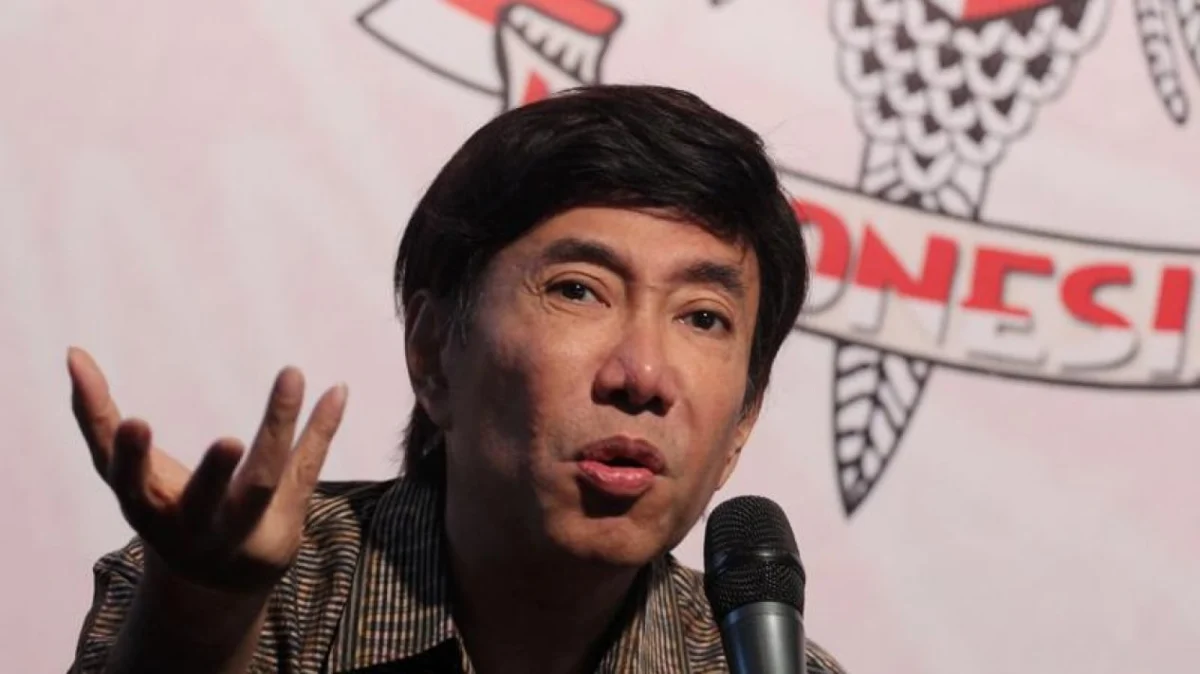
The passing of Mohammad Guruh Irianto Soekarnoputra on Saturday, September 26, 2026, at the age of 73, marks the end of an era for one of Indonesia’s most versatile cultural icons. A man who bridged the worlds of fine art, choreography, music, and national politics, Guruh left behind a legacy that transcended his illustrious lineage. While the nation mourns the loss of the youngest son of Indonesia’s founding father, Soekarno, and former First Lady Fatmawati, his life story offers a fascinating case study in intellectual pursuit and creative evolution. His journey, spanning from elite educational institutions in Jakarta to the historic lecture halls of Amsterdam, reflects a man who was deeply committed to academic enrichment despite his prominence in the public eye.
A Legacy of Artistic and Political Service
Guruh Soekarnoputra was far more than a presidential scion. As a visionary choreographer and composer, he was instrumental in modernizing traditional Indonesian performance arts. His work, often characterized by a fusion of classical Javanese aesthetics and contemporary Western theatrical sensibilities, redefined the Indonesian stage. Beyond the arts, he was a fixture in the Indonesian Democratic Party of Struggle (PDI-P), consistently advocating for the preservation of Indonesian cultural identity in the face of rapid globalization. His death at Siloam Semanggi Hospital in Jakarta prompted an outpouring of grief from political leaders, artists, and the public, all of whom recognized his unique role as a custodian of Soekarno’s ideological and cultural heritage.
The Formative Years: Early Education and Domestic Foundations
Born on January 13, 1953, in the heart of the capital, Guruh was raised in an environment that emphasized both intellectual rigor and nationalistic fervor. His educational trajectory began at the Perguruan Cikini, an institution known for its discipline and emphasis on holistic development. The atmosphere at Cikini provided the foundational structure that would later support his diverse professional interests.
Following his primary and secondary schooling, he attended SMA Negeri 25 Jakarta, a period during which he began to demonstrate a burgeoning interest in both social sciences and the arts. These formative years were critical in shaping his identity as an individual separate from the heavy expectations placed upon the children of Indonesia’s first president. His teachers and peers often described him as a contemplative student who possessed a keen eye for detail and a penchant for historical analysis.

European Horizons: The Amsterdam Period
In a move that surprised many observers of the Soekarno family, the young Guruh ventured to the Netherlands in the early 1970s. His decision to study at the University of Amsterdam was driven by a genuine intellectual curiosity regarding the history and material culture of the archipelago. He enrolled in the Archaeology program, an academic field that allowed him to explore the ancient roots of the Indonesian identity he would later celebrate through his artistic endeavors.
Guruh’s three-year tenure in Amsterdam, which concluded in 1974, provided him with a unique global perspective. Living in Europe during a time of intense cultural shift allowed him to synthesize Western artistic trends with his own Southeast Asian sensibilities. Although he ultimately did not complete his degree at the University of Amsterdam—a common occurrence for individuals whose career paths are redirected by intense creative or political callings—this period proved foundational. The exposure to European intellectual traditions served as a catalyst for his future works, particularly in how he structured large-scale dance performances and musical arrangements.
Mid-Life Academic Pursuit: Returning to the Classroom
One of the most compelling aspects of Guruh’s life was his decision to return to formal education later in life. In 2005, at the age of 52, he enrolled at the Sekolah Tinggi Ilmu Administrasi Mandala Indonesia (STIAMI). This return to academia was not a pursuit of vanity, but rather a deliberate effort to formalize his knowledge of governance and public administration—fields essential for his role as a long-standing member of the Indonesian legislature.
Between 2005 and 2008, he applied himself to the study of State Administrative Sciences. His transition from an artist to a serious academic student was noted by his faculty, who praised his dedication and his ability to relate theoretical administrative models to the practical realities of Indonesian statecraft. In 2010, building upon his Bachelor’s degree, Guruh pursued a Master’s degree in Management with a focus on Human Resource Management. This academic consolidation reflected his maturation as a politician, moving from the symbolic power of his name to a more substantive understanding of policy and organizational management.
Chronology of a Storied Life
- January 13, 1953: Born in Jakarta to Soekarno and Fatmawati.
- 1960s: Attends Perguruan Cikini and SMA Negeri 25 Jakarta.
- 1971–1974: Pursues Archaeology at the University of Amsterdam, Netherlands.
- 1970s–1990s: Becomes a prominent cultural figure, producing groundbreaking works in music and dance.
- 2005–2008: Returns to academia at STIAMI, majoring in State Administrative Science.
- 2010: Completes a Master’s degree in Management (Human Resources).
- September 26, 2026: Passes away at age 73 at Siloam Semanggi Hospital, Jakarta.
Public Reaction and National Mourning
The passing of Guruh Soekarnoputra has triggered a period of national reflection. Government officials have highlighted his dual role as a cultural diplomat and a servant of the state. Colleagues in the PDI-P have noted that his absence will be felt in committees concerned with education and culture, where he was a vocal advocate for curriculum reform that prioritizes the arts.

"Guruh was a bridge between the old guard and the new generation," noted one political analyst. "His ability to navigate the complexities of being a Soekarno while maintaining his own independent artistic path was remarkable. His commitment to education in his later years proved that he never stopped wanting to learn, a trait that defined his entire life."
Ritual and Symbolism in Final Rites
The funeral proceedings for Guruh were characterized by profound symbolism. In a gesture that honored his deep personal connection to his mother, the late Fatmawati, his body was wrapped in batik cloth associated with her memory. Furthermore, it was revealed that his remains were covered by the ihram cloth he used during his final umrah pilgrimage. This detail has resonated deeply with the Indonesian public, serving as a poignant reminder of his private faith and his final spiritual journey.
Implications for Future Cultural Policy
The legacy of Guruh Soekarnoputra extends beyond his individual accomplishments. His career serves as a template for how cultural figures in Indonesia can successfully engage with the political apparatus. By balancing his academic credentials in administration with his lifelong pursuit of the arts, he demonstrated that creative industries require a structural, policy-driven approach to survive.
His life suggests that the future of Indonesian cultural policy should focus on integrating artistic education with broader social sciences. As the nation moves forward, the "Guruh model"—the intersection of deep academic study and creative expression—may become a standard for those aspiring to bridge the gap between Indonesia’s traditional heritage and its future as a modern, globalized power.
Conclusion: A Final Assessment
Guruh Soekarnoputra was a man of many layers. He was a product of the nationalist revolution, a student of European archaeology, a master of the performing arts, and a scholar of public administration. His life, which spanned nearly three-quarters of a century, was marked by a continuous quest for knowledge. Whether in the libraries of Amsterdam or the classrooms of Jakarta, he approached every stage of his life with a sense of purpose. As he is laid to rest, the narrative of his life—a story of intellectual curiosity and service—remains a significant chapter in the history of modern Indonesia, serving as an inspiration for future generations to pursue both the arts and the sciences with equal fervor.