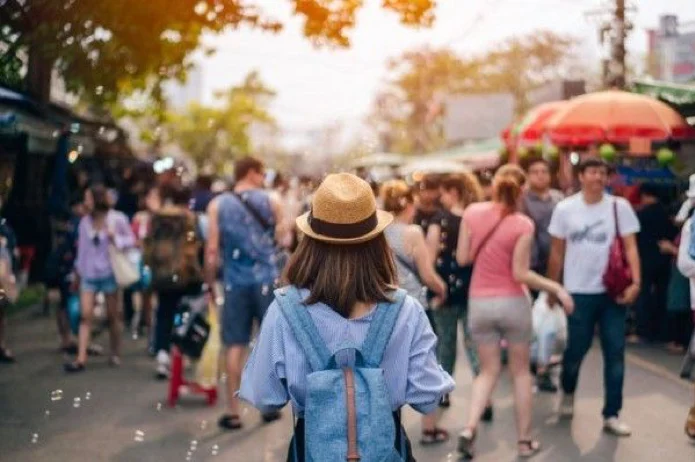
The landscape of personal finance and life priorities has undergone a seismic shift among the millennial and Generation Z cohorts. In an era defined by digital connectivity and a growing emphasis on psychological well-being, travel has transitioned from a periodic luxury to a fundamental lifestyle choice. Data from recent economic reports suggests that for these younger demographics, the accumulation of "experiential capital"—memories, cultural literacy, and personal growth—has largely superseded the traditional drive to accumulate material assets such as real estate or luxury vehicles during one’s early career years.
This behavioral change is not merely a trend; it is a profound alteration in how individuals define long-term security. While previous generations often viewed financial stability through the lens of tangible ownership, modern travelers are increasingly treating their income as a resource for life-shaping experiences. This shift is supported by the democratization of travel facilitated by low-cost carriers, peer-to-peer accommodation platforms, and the widespread accessibility of travel information through digital media.
The Economic Shift: Experiential Investment vs. Asset Accumulation
To understand the current appetite for travel, one must look at the economic context of the last decade. A 2023 study by the Global Travel Insights group indicated that approximately 65% of millennials prefer spending money on "meaningful experiences" rather than "material possessions." This preference is often attributed to the "experience economy," a concept where consumers place a premium on services that offer personal transformation.
For many, the cost of entry into the housing market has reached historic highs, leading to a "delayed adulthood" phenomenon. Faced with the daunting prospect of long-term debt to secure property, many young professionals have opted to reallocate their discretionary income toward travel. This is not necessarily an act of fiscal irresponsibility, but rather a calculated decision to maximize life satisfaction during their most physically capable years. By traveling, they engage with global cultures, refine their interpersonal skills, and cultivate a sense of adaptability—traits that are increasingly valued in the modern, globalized job market.
Chronology of a Shifting Paradigm
The transformation of travel from a "vacation" to a "lifestyle" can be traced back to the early 2010s, coinciding with the rise of social media and remote work flexibility.
- 2010–2015: The "Bucket List" era. Travel began to be documented and shared on social platforms, creating a social currency associated with visiting exotic locations.
- 2016–2019: The normalization of the "digital nomad" movement. Improved infrastructure in Southeast Asia and parts of Europe allowed for sustained travel while working, removing the binary choice between work and exploration.
- 2020–2021: The pandemic-induced pause. Global lockdowns led to a psychological "pent-up demand," reinforcing the value of movement and personal freedom.
- 2022–Present: The post-pandemic surge. Travel has become a critical component of mental health maintenance, with "bleisure" (business and leisure) travel becoming the new standard for corporate professionals.
The Psychology of Modern Exploration
Sociologists argue that this trend is rooted in the search for identity. In a world of increasing automation and artificial intelligence, human-centric experiences—such as navigating a foreign city, overcoming language barriers, or immersing oneself in a different social hierarchy—provide a sense of authenticity that digital interactions lack.
When an individual steps outside their comfort zone to visit an unfamiliar environment, they are subjected to "positive stress," or eustress. This psychological state fosters resilience. The challenges encountered during travel—such as navigating a foreign transit system or managing unexpected logistical hurdles—serve as a form of experiential training. This contributes to the development of "soft skills," including emotional intelligence, problem-solving, and cross-cultural empathy, which are highly transferable to professional environments.
Practical Frameworks for Sustained Travel
Transitioning to a lifestyle where travel is a permanent fixture requires more than just capital; it requires a strategic approach to planning and adaptation. Experts in the travel industry emphasize three core pillars:
1. Strategic Courage and Financial Literacy
The myth that one must wait for a substantial savings account to travel is increasingly being debunked. Instead, the modern traveler focuses on "sustainable spontaneity." This involves maintaining a lean budget and prioritizing travel frequency over luxury. By decoupling the idea of travel from the concept of "vacationing" (which implies high spending on leisure), travelers can integrate exploration into their daily existence, utilizing cost-effective travel hacks and long-term planning.

2. Adaptive Planning and Flexibility
While traditional tourism relies on rigid itineraries, lifestyle travel thrives on fluidity. The ability to adapt to the local environment—often referred to as "the flow state"—is essential. This involves researching a destination enough to ensure safety and basic logistics, while leaving room for serendipitous discoveries. This approach mitigates the disappointment that often arises when a meticulously planned trip fails to materialize as expected.
3. Cultivating Cultural Adaptability
The ultimate goal of lifestyle traveling is integration rather than observation. This requires an individual to be a student of culture. By engaging with local communities, learning rudimentary elements of local languages, and respecting indigenous customs, the traveler gains a deeper understanding of the world. This level of engagement is what distinguishes a tourist from a global citizen.
Broader Implications and Future Outlook
The rise of this travel-centric lifestyle has significant implications for global industries. Hospitality sectors are pivoting toward "community-driven" experiences, while the real estate market is seeing a surge in demand for short-term rental properties over traditional hotel stays. Furthermore, the workforce is evolving; corporations are increasingly offering remote work policies, recognizing that a well-traveled employee often possesses greater creative capacity and problem-solving skills.
However, this lifestyle is not without its critics. Concerns regarding the environmental impact of increased air travel and the "gentrification" of travel destinations are significant. Industry experts suggest that the future of this lifestyle must be balanced with "sustainable tourism"—an approach that emphasizes minimizing the carbon footprint and ensuring that the economic benefits of travel reach the local communities being visited.
As we look toward the future, the definition of success is clearly being rewritten. For the current generation, the "ROI" (Return on Investment) of a life is no longer measured solely in bank account balances or property titles. It is measured in the breadth of one’s perspective, the depth of one’s experiences, and the ability to navigate an ever-changing world with curiosity and resilience. Traveling is no longer an escape from reality; for many, it has become the most effective way to engage with it.

Expert Perspectives
Industry analysts from the Global Tourism Council have noted that the shift is permanent. "We are seeing a fundamental change in consumer values," says a senior consultant at the council. "The demand for ‘authenticity’ is the new gold standard. Companies that ignore this shift in millennial and Gen Z priorities will likely struggle to capture the market in the coming decade. Travel is no longer a luxury good; it is a necessity for personal development."
As this movement continues to mature, it is likely that we will see further integration between the travel industry and the professional sector, with more institutions fostering global mobility as a standard part of the human experience. Whether through gap years, remote work sabbaticals, or simply more frequent, shorter-duration trips, the culture of exploration is firmly embedded in the modern social fabric, promising a future of more connected and globally aware citizens.