Socio Today
The United States Department of Defense has confirmed the deaths of two American military personnel and the disappearance of a third following a sophisticated coordinated attack involving ballistic missiles and unmanned aerial vehicles (UAVs) launched by Iranian forces against a strategic installation in Jordan. According to a statement released by the United States Central Command (CENTCOM) on Saturday, July 18, 2026, the incident occurred during the late hours of Friday, July 17, as U.S. and allied forces were engaged in defensive maneuvers to intercept a heavy barrage of incoming munitions. The casualties represent a significant escalation in the direct military confrontation between Washington and Tehran, marking one of the deadliest single encounters for American forces in the region in recent years.
In addition to the two confirmed fatalities and the missing servicemember, the Pentagon reported that four other personnel sustained injuries of varying severity. These individuals were promptly evacuated via medical airlift to a military hospital in Jordan, where they are currently receiving specialized treatment. While the identities of the deceased and missing have been withheld pending the notification of next of kin, military officials emphasized that a robust search-and-recovery operation is currently underway to locate the unaccounted-for personnel. The strike has sent shockwaves through the international community, as it signifies a shift from proxy-led skirmishes to direct, state-sanctioned kinetic engagement between the Islamic Republic of Iran and the United States military.
Details of the Friday Engagement
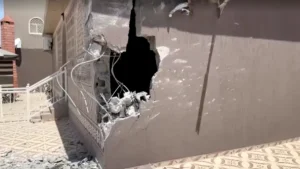
The attack on Friday evening was characterized by military analysts as a "saturated strike," designed to overwhelm existing air defense systems through the simultaneous use of high-speed ballistic missiles and low-flying "suicide" drones. CENTCOM officials noted that the defensive perimeter, which includes Patriot missile batteries and Counter-Rocket, Artillery, and Mortar (C-RAM) systems, managed to intercept a majority of the incoming threats. However, several projectiles penetrated the shield, impacting areas where personnel were stationed.
The choice of Jordan as a theater for this attack is significant. Jordan has long served as a stable security partner for the United States, hosting several thousand American troops as part of regional stability missions and the ongoing effort to prevent a resurgence of extremist groups. By targeting assets within Jordanian territory, Tehran has demonstrated a willingness to expand the geographic scope of the conflict, potentially pressuring Amman and other regional capitals to reconsider their security cooperation with Washington.
The Iranian Ultimatum and the "Full-Scale" Threat
The strike in Jordan follows an explicit and ominous warning from the highest levels of the Iranian military hierarchy. On Saturday, Major General Mohsen Rezaei, a senior military advisor to Iran’s Supreme Leader Mojtaba Khamenei and a prominent figure within the Islamic Revolutionary Guard Corps (IRGC), issued a televised statement regarding the future of the conflict. Speaking to the state broadcaster IRIB, Rezaei warned that Iran is prepared to transition from "proportionate response" to a "full-scale offensive operation" if the United States does not cease its current military campaign.
"If American attacks continue for another two or three days, we will enter the phase of full-scale offensive operations," Rezaei stated during the interview. He further asserted that the era of strategic patience or limited retaliation had ended. "Iran will no longer limit itself to acts of retaliation or equal response. There will be no safe political boundaries from the force of Iran’s strike power."
Rezaei’s comments also included a demand for financial reparations, suggesting that Washington must pay for the damage caused to Iranian infrastructure during recent sorties. While the United States has maintained that its strikes are precision-targeted at military and IRGC-linked facilities, Tehran has accused the U.S. of hitting civilian infrastructure, a claim the Pentagon has repeatedly denied.
A Week of Intensifying Hostilities
The current crisis is the culmination of seven consecutive nights of American airstrikes against Iranian-linked targets. This sustained U.S. campaign was reportedly launched in response to a series of provocations in international shipping lanes and previous drone attacks on American outposts in Syria and Iraq. The U.S. Navy and Air Force have utilized a combination of carrier-based aircraft and long-range bombers to degrade the IRGC’s logistical networks and drone manufacturing hubs.
In response, Tehran has not only targeted U.S. personnel directly but has also directed its fire toward Gulf nations that host American military assets. This "horizontal escalation" is a known part of Iran’s defensive doctrine, intended to make the cost of hosting U.S. bases prohibitively high for regional neighbors like the United Arab Emirates, Qatar, and Bahrain. The targeting of Jordan, however, represents a more aggressive move, as Jordan does not share a maritime border with Iran and has historically tried to maintain a delicate balance in its foreign policy.
Strategic Shift under New Iranian Leadership
The mention of Mojtaba Khamenei as the Supreme Leader in the recent reports highlights a critical shift in Iran’s internal political landscape. In this 2026 context, the transition of power from the late Ali Khamenei to his son, Mojtaba, appears to have ushered in a more confrontational and uncompromising foreign policy. Analysts suggest that the younger Khamenei, closely aligned with the hardline factions of the IRGC, may feel the need to project absolute strength to consolidate his domestic authority.
This internal dynamic makes the current standoff particularly volatile. Unlike previous cycles of escalation where back-channel diplomacy often provided an "off-ramp," the current rhetoric from Tehran suggests a departure from traditional diplomatic norms. The insistence that there are "no safe political boundaries" implies that Iranian missiles could potentially target U.S. interests or allies far beyond the immediate Middle Eastern theater.
Regional and Global Implications
The deaths of American servicemembers in Jordan have immediate implications for U.S. domestic and foreign policy. Within the United States, there is likely to be increased pressure on the administration to deliver a "decisive" response, which risks a broader regional war. Conversely, there are growing calls for a strategic reassessment of the U.S. footprint in the Middle East to avoid further "forever wars."
From a global perspective, the escalation has already begun to affect international markets. Crude oil prices saw a sharp uptick following the news of the Jordan strike, as traders fear disruptions to the Strait of Hormuz, through which a significant portion of the world’s energy supply passes. Furthermore, the involvement of Jordan—a country seen as a pillar of regional stability—threatens to draw in other regional actors, including Israel and Saudi Arabia, both of whom view Iran’s missile program as an existential threat.
Technical Analysis of Iran’s Drone and Missile Capabilities
The 2026 iteration of the Iranian military machine has shown significant technological advancements. The "Shahed" series of loitering munitions, which gained notoriety in earlier conflicts, have reportedly been upgraded with more resilient GPS-jamming resistance and improved thermal seekers. Furthermore, the ballistic missiles used in the Friday attack are believed to be variants of the Fateh-110 or Zolfaghar, which possess high precision and the ability to maneuver in their terminal phase to evade interceptors.
The Pentagon’s report of a "missing" servicemember also raises concerns regarding the chaos of the impact zone. In modern missile warfare, the sheer kinetic energy of an impact can level reinforced structures, making search-and-rescue operations grueling and complex. The search for the missing individual remains the top priority for CENTCOM, even as the military prepares for potential follow-up strikes.
Diplomatic Stagnation and the Path Forward
At the United Nations, emergency sessions are expected to be convened, though the likelihood of a meaningful resolution remains low given the deep divisions among the permanent members of the Security Council. Traditional mediators, such as Oman and Qatar, have reportedly been attempting to facilitate a de-escalation, but the IRGC’s "full-scale" ultimatum suggests that the window for dialogue is closing rapidly.
The situation remains fluid. As the U.S. military evaluates its next steps, the primary focus is on the protection of its remaining forces in the region and the recovery of the missing personnel. The coming 48 to 72 hours—the window mentioned by General Rezaei—will be a critical period that could determine whether the Middle East descends into a large-scale interstate conflict or if a fragile deterrence can be re-established.
For now, the international community watches with bated breath as the two nations stand on the precipice of a war that neither side claims to want, but both sides seem increasingly prepared to fight. The loss of life in Jordan marks a somber milestone in this 2026 crisis, serving as a stark reminder of the human cost of geopolitical instability in an increasingly armed and volatile region.