Socio Today
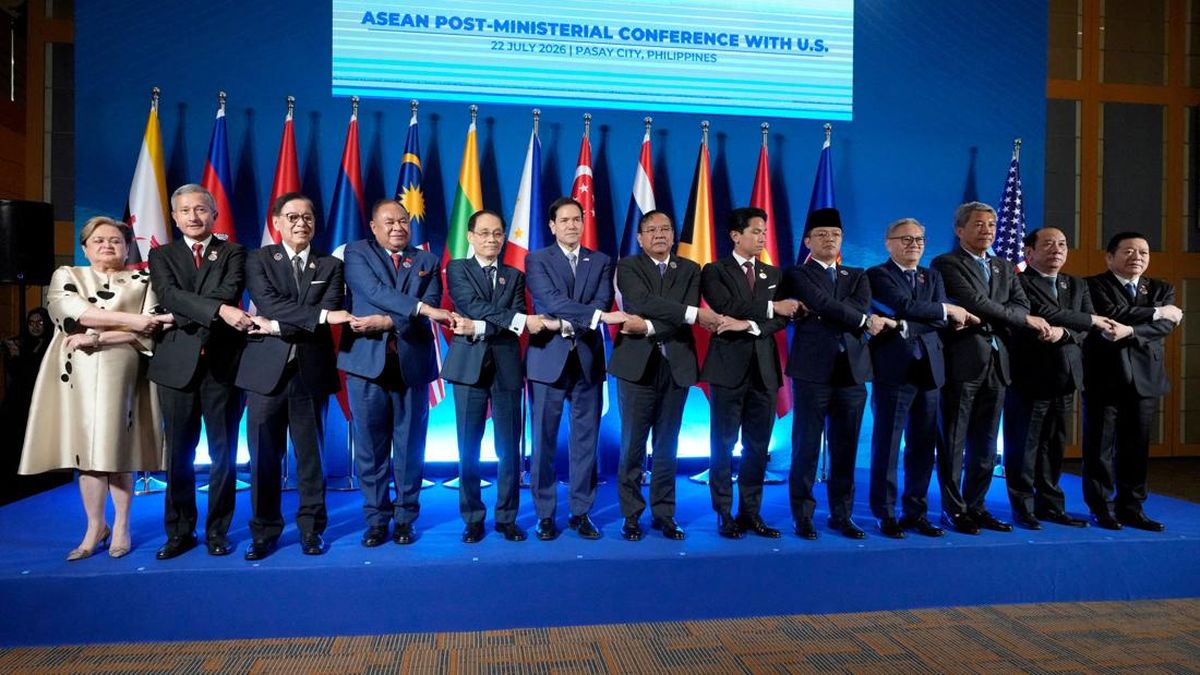
In a high-stakes diplomatic gathering in Manila, United States Secretary of State Marco Rubio addressed the Association of Southeast Asian Nations (ASEAN) Foreign Ministers, delivering a stern warning regarding the ongoing conflict with Iran and its far-reaching implications for global energy security. Speaking at the ASEAN Ministerial Meeting on Wednesday, Rubio characterized the Islamic Republic of Iran as an insincere negotiator, accusing Tehran of weaponizing one of the world’s most vital maritime chokepoints: the Strait of Hormuz. The Secretary’s remarks underscore a deepening crisis that threatens to destabilize not only the Middle East but also the rapidly growing economies of Southeast Asia, which remain heavily reliant on Middle Eastern crude oil and liquefied natural gas.
The Secretary of State’s visit to the Philippine capital comes at a time of heightened regional anxiety. For months, the shadow of a broader conflict between Washington and Tehran has loomed over international markets. According to Rubio, the United States remains theoretically open to a diplomatic resolution, yet he insisted that the current administration in Tehran has shown no genuine desire to engage in the "positive and constructive" dialogue necessary to de-escalate the situation. The rhetoric in Manila reflects a hardening of the U.S. position, as Rubio emphasized that the United States would take all necessary measures to protect its interests and those of its global allies if diplomacy continues to fail.
The Impasse of Diplomacy: Rubio’s Assessment of Tehran
The core of Rubio’s address focused on the perceived failure of recent attempts to bring Iran back to the negotiating table. "The United States remains open and willing to engage in positive and constructive negotiations and discussions, provided that the commitments that have been made are respected," Rubio stated during the forum, as reported by Al Jazeera. However, he quickly pivoted to a more critical assessment, noting that the current impasse is a direct result of Iranian intransigence.
Rubio argued that for a dialogue to be successful, both parties must demonstrate a baseline of sincerity, which he claims is currently lacking on the Iranian side. "The problem we face today is that they are not serious about dialogue. If they are serious, we are also serious. If not, then we will do what is necessary to protect our interests and also the interests of our allies," he added. This ultimatum suggests that the U.S. is prepared to pivot from diplomatic pressure to more direct forms of intervention or containment if the status quo persists.
The Secretary’s comments were not merely a bilateral grievance but were framed as a warning to the international community. By choosing the ASEAN forum as his platform, Rubio sought to highlight how Iranian regional policy directly impacts the Indo-Pacific. The U.S. perspective maintains that Iran’s tactical maneuvers in the Middle East are part of a broader strategy to exert leverage over the global economy by holding maritime trade routes hostage.
The Strategic Significance of the Strait of Hormuz
A central pillar of Rubio’s warning concerned the Strait of Hormuz, a narrow waterway between Oman and Iran that connects the Persian Gulf with the Gulf of Oman and the Arabian Sea. It is arguably the most important oil transit chokepoint in the world. Rubio warned that Iran’s ambitions to control this passage constitute a "dangerous precedent" that could undermine international law and maritime freedom across the globe.
"If we create a precedent in the Middle East where a country can decide to control international waterways, charge tolls, and blow up your ships if you don’t pay, we have created a very dangerous precedent that will be repeated in other parts of the world, including this region," Rubio said, according to Channel News Asia. This specific reference to "this region" was a clear nod to the South China Sea, where ASEAN nations have long struggled with territorial disputes and challenges to the freedom of navigation.
The Secretary argued that Iran is attempting to assert legal rights it does not possess under international maritime frameworks, such as the United Nations Convention on the Law of the Sea (UNCLOS). By attempting to regulate or restrict traffic through the Strait, Iran is challenging the fundamental principle of "innocent passage" and "transit passage" for commercial vessels. Rubio’s insistence that this "cannot be allowed to happen" signals a potential increase in U.S. naval presence or escorted shipping operations in the region to ensure that the flow of energy remains uninterrupted.
ASEAN’s Economic Vulnerability and Energy Dependency
The concerns raised by Secretary Rubio found a captive audience among ASEAN ministers, though the tone of the regional bloc was one of profound alarm rather than total alignment with U.S. strategy. ASEAN nations are among the most vulnerable to disruptions in the Strait of Hormuz. Data suggests that approximately 60 percent of the energy supplies for the Asian region pass through this single chokepoint.
In a joint statement, the ASEAN Foreign Ministers expressed "serious concern" over the escalating tensions. The bloc noted that a total closure or sustained disruption of the Strait would have catastrophic effects on their domestic economies. For nations like Thailand, Vietnam, and Indonesia, which are in the midst of massive industrial expansions, a spike in oil prices or a physical shortage of fuel could trigger runaway inflation and stall GDP growth.
"We are very concerned that these developments are seriously undermining the efforts being made by key mediators and reducing the prospects for a peaceful settlement through dialogue and diplomacy," the ASEAN joint statement read. The bloc’s position emphasizes a "neutrality" that seeks to prioritize economic stability over geopolitical alignment, urging both the U.S. and Iran to return to the bargaining table to prevent a global energy crisis.
Bilateral Dynamics: The Rubio-Wang Yi Meeting
The Manila summit also served as a backdrop for critical bilateral diplomacy. Following the ASEAN forum, Secretary Rubio held a high-profile meeting with Chinese Foreign Minister Wang Yi. While the details of their private conversation remain largely confidential, analysts suggest that the Iran crisis was a top priority.
China is one of the largest buyers of Iranian oil and maintains a complex relationship with Tehran. At the same time, Beijing relies heavily on the stability of global trade routes for its own economic health. The meeting between Rubio and Wang Yi represents a rare moment of potential overlap in interests: neither Washington nor Beijing desires a total shutdown of the Strait of Hormuz, though they differ wildly on how to prevent such an outcome.
For the U.S., the goal is to pressure China to use its economic leverage over Iran to force a change in behavior. For China, the priority is ensuring that U.S. military actions do not further destabilize the Middle East or lead to a conflict that would drive energy prices to record highs. The outcome of these discussions will likely determine whether a coordinated international response to the Hormuz crisis is possible, or if the region will remain a theater of unilateral actions.
Historical Context and the Path to Escalation
The current friction is the culmination of a long-standing breakdown in U.S.-Iran relations, which significantly deteriorated following the U.S. withdrawal from the Joint Comprehensive Plan of Action (JCPOA) in 2018. Since then, a "maximum pressure" campaign of sanctions has crippled the Iranian economy, leading Tehran to adopt a more aggressive posture in the Persian Gulf to demonstrate its ability to retaliate.
The timeline of recent escalations includes several key incidents:
- Harassment of Commercial Shipping: Over the past year, there have been numerous reports of the Iranian Revolutionary Guard Corps (IRGC) attempting to seize or divert tankers in the Gulf.
- Drone and Missile Strikes: Incidents involving unmanned aerial vehicles (UAVs) targeting energy infrastructure in the region have become more frequent.
- Breakdown of Back-channel Talks: While European and Middle Eastern mediators (such as Qatar and Oman) have attempted to facilitate indirect talks, Rubio’s comments suggest these channels have effectively dried up or reached a dead end.
By bringing this history to the ASEAN stage, Rubio is attempting to build a narrative that Iran is a "rogue actor" whose actions have moved beyond a regional dispute into a global security threat.
Analysis: The Global Implications of a "Toll" on the Sea
Rubio’s metaphor of Iran "charging a toll" for passage through the Strait of Hormuz touches on a sensitive nerve in international law. If a state is permitted to unilaterally charge for passage through an international strait, the entire logic of global maritime trade—built on the 1982 UNCLOS treaty—could collapse.
For ASEAN, this is not a theoretical problem. The Malacca Strait, which runs between Indonesia, Malaysia, and Singapore, is another of the world’s most vital chokepoints. If the international community accepts Iran’s claims over Hormuz, it could embolden other nations to assert similar control over the Malacca Strait or the South China Sea. This "precedent" that Rubio warned about is perhaps the most significant long-term risk for Southeast Asian nations, as it would transform open seas into a patchwork of nationalized, fee-based zones, drastically increasing the cost of global trade.
Conclusion: A Fragile Regional Stability
As the ASEAN Ministerial Meeting concludes, the outlook for the Middle East and its impact on Asia remains grim. Secretary Rubio’s statements in Manila have clarified the U.S. position: Washington sees no current path to peace because it views Tehran’s engagement as a facade. By emphasizing the threat to the Strait of Hormuz, the U.S. is signaling that it views the conflict as an issue of global economic survival, not just regional politics.
For ASEAN, the challenge remains one of balancing. While they share the U.S. concern over the freedom of navigation and the security of energy supplies, they are wary of a military escalation that would inevitably follow if diplomacy is declared dead. The 60 percent energy dependency figure serves as a stark reminder that when the U.S. and Iran move toward conflict, it is the economies of the Indo-Pacific that may ultimately pay the highest price.
In the coming weeks, the international community will be watching for signs of increased naval activity in the Gulf and any potential shifts in Iran’s rhetoric. For now, the "Manila Warning" delivered by Secretary Rubio stands as a definitive marker of a world teetering on the edge of a major energy disruption, with the Strait of Hormuz serving as the precarious fulcrum upon which global stability rests.