Socio Today
The geopolitical landscape of the Middle East faces a critical inflection point as the United States government formally declined a request from the Kingdom of Saudi Arabia for direct air support in its ongoing military campaign against the Houthi movement in Yemen. According to reports from the Financial Times and corroborated by various diplomatic sources, the Biden-Trump transition era—marked by a heightened state of alert regarding Iranian regional influence—has forced Washington to re-evaluate its military commitments. While Riyadh sought immediate tactical air cover to counter insurgent advances, Washington has cited the necessity of maintaining military readiness for potential escalation with Iran as the primary justification for its neutrality in this specific request.
The refusal marks a notable shift in the traditional security architecture that has defined U.S.-Saudi relations for decades. Historically, Washington has provided logistical, intelligence, and occasionally direct tactical support to the Saudi-led coalition. However, as the conflict in Yemen evolves into a theater of broader regional competition, the White House has signaled that its primary strategic interest lies in curbing Tehran’s regional reach, effectively de-prioritizing the internal stability of Yemen as a direct U.S. military obligation.
Chronology of Escalation in the Yemeni Theater
The current instability in Yemen is the culmination of years of cyclical violence, but the situation deteriorated sharply in mid-July. Tensions reached a breaking point when forces aligned with the internationally recognized government launched a strategic strike on the Sana’a International Airport. The timing of the attack was particularly sensitive, as it occurred precisely when a commercial aircraft transporting a high-level delegation of Houthi political leaders—reportedly arriving from Iran—was attempting to land.
The Houthi movement, which maintains de facto control over large swathes of northern Yemen, responded with immediate vitriol, formally declaring a state of total war against the Saudi coalition. The group explicitly linked its military mobilization to the presence of a "stranglehold" blockade imposed by Saudi forces, demanding the immediate lifting of all restrictions on air and sea access to Houthi-held territories.
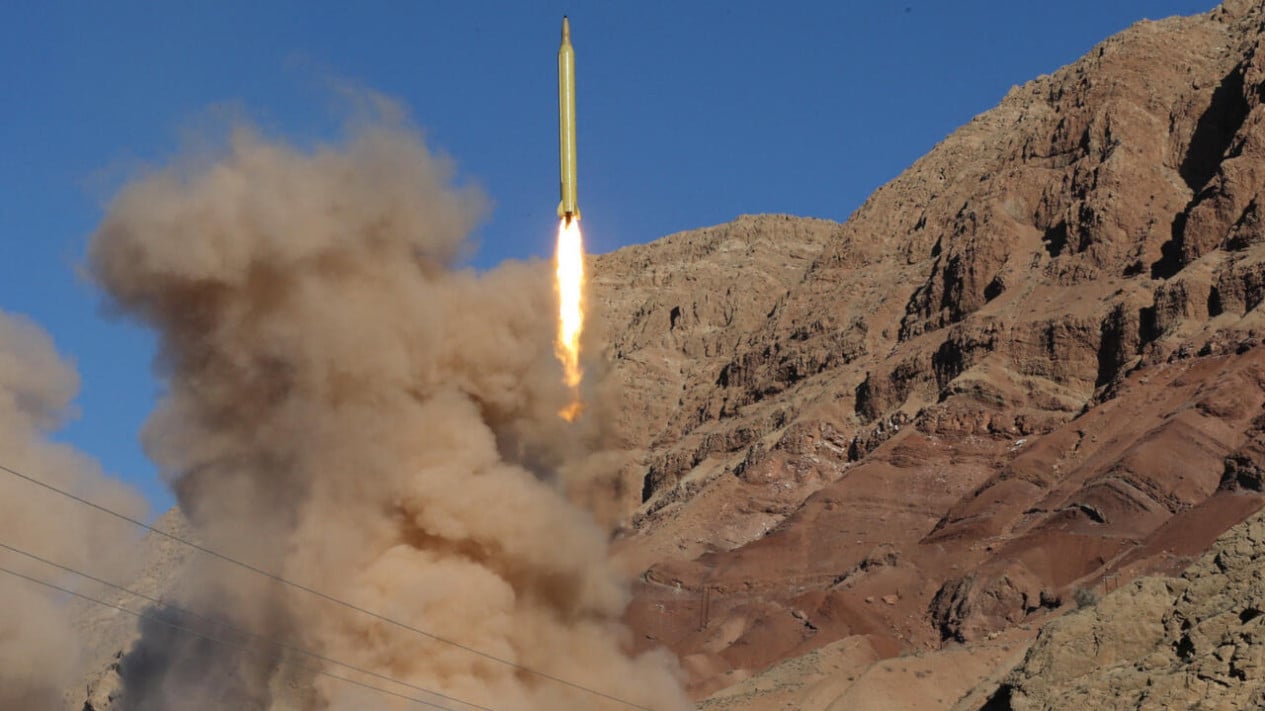
Following this declaration, the tactical situation on the ground shifted rapidly. In the span of just seven days, Houthi fighters achieved significant territorial gains in the southwest and western regions of the country. Reports indicate that these forces have successfully seized control of the critical Red Sea coastline, effectively threatening the security of the Bab el-Mandeb Strait—one of the world’s most vital maritime chokepoints. Furthermore, the capture of the port of Mokha represents a major logistical blow to the Saudi-backed government, as the port serves as a primary hub for both humanitarian aid and military supplies.
The Washington-Riyadh Security Paradox
Despite the refusal of direct air support, the U.S.-Saudi security partnership remains multifaceted. Axios recently reported that President Donald Trump personally rebuffed a request from Crown Prince Mohammed bin Salman Al Saud for a broader U.S. intervention against Houthi targets. This move has been interpreted by analysts as an attempt to decouple U.S. regional policy from the Saudi-Yemen conflict, ensuring that U.S. military assets remain available for contingencies involving the Iranian military or its proxies in the Levant and the Persian Gulf.
Interestingly, while the administration has denied requests for offensive air strikes, the logistical presence of the United States in the Kingdom continues to grow. Sources cited by CNN indicate that more than 100 U.S. military advisors have arrived in Saudi Arabia in recent weeks. Their mission, according to official briefings, is to assist Riyadh in professionalizing its defense capabilities and improving the effectiveness of its existing military infrastructure. This suggests that while Washington is hesitant to engage in direct combat, it remains committed to the long-term goal of bolstering Saudi Arabia’s defensive posture against regional threats.
Contextualizing the Iranian Factor
The focus on Iran as the primary driver of U.S. policy is not without precedent. For years, Western intelligence agencies have accused Tehran of providing the Houthi movement with sophisticated drone technology, ballistic missiles, and tactical guidance. By framing the conflict through the lens of the "Iran file," the United States is essentially acknowledging that any engagement in Yemen is, by extension, a proxy war with the Islamic Republic.
The strategic dilemma for Washington is twofold. First, an aggressive intervention in Yemen could potentially trigger a wider regional war, exactly what the White House seeks to avoid while the Iranian nuclear program and regional proxy networks remain in flux. Second, the humanitarian cost of the war in Yemen has become a significant political liability in the United States, with domestic pressure mounting to end the involvement of U.S.-made weaponry in the conflict. By distancing itself from direct tactical strikes, the U.S. aims to mitigate both geopolitical risks and domestic criticism.
Regional Reactions and the Security of Holy Sites
The spillover of the conflict has extended beyond military installations, reaching into the religious and cultural consciousness of the region. Recent reports of an unidentified drone operating in the vicinity of the holy city of Mecca have sent shockwaves through the Islamic world. The attempted incursion, which was reportedly intercepted by Saudi air defense systems, drew immediate condemnation from regional leaders.
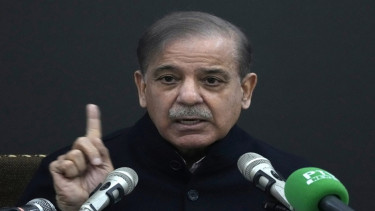
Perdana Menteri Pakistan, Shehbaz Sharif, was among the first to voice strong opposition to the incident, characterizing the attempt to compromise the security of Islam’s holiest site as "heinous and barbaric." Such incidents serve to internationalize the conflict, transforming a local Yemeni struggle into a matter of concern for the entire Muslim world. This incident highlights the precariousness of Saudi security, as the Kingdom struggles to protect not only its economic infrastructure—such as the Red Sea oil pipelines—but also the sanctity of its religious centers.
Strategic Implications and Future Outlook
The current situation presents several key implications for the future of the Middle East:
- Erosion of the Security Umbrella: The refusal to provide air support suggests a pivot toward a more transactional model of security cooperation. Saudi Arabia may need to look toward diversifying its military partnerships or accelerating its own "Vision 2030" defense manufacturing goals to fill the gap left by reduced U.S. intervention.
- Maritime Security Risks: With the Houthi movement consolidating control over the Bab el-Mandeb Strait, the risk to global shipping routes is at an all-time high. International shipping companies are already factoring in higher insurance premiums, and any prolonged conflict in the area could disrupt energy flows from the Persian Gulf to Europe and Asia.
- The Limits of Proxy Warfare: Both the U.S. and Iran are testing the limits of indirect engagement. By avoiding a direct confrontation, both powers are attempting to manage the "gray zone" of modern warfare. However, as demonstrated by the rapid territorial shifts in western Yemen, the vacuum created by this stalemate is being filled by non-state actors who are increasingly emboldened.
- Humanitarian Crisis: Amidst the tactical movements of armies, the civilian population of Yemen remains the most vulnerable entity. The blockade of ports and the disruption of critical infrastructure continue to exacerbate what the United Nations has frequently identified as one of the world’s worst humanitarian disasters.
As the situation develops, the global community will be watching closely to see if the U.S. maintains its current stance of limited engagement or if the escalating security threat to the Red Sea corridor forces a change in policy. For the moment, Washington’s message to Riyadh is clear: the United States is prepared to assist in defense and training, but it is not prepared to become the primary engine of a kinetic military campaign in the Yemeni desert while the shadow of Iran looms large over the entire theater.
In the coming weeks, diplomatic channels are expected to remain active. Riyadh will likely continue to lobby for more robust military support, while the Houthi movement will look to solidify its gains on the coast to gain leverage for any potential future negotiations. Whether these developments lead to a de-escalation or a further descent into regional chaos depends heavily on the strategic calculations made in Tehran, Washington, and Riyadh in the immediate aftermath of this latest diplomatic friction.