The digital transformation of civil registration services in Indonesia has fundamentally streamlined how citizens manage their administrative records, moving routine bureaucratic tasks away from physical government offices and directly onto digital screens. Among the most critical administrative updates a household can undergo is the incorporation of a new family member into the official Kartu Keluarga (KK), a document that serves as the cornerstone of legal identity verification for citizens across the archipelago. Traditionally requiring long queues at the local Office of Population and Civil Registration (Dinas Kependudukan dan Pencatatan Sipil, or Dukcapil), this process has increasingly migrated to online portals and regional applications, such as the SIDEMANG platform utilized in Palembang or various other municipal portals nationwide. Despite these advancements, the transition to paperless, remote administration does not eliminate the need for precision. The inclusion of a newborn child, an adopted dependent, or an adult relative entering a household requires strict adherence to specific bureaucratic workflows, compliance with document standards, and an understanding of regional infrastructural variances. As municipal governments continue to digitize, mastering the digital application process ensures that households can update their legal status securely, efficiently, and entirely free of charge.
Background and Context of Civil Registration Digitization
The push toward online population administration is not merely a matter of convenience; it represents a major strategic initiative by the Ministry of Home Affairs to establish a singular, highly accurate population database. Historically, bureaucratic bottlenecks at physical Dukcapil offices created severe backlogs, leaving countless families with outdated administrative records. This lag often cascaded into secondary problems, complicating access to subsidized healthcare, public education enrollment, social welfare programs, and formal employment verification.
To mitigate these systemic inefficiencies, the Indonesian government accelerated the implementation of electronic civil registration, famously championed by the Directorate General of Population and Civil Registration through initiatives like the Digital Population Identity (Identitas Kependudukan Digital, or IKD). By allowing families to manage updates—such as the addition of family members—via smartphones or web browsers, the state aims to achieve near-real-time synchronization of demographic data. This digital pivot relies heavily on a decentralized approach, where central government standards set by the Ministry of Home Affairs are executed through localized municipal platforms tailored to the technological capacities of individual regional governments. Consequently, while the legal framework remains uniformly national, the specific digital interface, application name, and auxiliary feature integrations—such as the simultaneous issuance of a birth certificate or a Child Identity Card (Kartu Identitas Anak)—vary significantly depending on the applicant’s residential jurisdiction.
Categorized Requirements for Adding Family Members
Before initiating any digital submission, applicants must accurately categorize the nature of the family addition, as the mandatory documentation varies widely depending on whether the incoming individual is a newborn infant or a person who already possesses a Population Identification Number (Nomor Induk Kependudukan, or NIK).
For newborns, the procedure focuses on establishing baseline identity and lineage. The primary documents required include the existing family’s Kartu Keluarga, a formal birth notification letter issued by a hospital, puskesmas, clinic, or certified midwife, and the parents’ marriage certificate or official proof of nuptial registration. In certain regional systems, parents may also be prompted to upload their own digital identification tokens to verify familial ties. Crucially, many progressive municipalities have integrated this workflow to allow simultaneous applications for a birth certificate and a Child Identity Card (KIA), drastically reducing the administrative burden on new parents. However, applicants must verify whether their local Dukcapil infrastructure supports these bundled services.
Conversely, adding an individual who already possesses an established NIK—such as an elderly parent moving into a child’s household, or a child transferring from a relative’s registry—triggers a completely different procedural track. This scenario often intersects with inter-regional migration rules, requiring formal move-in certificates (Surat Keterangan Pindah) or documentation proving changes in household composition. If a child is being integrated into a household managed by extended family members or legal guardians, supplementary documents verifying guardianship, foster status, or familial consent may be legally mandated. Selecting the incorrect service category on a digital portal is among the leading causes of administrative rejection, underscoring the necessity of pre-application auditing.
Step-by-Step Chronology of the Online Application Process
Navigating the digital portals of regional Dukcapil offices requires adherence to a structured sequence of actions designed to protect data integrity while ensuring efficient bureaucratic processing.
Step 1: Accessing Verified Regional Channels
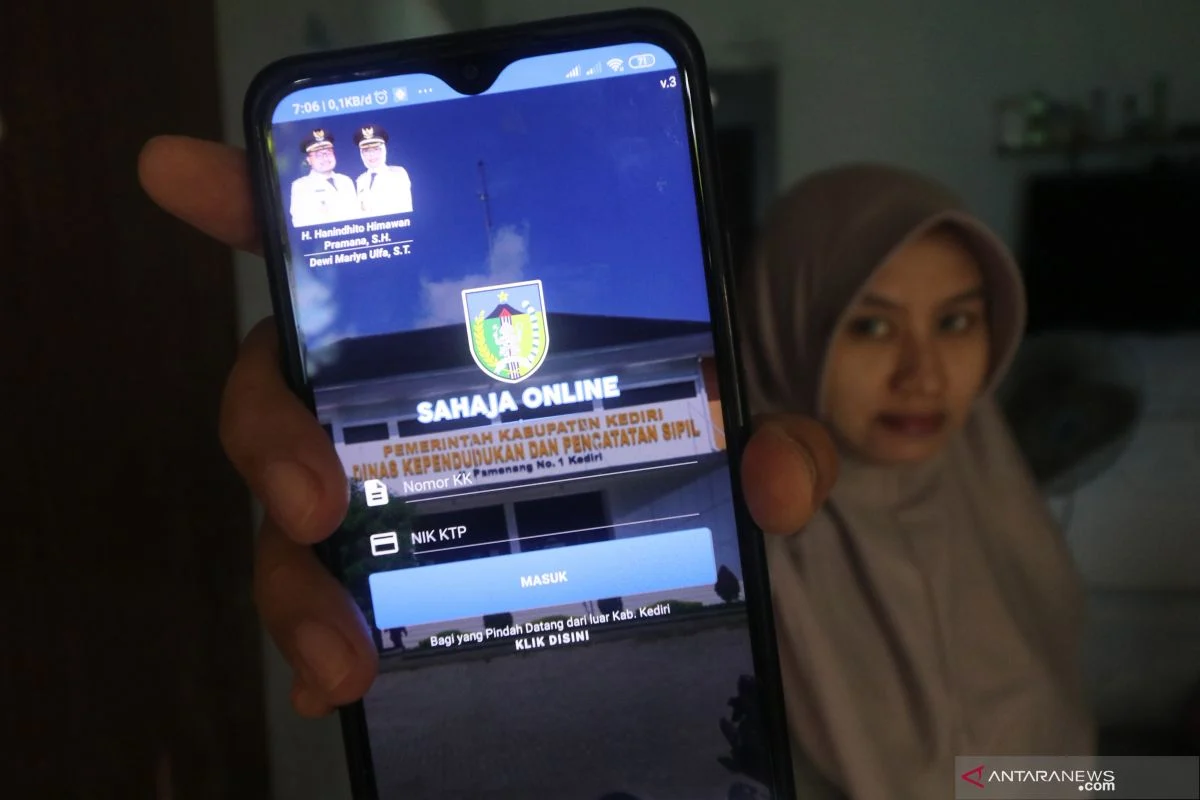
The process begins by locating the official web domain or dedicated mobile application managed by the local Dukcapil office of the applicant’s legal domicile. Analysts and cybersecurity experts repeatedly caution citizens against utilizing unverified third-party websites or intermediary services that promise expedited administrative processing for a fee. Official government portals typically feature domain suffixes indicative of state entities, such as ‘.go.id’. For instance, residents of Palembang utilize the SIDEMANG application, whereas other jurisdictions rely on distinct regional cloud portals or specialized WhatsApp gateway services authorized by local government decree.
Step 2: Account Authentication and Profile Initialization
Upon accessing the designated platform, users are required to establish a secure user profile or log into an existing account. This step mandates the input of verified personal information, including an active mobile number, an email address, and a primary NIK. Security protocols often require a two-factor authentication step, such as a One-Time Password (OTP) sent via SMS or email, to verify the user’s identity before granting access to sensitive population administration modules.
Step 3: Service Selection and Category Mapping
Once authenticated, the user must navigate the service menu to select the precise demographic update required. Applicants must carefully differentiate between services labeled for newborn additions, external family relocations, or general household restructuring. Selecting a generic service category or misrepresenting the status of the incoming member will inevitably result in systemic rejection by reviewing officers who cross-reference the application against national database flags.
Step 4: Data Entry and High-Fidelity Document Upload
The fourth phase involves populating the digital application form with precise biographical data, ensuring absolute alignment with existing physical civil documents. Typographical errors regarding names, birth dates, or previous NIK entries will corrupt the automated verification chain. Following data entry, applicants must upload digital copies of all mandatory supporting documents. Modern portals require these files to be uploaded in specific digital formats (such as PDF or high-resolution JPEG) derived from clear, uncropped scans or photographs of the original physical documents. Illegisible uploads or obscured text fields will trigger an immediate administrative halt.
Step 5: Verification, Review, and Iterative Correction
After final submission, the application enters an internal bureaucratic queue where Dukcapil officials examine the digital file for legal and structural compliance. According to internal municipal governance standards, this review phase evaluates document authenticity and database integrity. If discrepancies or minor omissions are detected, the system generates a revision notice, prompting the applicant to rectify the specific document through the portal. Applicants are advised to monitor their notification dashboards actively during this window to prevent prolonged processing delays.
Step 6: Document Retrieval and Digital Archiving
Upon successful verification and approval, the updated Kartu Keluarga is finalized. In regions utilizing fully digitized civil administration frameworks, the new KK is transmitted directly to the applicant’s registered email address or made available for secure download via the platform dashboard. This digital document features a secure Quick Response (QR) code, which replaces the traditional wet signature and physical stamp of the Dukcapil head, rendering it legally valid for all public and private administrative interactions. Citizens are strongly encouraged to cross-examine the newly downloaded document for accuracy, immediately reporting any clerical errors to the local office.
Legal Framework and the Zero-Cost Mandate
A critical dimension of population administration reform in Indonesia is the absolute statutory prohibition of fees for core civil services. The processing and issuance of a Kartu Keluarga—regardless of whether it involves additions, deletions, or structural modifications—are entirely free of charge. This policy is explicitly codified under Article 79A of Law Number 24 of 2013 concerning Population Administration, which mandates that the state absorb the administrative costs associated with maintaining civil registry databases.
The legal enforcement of this zero-cost mandate has significant socio-economic implications. Historically, the commodification of bureaucratic services by unauthorized intermediaries (known locally as calo) created severe financial barriers for low-income families, frequently forcing them to delay vital administrative updates. By shifting these services to transparent, direct-to-citizen digital platforms, the government has systematically dismantled the operational space for extortion and illegal fees. Officials from the Ministry of Home Affairs have repeatedly warned the public to report any individual or agency—internal or external to Dukcapil—demanding monetary compensation for expediting family card updates. Citizens encountering such violations are encouraged to utilize official state whistleblowing channels.
Implications and Broader Analysis of Digital Civil Registration
The widespread adoption of online Kartu Keluarga updates carries profound implications for state governance, demographic planning, and social equity. On a macroeconomic level, real-time population updates feed directly into the National Population Database (Database Kependudukan Nasional), providing policymakers with granular, up-to-date demographic metrics. This accuracy is vital for designing targeted fiscal policies, allocating regional development funds, and forecasting public infrastructure demands in education, healthcare, and public transportation.
From a sociological perspective, the elimination of physical geographic friction democratizes access to state services. Families residing in remote or outer districts within municipal boundaries no longer need to expend time and financial resources traveling to central urban offices simply to register a newborn or update a household roster. This reduction in administrative friction directly correlates with higher rates of legal identity documentation among vulnerable populations, ensuring that children secure their birth rights and access to state-backed social safety nets—such as the National Health Insurance (JKN) scheme administered by BPJS Kesehatan—earlier in life.
However, analysts also point to persistent structural challenges that accompany this digital transition. The primary vulnerability lies in the digital divide: disparities in internet connectivity, digital literacy, and smartphone ownership mean that marginalized or elderly populations may struggle to navigate complex web portals independently. To counter this, many forward-thinking municipal Dukcapil offices maintain hybrid operational models, preserving physical assistance desks or deploying mobile community service units alongside their digital infrastructure.
Ultimately, the digitalization of family card updates represents a critical milestone in Indonesia’s broader administrative modernization. By marrying legal strictness with technological accessibility, the state has transformed a once-dreaded bureaucratic hurdle into a streamlined, transparent service. For citizens, success in this digital ecosystem hinges on meticulous preparation: verifying document authenticity, utilizing exclusively authorized government channels, and adhering strictly to established procedural sequences. Through these combined efforts, households ensure not only the legal cohesion of their domestic units but also contribute to the foundational accuracy of the nation’s civil infrastructure.