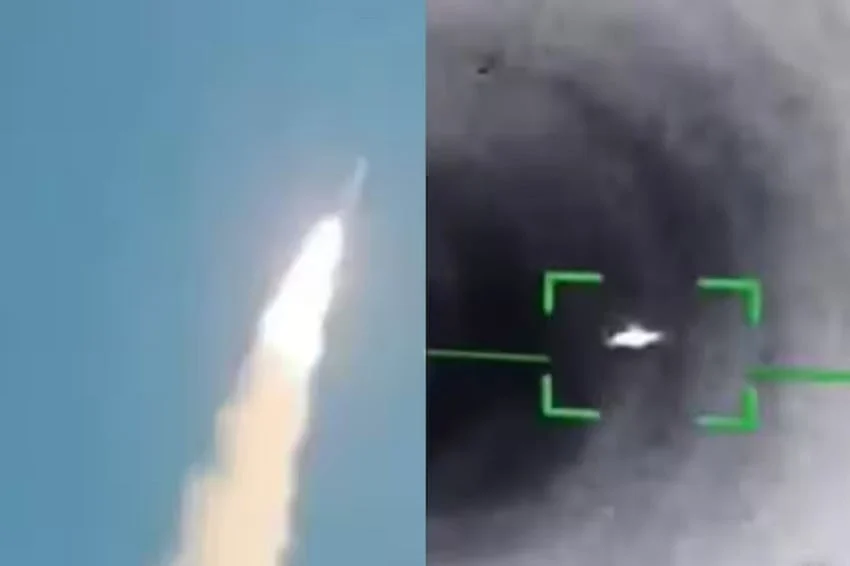
Tensions in the Middle East escalated significantly following a contested military engagement over the Persian Gulf, where the Iranian Army claimed its domestic air defense systems successfully targeted and damaged a United States Air Force F-16 fighter jet. The incident, allegedly occurring on a Friday evening, immediately triggered conflicting narratives from Tehran and Washington, highlighting the precarious nature of military operations in the region. While Iranian state media promulgated reports of a successful interception and subsequent emergency landing, the United States Central Command (CENTCOM) categorically dismissed the claims as false, insisting that all American aircraft in the theater remain secure and operational.
This disputed aerial clash unfolds against the backdrop of a broader, protracted conflict that has destabilized the Persian Gulf and surrounding territories since late February. As military analyst circles evaluate the strategic implications of these competing claims, the event underscores the heightened risk of miscalculation between heavily armed adversaries operating in close geographic proximity.
Chronology of the Disputed Persian Gulf Incident
According to official statements released by the Iranian Army and disseminated through the Mehr News Agency, the sequence of events began on Friday night when integrated domestic radar networks detected an unidentified aerial intruder operating over the southern maritime borders of the Islamic Republic. Tehran asserted that the aircraft, identified as a United States F-16 fighter jet, was engaging in unauthorized flight patterns within or immediately adjacent to Iranian airspace over the Persian Gulf.
Operating under the unified command of Iran’s integrated air defense network, a localized surface-to-air missile battery was authorized to engage the target. Iranian military officials stated that the domestically manufactured missile system successfully locked onto and struck the American warfighter. The impact reportedly caused measurable structural and mechanical damage, compelling the pilot to abort the mission immediately. Unable to maintain optimal flight parameters for a return to a primary forward operating base, the aircraft was forced to execute an emergency landing at a nearby regional airfield.
The narrative from Tehran was swiftly countered by Washington. The United States Central Command, overseeing military operations across the Middle East, issued a direct refutation via social media and official defense briefings. CENTCOM explicitly stated that no United States F-16 aircraft had been targeted, hit, or forced into an emergency landing by Iranian forces. The command emphasized that telemetry and tactical tracking data confirmed all American military aircraft deployed to the region were fully mission-capable, secure, and operating within routine parameters.
Context and Background of the Ongoing Conflict
The friction over the Persian Gulf does not occur in a vacuum; rather, it is a continuation of hostilities that intensified sharply following coordinated military actions initiated by the United States and Israel on February 28. Teheran maintains that this ongoing military campaign constitutes a blatant violation of the United Nations Charter and international law, providing the legal and operational justification—from the perspective of the Iranian Armed Forces—for active defense and retaliatory measures.
Throughout the course of the current hostilities, the Iranian military has frequently published claims regarding the neutralization or successful engagement of advanced Western-manufactured military hardware. Iranian state media has previously reported the downing or disruption of sophisticated aircraft, including fifth-generation stealth fighters such as the F-35, alongside traditional workhorses like the F-15 and F-16. While independent verification of these extensive claims is rarely possible due to the fog of war and strict operational security protocols maintained by Western defense departments, these assertions serve a dual purpose within Iran’s domestic and strategic messaging: demonstrating the efficacy of indigenous military technology and signaling a robust defense posture against technologically superior adversaries.
Retaliatory Strikes and Broader Regional Implications
The reported air defense engagement over the Persian Gulf directly preceded a wider kinetic escalation on Saturday night. The Islamic Revolutionary Guard Corps (IRGC) announced that it had launched a complex, combined offensive utilizing both ballistic missiles and loitering munitions—commonly known as suicide drones—targeting American military infrastructure in the Kingdom of Bahrain.
According to regional reports, the specific objectives of the IRGC strike included vital radar installations and components of the Patriot missile defense system stationed at a key United States military facility in Bahrain. This coordinated attack was framed by Tehran as a direct reprisal for what it termed persistent violations of Iranian airspace and ongoing acts of aggression by Western forces stationed in the Persian Gulf basin.
The targeting of allied host nations and entrenched American military assets in small Gulf states like Bahrain amplifies the regional threat matrix. Host nations that host foreign military bases find themselves increasingly vulnerable to the fallout of a wider geopolitical confrontation between Washington and Tehran.
Strategic Fact-Based Analysis of Implications
The conflicting reports surrounding the alleged F-16 incident and the verified missile strikes in Bahrain highlight several critical implications for regional security and international diplomacy:
-
Heightened Risk of Tactical Miscalculation: With dense air traffic, routine surveillance operations, and active combat patrols operating in confined spaces like the Persian Gulf and the Strait of Hormuz, the margin for error is razor-thin. Unverified claims and rapid retaliatory cycles increase the probability of an unintended escalation that could draw regional powers into a wider, uncontrollable conflict.
-
Reliability of Open-Source and State-Sponsored Claims: The vast discrepancy between Tehran’s assertions of damaging a frontline US fighter jet and CENTCOM’s absolute denial emphasizes the psychological and informational dimensions of modern warfare. Both sides utilize strategic communication to shape domestic morale, deter opposing actions, and project strength to regional allies.
-
Vulnerability of Critical Defense Infrastructure: The IRGC’s ability to target advanced defense systems such as Patriot radars in Bahrain demonstrates the persistent threat posed by asymmetric missile and drone warfare to conventional force protection measures. Protecting high-value military assets in proximity to adversarial launch zones remains a significant logistical and tactical challenge for coalition forces.
As diplomatic channels remain severely constrained and military postures on both sides stay at a heightened state of readiness, the Persian Gulf remains one of the world’s most volatile flashpoints. The veracity of Friday night’s aerial engagement may remain obscured by conflicting intelligence assessments, but the broader reality of an unremitting, high-stakes military standoff in the Middle East persists unabated.