Socio Today
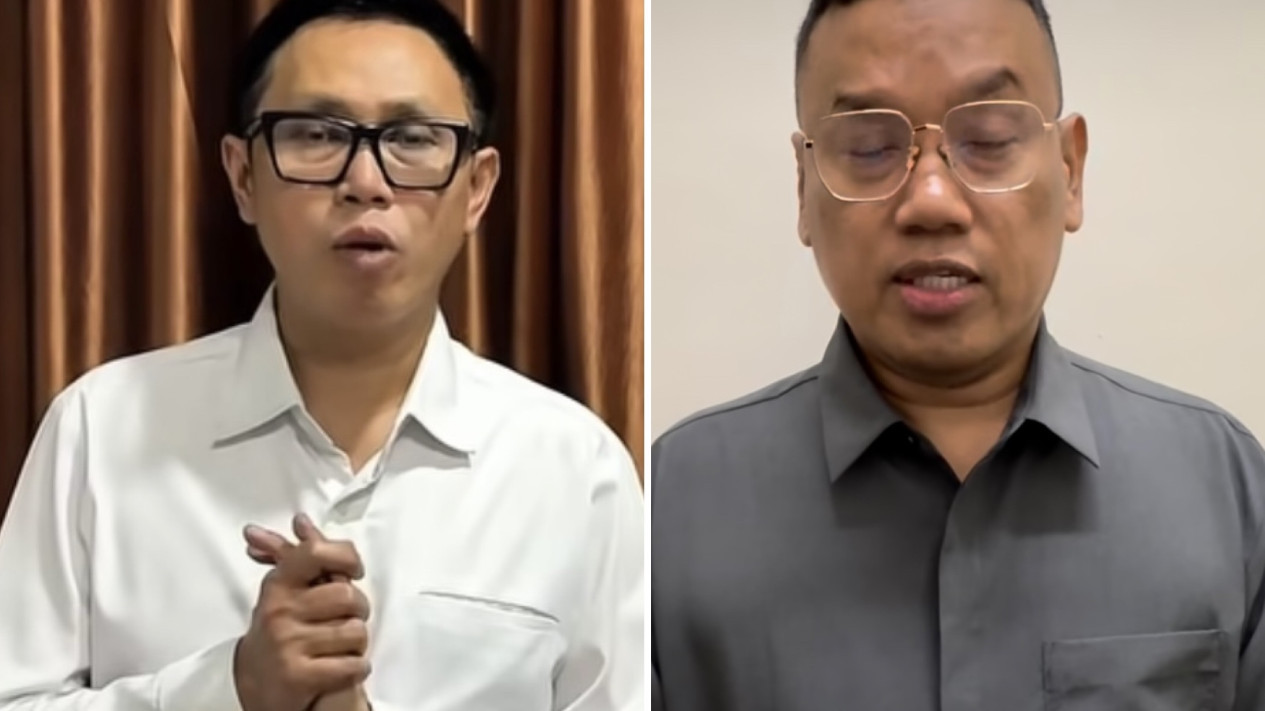
Jakarta, October 22, 2025 – The political landscape in Indonesia remains attentive to the status of prominent public figures Eko Hendro Purnomo, widely known as Eko Patrio, and Surya Utama, or Uya Kuya, following their non-activation from the House of Representatives (DPR RI). Both individuals, who transitioned from successful careers in entertainment to national politics under the banner of the National Mandate Party (PAN), have maintained a low profile since the party’s decision to render them non-active members. This situation gained renewed clarity today as the party leadership confirmed that their status remains unchanged, with further directives anticipated from the party’s top echelon.
The update came from Eddy Soeparno, Deputy Chairman of PAN and also a respected figure within the party’s executive board. Speaking to reporters on Wednesday, October 22, 2025, Soeparno affirmed the continuity of their non-active status, indicating that the party’s central executive board (DPP PAN) has not yet altered its initial decision. "As of now, the DPP PAN still maintains the status of non-activating our members," Soeparno stated, underscoring the party’s firm stance on the matter. He elaborated that any subsequent developments or changes concerning Eko Patrio and Uya Kuya would emanate directly from the party’s Chairman, Zulkifli Hasan. These future instructions would then be formally communicated to the leadership of the PAN faction within the DPR RI, signaling a structured approach to internal party affairs.
The initial announcement of their non-activation had sent ripples through both political and entertainment circles, given the high public profiles of both Eko Patrio and Uya Kuya. The decision, made public via a press release from the DPP PAN on Sunday, August 31, 2025, stipulated that their non-active status would officially commence on Monday, September 1, 2025. This significant party directive was formally signed by two of PAN’s most influential figures: Chairman Zulkifli Hasan and Deputy Chairman Viva Yoga Mauladi, lending considerable weight and authority to the decision. The press release, which was widely circulated, also contained an appeal to the public, urging calmness and continued trust in the government led by President Prabowo Subianto, alongside an assurance that PAN remains committed to advocating for the interests of the people. This particular framing within the announcement suggested a broader strategic context for the party’s actions, perhaps aiming to reinforce party discipline and alignment with national governance priorities.
Background and Political Trajectories of Eko Patrio and Uya Kuya
Eko Hendro Purnomo, better known as Eko Patrio, carved out a distinguished career in Indonesian entertainment as a comedian, television presenter, and actor before venturing into politics. His foray into the legislative arena began when he successfully ran for a seat in the DPR RI, representing the National Mandate Party. Eko’s popularity and widespread recognition as a public figure were instrumental in his electoral success, demonstrating the increasing trend of celebrity politicians leveraging their fame for political office in Indonesia. Throughout his tenure as a legislator, Eko Patrio was often associated with commissions related to communication, information, and culture, utilizing his background to contribute to policy discussions in these areas. His presence in parliament brought a distinct public appeal to PAN’s representation, making his non-activation a noteworthy event.
Similarly, Surya Utama, or Uya Kuya, is another prominent figure from the Indonesian entertainment industry, renowned for his work as a magician, television host, and producer. His transition into politics, also under the PAN banner, followed a path akin to Eko Patrio’s, capitalizing on his widespread public recognition. Uya Kuya’s political journey reflected a growing pattern where individuals with strong public platforms sought to translate their influence into legislative power. While the specific details of his legislative contributions during his active period in the DPR RI may vary, his role undoubtedly added a unique dimension to the PAN faction, attracting public attention and engagement. The decision to non-activate both Eko Patrio and Uya Kuya thus represents a significant internal move by PAN, impacting not only the individuals but also the party’s public image and internal dynamics.
The National Mandate Party (PAN) in the Indonesian Political Landscape
The National Mandate Party (Partai Amanat Nasional, PAN) holds a significant position within Indonesia’s multi-party democratic system. Established in 1998 during the reform era, PAN emerged from a reformist movement and has historically positioned itself as a moderate nationalist-religious party. Its ideology blends elements of nationalism with Islamic values, appealing to a broad segment of the Indonesian electorate. Over the years, PAN has been a consistent presence in national politics, participating in various coalition governments and often playing a kingmaker role due to its moderate stance.
Currently, PAN is an integral part of the ruling coalition supporting President Prabowo Subianto’s administration. This strategic alignment places the party in a position of influence within the government and legislative bodies. As a component of the ruling coalition, PAN is expected to demonstrate strong internal cohesion and adherence to the government’s agenda. Decisions regarding the status of its members, particularly those with high public visibility like Eko Patrio and Uya Kuya, are often scrutinized not only for their internal implications but also for how they reflect the party’s commitment to discipline and its broader political strategy within the coalition. The party’s leadership, particularly Chairman Zulkifli Hasan, plays a crucial role in navigating these complex political dynamics, ensuring party unity while advancing its political objectives.
Chronology of Events Leading to the Current Status
The sequence of events surrounding the non-activation of Eko Patrio and Uya Kuya from the DPR RI provides a clearer understanding of the situation:
- Prior to August 31, 2025: Both Eko Patrio and Uya Kuya were active members of the DPR RI, serving within the PAN faction. They participated in legislative duties, committee meetings, and represented their respective constituencies, leveraging their public profiles to engage with policy matters and constituents. The precise reasons or preceding events that led to the party’s decision for non-activation were not publicly disclosed, maintaining an air of internal party prerogative.
- Sunday, August 31, 2025: The National Mandate Party (DPP PAN) issued an official press release. This document formally announced the party’s decision to non-activate Eko Hendro Purnomo and Surya Utama from their roles as DPR RI members representing the PAN faction. The press release was a crucial public declaration, conveying the party’s official stance. It was notably signed by party Chairman Zulkifli Hasan and Deputy Chairman Viva Yoga Mauladi, underscoring the weight of the decision from the highest levels of the party.
- Monday, September 1, 2025: The non-active status for both Eko Patrio and Uya Kuya officially took effect. From this date onwards, they were no longer considered active legislative members by their party, which would have implications for their participation in parliamentary proceedings, access to facilities, and receipt of emoluments associated with their legislative roles.
- Wednesday, October 22, 2025: Eddy Soeparno, Deputy Chairman of PAN, publicly reconfirmed that the non-active status of Eko Patrio and Uya Kuya remains in effect. His statement clarified that the DPP PAN has not reversed or altered its earlier decision. Soeparno also emphasized that any future changes or directives regarding their status would be determined by Chairman Zulkifli Hasan and subsequently communicated to the PAN faction leadership within the DPR RI. This recent statement serves to underscore the ongoing nature of the situation and the party’s continued internal management of the matter.
This timeline highlights the controlled and deliberate approach taken by PAN in managing the status of its high-profile members, suggesting a carefully considered internal party process.
Official Statements and Party Messaging
Eddy Soeparno’s latest statement serves as the most current official communication from PAN regarding Eko Patrio and Uya Kuya. His reiteration of their non-active status, coupled with the deferral of future decisions to Chairman Zulkifli Hasan, paints a picture of centralized authority within the party. Soeparno’s remarks, "Sejauh ini DPP PAN masih tetap statusnya menonaktifkan para anggota kita," translated as "As of now, the DPP PAN still maintains the status of non-activating our members," are direct and leave no room for ambiguity regarding their current standing. The subsequent clarification that "Perkembangannya tentu kami menunggu arahan selanjutnya dari ketua umum dan akan nanti dikomunikasikan kepada pimpinan fraksi PAN," meaning "For developments, of course, we await further direction from the chairman and will then communicate it to the PAN faction leadership," reinforces Zulkifli Hasan’s ultimate authority in this matter.
The original press release from August 31, 2025, co-signed by Zulkifli Hasan and Viva Yoga Mauladi, also contained a significant message beyond the immediate announcement of non-activation. It included a direct appeal for public calm and trust in the administration of President Prabowo Subianto. This element suggests that the party’s decision, while internal, was framed within a broader context of national stability and support for the government. By explicitly mentioning the President and assuring PAN’s commitment to the people, the party likely aimed to mitigate any potential negative public perception of internal discord and instead project an image of unity and responsibility within the ruling coalition. This strategic communication highlights PAN’s awareness of public sentiment and its efforts to manage narratives surrounding its internal affairs.

Implications for Eko Patrio, Uya Kuya, and the National Mandate Party
The "non-active" status carries significant implications for Eko Patrio and Uya Kuya. While not explicitly a "recall" (Pergantian Antar Waktu or PAW), which involves a formal replacement in the legislature, being non-active within their party likely means a suspension of their parliamentary duties, privileges, and potentially their salaries and allowances as DPR members. They would presumably be barred from participating in faction meetings, committee sessions, and voting on legislative matters. This effectively sidelines them from their legislative roles, regardless of their official status within the DPR RI until a formal PAW process is initiated. For celebrity politicians, such a status can significantly impact their political careers, potentially signaling a loss of trust or alignment with the party’s core directives, and could make future electoral endeavors more challenging.
For the National Mandate Party, this decision underscores its commitment to internal discipline and the authority of its leadership. The non-activation of two high-profile members, particularly without a publicly disclosed specific reason, sends a strong message to other party members about adherence to party lines and directives. This move could be interpreted as an effort by Chairman Zulkifli Hasan to consolidate power, address internal dissent, or realign the party’s image and focus. In the context of PAN being a key member of the ruling coalition, such internal disciplinary actions can also signal the party’s commitment to presenting a unified front with the government, ensuring that its legislative members are fully aligned with the broader political agenda. It reflects a party exercising its prerogative to manage its parliamentary representation, a common practice in multi-party systems where party discipline is crucial for policy implementation.
Broader Political Context and Future Outlook
The phenomenon of celebrity politicians in Indonesia, exemplified by figures like Eko Patrio and Uya Kuya, is a recurring feature of its democratic landscape. While their popularity often secures them electoral victories, their integration into the formal legislative process and adherence to party discipline can sometimes present unique challenges. The non-activation of these two prominent figures by PAN offers a case study in how political parties manage such transitions and maintain control over their representatives.
From a procedural standpoint, the status of "non-active" is an internal party decision that can precede a formal recall process from the DPR RI, known as Pergantian Antar Waktu (PAW). A PAW typically occurs when a member resigns, dies, is declared permanently unfit, or is recalled by their political party due to violations of party regulations or ethical codes. The process for a PAW involves formal letters from the party leadership to the DPR leadership and ultimately to the President for official decree. Until such a formal recall is processed and approved, Eko Patrio and Uya Kuya technically remain members of the DPR RI but are effectively stripped of their functional roles by their party. The ongoing nature of their non-active status, awaiting Zulkifli Hasan’s "further direction," suggests that PAN is either evaluating its next steps carefully, perhaps considering a permanent recall, or using this period as a form of disciplinary suspension.
The situation also highlights the significant power wielded by party chairpersons in Indonesia’s political parties. Zulkifli Hasan’s ultimate authority in determining the future of Eko Patrio and Uya Kuya reflects a common characteristic of party structures where the chairman holds considerable sway over member appointments, disciplinary actions, and strategic direction.
Looking ahead, several scenarios could unfold. Eko Patrio and Uya Kuya could potentially be reinstated if the party chairman decides to reverse the non-active status, perhaps after a period of internal reconciliation or if strategic considerations change. Alternatively, the non-active status could be a precursor to a formal PAW, leading to their permanent removal from the DPR RI and replacement by the next eligible candidate from PAN’s electoral list in their respective constituencies. The outcome will depend on PAN’s internal deliberations, the political climate, and the broader strategic objectives of the party within the current government coalition. The ongoing saga serves as a reminder of the intricate interplay between celebrity, political ambition, and party discipline in Indonesia’s vibrant democratic system.