Socio Today
The global landscape of consumer behavior has undergone a seismic shift over the last decade, as traditional milestones of success—such as homeownership and the accumulation of physical assets—are increasingly being superseded by the pursuit of experiential wealth. For the millennial generation and their successors, Gen Z, the concept of a "lifestyle" is no longer defined by the permanence of one’s residence but by the breadth of one’s global footprint. This transition from material investment to experiential investment represents a fundamental change in societal values, where the "traveling lifestyle" has evolved from an occasional luxury into a mandatory component of personal development and social identity.
The Socio-Economic Context of Experiential Priority
Historically, previous generations, particularly the Baby Boomers and Gen X, operated under an economic framework that prioritized stability and long-term asset accumulation. The standard trajectory involved entering the workforce, saving for a down payment on a home, and investing in durable goods like automobiles. However, the millennial cohort is navigating a vastly different economic reality characterized by rising real estate prices, fluctuating job markets, and the advent of the "gig economy."
In response to these pressures, many young adults have recalibrated their financial goals. Rather than viewing travel as an expenditure that detracts from savings, they view it as a high-yield investment in "human capital." This perspective suggests that the memories, skills, and perspectives gained through international or domestic exploration provide a greater long-term return on investment (ROI) than the ownership of depreciating physical goods. This shift is supported by various psychological studies indicating that "experiential purchases" lead to more enduring happiness than "material purchases," primarily because experiences become an integral part of one’s identity and are less susceptible to social comparison.
The Evolution of Travel Technology and Accessibility
The rise of travel as a primary lifestyle choice cannot be divorced from the rapid advancement of digital infrastructure. In previous decades, planning a journey required the mediation of travel agents and the use of physical maps. Today, the democratization of information through the internet and mobile applications has lowered the barrier to entry for global exploration.
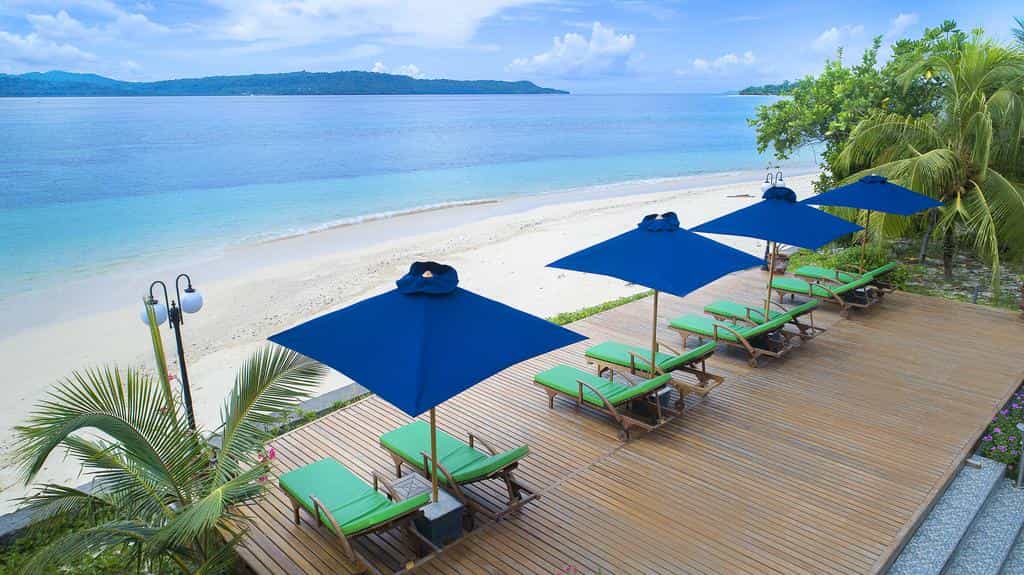
Technological tools have transformed the "unknown" into a manageable challenge. Platforms for accommodation sharing, real-time navigation, and instant language translation have empowered travelers to venture into remote or "challenging" locations with unprecedented confidence. Furthermore, the ubiquity of social media has created a feedback loop of inspiration. Digital platforms allow travelers to document their journeys in real-time, effectively turning travel into a form of social currency. This visibility has encouraged a "discovery culture" where the search for "hidden gems" and authentic local experiences drives the tourism industry’s growth.
A Chronology of the Lifestyle Shift: From Vacation to Vocation
To understand the current state of travel as a lifestyle, it is necessary to examine the timeline of its evolution over the past twenty years:
- The Early 2000s (The Transitional Phase): Travel was still largely seen as a "vacation"—a temporary escape from work. The rise of budget airlines began to make regional travel more accessible to students and young professionals.
- The 2010s (The Social Media Boom): The launch and subsequent dominance of visual-centric platforms like Instagram changed the motivation for travel. "Bucket list" destinations became a priority, and the aesthetic value of a location began to influence travel decisions.
- The Late 2010s (The Rise of the Digital Nomad): As high-speed internet became globally available, the "work from anywhere" movement gained momentum. Travel was no longer an escape from work but was integrated into work.
- 2020–2022 (The Pandemic Pivot): The global lockdowns created a pent-up demand known as "revenge travel." The realization that mobility could be taken away overnight solidified the belief that one should travel while young and healthy rather than waiting for retirement.
- 2023–Present (The Experience Economy): Travel is now a primary budget line item for millennials. It is viewed as an essential tool for mental health, self-discovery, and cultural education.
Strategic Implementation: How to Adopt a Travel-Centric Lifestyle
Transitioning to a lifestyle where travel is a priority requires more than just financial resources; it requires a psychological shift and strategic planning. Industry experts and veteran travelers suggest several core pillars for successfully integrating travel into one’s life.
Strengthening Psychological Resilience and Courage
The first step in adopting travel as a lifestyle is the cultivation of "grit" and the willingness to step outside one’s comfort zone. For many, the primary obstacle is not a lack of funds, but the fear of the unknown. Professional travel analysts note that the "wait until I have enough money" mindset is often a form of procrastination. Instead, the lifestyle approach emphasizes "surviving with what you have." This involves choosing destinations and modes of travel that align with current financial realities—be it backpacking, "slow travel," or domestic exploration—rather than delaying the experience indefinitely.
Embracing Fluidity and Local Wisdom
A common mistake among novice travelers is the attempt to over-schedule. In a professional newsroom analysis of travel trends, it has been observed that the most "successful" lifestyle travelers—those who report the highest levels of satisfaction—are those who allow for serendipity. Rigid itineraries often lead to stress and a "checklist" mentality, which defeats the purpose of experiential investment. By following the "flow" of a destination and engaging with local customs, travelers can discover opportunities that are not documented in guidebooks. This "local wisdom" approach fosters a deeper connection to the environment and a more authentic understanding of global cultures.

Developing Cross-Cultural Adaptability
As travel becomes a permanent fixture of one’s life, the ability to adapt to diverse social and cultural environments becomes a critical skill. This is often referred to as Cultural Intelligence (CQ). Lifestyle travelers must be prepared to navigate different social hierarchies, linguistic nuances, and ethical norms. This adaptability does not just make travel easier; it has significant professional implications. Employers increasingly value individuals who can demonstrate flexibility and global awareness—traits that are naturally sharpened through the challenges of long-term travel.
Supporting Data: The Economic Impact of Millennial Travel
The shift toward experiential spending is reflected in global economic data. According to reports from the World Travel & Tourism Council (WTTC), millennial travelers contribute an estimated $200 billion to the global tourism economy annually. Research indicates that:
- Approximately 72% of millennials prefer to spend their money on experiences rather than physical goods.
- The "adventure tourism" market is expected to grow at a compound annual growth rate (CAGR) of over 15% through 2030, driven largely by younger demographics seeking "authentic" and "challenging" environments.
- A significant percentage of young travelers now prioritize "sustainable" and "eco-friendly" travel, showing an awareness of their environmental footprint and a desire to preserve the destinations they visit.
Analysis of Implications: The Future of Living and Working
The rise of travel as a lifestyle has profound implications for several sectors of society. In the real estate market, the decreased urgency for homeownership among young adults has led to a surge in the "rental economy" and the development of "co-living" spaces designed for transient professionals.
In the corporate world, the demand for travel-friendly work policies has forced companies to adopt remote or hybrid models to retain talent. This has led to the "Digital Nomad Visa" phenomenon, where countries like Portugal, Indonesia, and Mexico offer special residency permits to attract high-spending remote workers.
Furthermore, the psychological impact of this lifestyle shift cannot be understated. While traditionalists may view the lack of asset accumulation as a risk to long-term financial security, proponents argue that the "self-actualization" achieved through travel creates a more resilient, empathetic, and creative workforce. The ability to navigate a foreign city, solve problems in a non-native language, and empathize with different worldviews are intangible assets that may prove more valuable in the 21st-century economy than a fixed property.

Conclusion: Travel as a Path to Self-Discovery
Ultimately, the trend of making travel a lifestyle is a quest for identity. In an increasingly digital and disconnected world, the physical act of moving through space and interacting with different cultures provides a sense of grounding and perspective. It allows individuals to "find themselves" by stripping away the comforts of home and facing the realities of the wider world.
By treating travel as an investment rather than an expense, the current generation is redefining the "Good Life." It is a life measured not by the square footage of one’s home or the brand of one’s car, but by the richness of one’s stories and the depth of one’s understanding of the human experience. As this lifestyle continues to gain traction, it will likely continue to reshape global economies, work cultures, and social values for decades to come.