Socio Today
The digitization of administrative documents has rapidly expanded across public services worldwide, and Indonesia’s transportation sector is no exception. For decades, motorists caught driving without their physical driver’s licenses—commonly known as Surat Izin Mengemudi (SIM) in Indonesia—faced immediate administrative penalties, regardless of whether they genuinely possessed a valid license at home. However, the introduction of the Digital Korlantas Polri application has fundamentally transformed how law enforcement agencies and citizens interact regarding traffic credentials. Moving beyond traditional paper or plastic cards, the Indonesian National Police’s Traffic Corps (Korlantas Polri) has introduced a secure, officially sanctioned digital counterpart to the physical SIM. Despite this technological leap, a persistent misconception remains among motorists: many believe that simply saving a photograph or a screenshot of their physical SIM card inside their smartphone gallery constitutes a legitimate digital license. Authorities have repeatedly emphasized that this practice is unacceptable, invalid, and ultimately useless during routine traffic stops. Real digital integration requires a formal onboarding process through the official application, backed by advanced cybersecurity measures designed to thwart forgery and data theft.
Understanding the Mechanics of Official SIM Digitization
To comprehend why a mere screenshot is insufficient, one must examine the backend architecture of the Digital Korlantas Polri application. The official SIM Digital is not a static image file stored locally on a mobile device; rather, it is a dynamic, cloud-synchronized credential linked directly to the centralized database of the Indonesian National Police. When a motorist undergoes a routine traffic check, law enforcement officers do not merely look at a picture on a screen. Instead, they scan an officially generated, verifiable digital token that communicates with national traffic servers in real time.
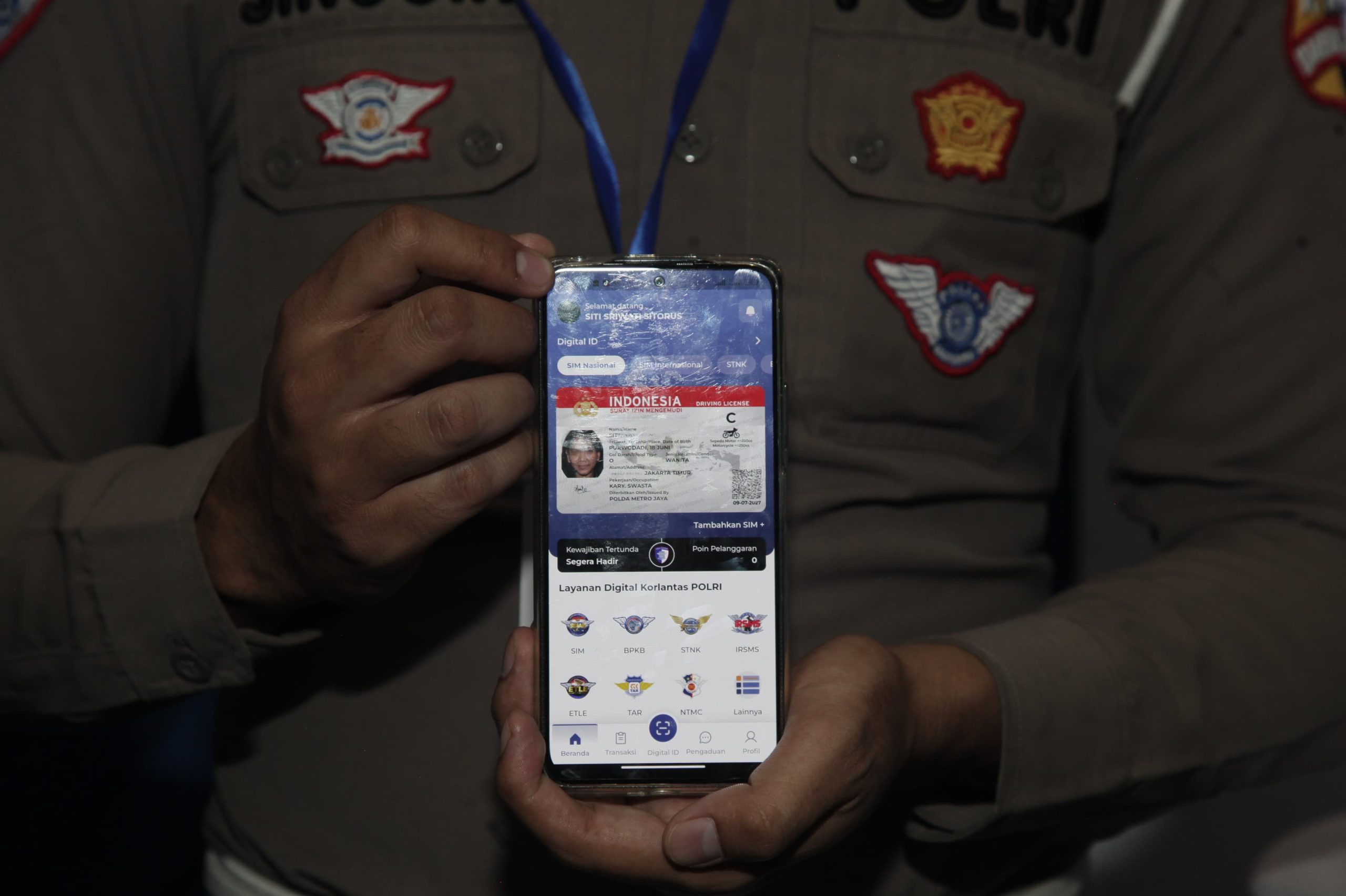
The physical card must be formally registered within the platform through a structured multi-step procedure. Users are required to download the Digital Korlantas Polri application from recognized mobile marketplaces such as the Google Play Store for Android or the Apple App Store for iOS. Following installation, individuals must complete a registration protocol using an active mobile telephone number, which is subsequently verified against national population registry data through an e-KTP identity check. Once access to the dashboard is secured, the user navigates to the "SIM Nasional" menu and selects the "Digitalisasi" (Digitization) sub-menu. At this juncture, the application prompts the user to either scan their physical SIM card or input the corresponding license number along with its specific classification category. Upon successful completion of these verification layers, the official SIM Digital populates dynamically on the application’s primary interface. This centralized ecosystem also offers a notable administrative advantage: motorists who hold multiple classes of driving licenses—such as a Class A license for personal cars and a Class C license for motorcycles—can consolidate all credentials neatly into a single, unified mobile account.
Security Protocols: Why Screenshots Fall Short
The widespread habit of storing photographs or screenshots of identity documents in smartphone image galleries has long been viewed by the public as a convenient backup method. In the context of driving credentials, however, this practice introduces severe vulnerabilities related to counterfeiting, document tampering, and identity theft. Recognizing these risks, Korlantas Polri engineered the SIM Digital with robust anti-fraud mechanisms that render static screenshots entirely obsolete.
At the core of the official application’s security framework is the implementation of a dynamic QR Code. Unlike static barcodes or printed images that remain identical every time they are viewed, the QR Code representing a valid SIM Digital changes at regular, automated intervals. If an officer attempts to verify a license, they must scan this live, rotating code using official law enforcement devices that query the central Korlantas database. A static screenshot captured on a previous day will display an outdated or unrecognized token, immediately signaling to the traffic officer that the credential is unverified.
Furthermore, the application incorporates strict anti-screenshot technology. When a user attempts to capture a screen image of their active SIM Digital within the application interface, the display automatically turns completely dark, blocking the action. This proactive measure prevents unauthorized duplication and minimizes the risk of credentials being intercepted, shared on messaging platforms, or exploited by malicious actors. To validate the integrity of these safeguards, the entire digital infrastructure of the application has undergone rigorous security evaluations and has received formal certification from the National Cyber and Crypto Agency (Badan Siber dan Sandi Negara – BSSN). This institutional endorsement underscores that the platform meets stringent national standards for data protection and secure government service delivery.
The Chronology and Evolution of Digital Traffic Policing in Indonesia
The transition toward a fully digital traffic administration ecosystem did not happen overnight; it represents the culmination of a multi-year modernization strategy initiated by Korlantas Polri. For many years, the issuance and renewal of driver’s licenses were plagued by long physical queues, bureaucratic inefficiencies, and widespread allegations of brokering (calo) at Satuan Administrasi Manunggal SIM (Satpas) facilities across the archipelago.
The first major phase of modernization began with the introduction of online registration systems for new licenses and renewals, allowing citizens to schedule appointments and pay non-cash fees digitally. However, motorists were still legally mandated to carry the physical plastic card at all times while operating a motor vehicle on public roads. Failure to present the physical card during a police checkpoint—even if the motorist’s data existed cleanly in the police database—frequently resulted in ticket issuance or protracted disputes on the roadside.
Recognizing the global shift toward mobile-first public administration, Korlantas Polri accelerated development on a unified consumer-facing application. The launch of the Digital Korlantas Polri app marked a paradigm shift. Initially introduced to streamline electronic traffic law enforcement (ETLE) payment processing and vehicle registration renewals (STNK), the platform gradually expanded its capabilities to incorporate the long-awaited digital driving license feature. By bridging the gap between civilian mobile devices and police backend databases, the initiative aimed to eliminate roadside friction, reduce reliance on physical document handling, and provide a transparent, accessible repository for drivers. Public awareness campaigns have continuously emphasized that while the physical card remains a valid and legally recognized credential, the digital version serves as an equally lawful alternative—provided it is accessed through the authorized application interface rather than through unofficial image storage methods.
Implications for Motorists and Law Enforcement Practices
The widespread adoption of official digital credentials carries profound implications for both everyday motorists and traffic police officers patrolling Indonesian roadways. For drivers, the primary benefit is undeniable convenience paired with risk mitigation. Misplacing a physical wallet no longer automatically translates into the anxiety of being penalized for driving without a license, provided the smartphone containing the active application is at hand. Moreover, the integration of multiple license tiers within a single profile simplifies compliance for professional drivers and multi-vehicle owners alike.
However, this transition also places a heightened level of personal responsibility on the motorist. Road safety advocates and police public relations divisions have stressed that drivers must proactively verify the functionality and accessibility of their SIM Digital before embarking on journeys. Relying on the assumption that a forgotten physical card can be excused by fumbling through phone photo galleries is a risky gamble that can lead to legitimate ticketing. Motorists are urged to ensure their internet connectivity is stable, their application is updated to the latest version, and their digital credentials are fully synchronized before operating a vehicle.
From the perspective of law enforcement, the digital ecosystem enhances operational efficiency and accountability. Traffic officers equipped with verification devices can instantly cross-reference digital tokens with national records, significantly reducing the time required to conduct routine document checks during operations such as Operasi Patuh or Operasi Lilin. This capability also minimizes opportunities for petty corruption, as roadside interactions become more transparent and verifiable through digital audit trails. Furthermore, the reliance on dynamic, encrypted tokens drastically curtails the circulation of counterfeit physical licenses that historically plagued the transportation sector.
Broader Context and Future Outlook of Indonesia’s E-Government Initiatives
The implementation of the SIM Digital is part of a broader, national crusade toward bureaucratic reform and digital transformation championed by the Indonesian government. Under national e-government frameworks, various ministries and state agencies are currently consolidating public services into integrated digital portals to eliminate data silos and improve citizen experience.
For the Indonesian National Police, the success of the Digital Korlantas Polri platform serves as a vital benchmark for future technological integrations. As vehicle ownership continues to rise exponentially across urban and rural centers alike, traditional paper-based and manual record-keeping methods are increasingly unsustainable. The scaling of cloud-based identity verification, biometric authentication, and encrypted document delivery paves the way for further innovations, such as fully automated vehicle registration transfers, integrated digital vehicle inspection histories, and seamless cross-province traffic violation tracking.
Ultimately, the distinction between a certified digital credential and an informal smartphone screenshot is not merely a bureaucratic technicality; it is a fundamental pillar of national cybersecurity and legal compliance. As law enforcement agencies continue to crack down on document forgery and unauthorized data duplication, motorists are reminded that true digital modernization requires embracing official platforms with all their embedded security protocols. By doing so, drivers not only protect themselves from administrative penalties on the road but also contribute to a safer, more transparent, and technologically advanced national transportation network.