Socio Today
The Indonesian government, under the newly established Ministry of Infrastructure and Regional Development, has launched a strategic initiative to address the persistent challenge of urban and rural blight. Coordinating Minister for Infrastructure and Regional Development, Agus Harimurti Yudhoyono (AHY), recently revealed that approximately 7,000 slum areas are scattered across the archipelago, necessitating a unified and cross-sectoral intervention strategy. This ambitious undertaking aims not merely to erase the label of "slum" from municipal maps, but to fundamentally upgrade the living standards, sanitation, and socio-economic resilience of millions of citizens residing in these environments.
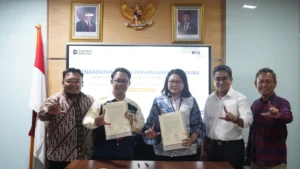
During the Forum for Integrated Slum Settlement Handling held at the BJ Habibie Building, National Research and Innovation Agency (BRIN), Jakarta, on Monday, September 14, Minister AHY outlined the scope of the problem. He categorized the 7,000 locations based on their severity: 100 areas are classified as high-priority "heavy" cases, approximately 1,280 are categorized as moderate, and the vast majority, totaling 5,620, fall under the "light" classification.
The Geography of Marginalization
The classification system employed by the Ministry relies on a multifaceted analysis of environmental and structural risks. These settlements are often defined by their proximity to precarious landscapes, such as riverbanks—which are prone to flooding—and areas vulnerable to geological disasters. Furthermore, the density of population, lack of waste management infrastructure, and inadequate access to clean water are primary indicators used to determine the urgency of intervention.
For decades, Indonesia has grappled with the rapid pace of urbanization. As rural populations migrate to metropolitan centers in search of economic opportunity, the supply of affordable, formal housing has failed to keep pace with demand. This imbalance has inevitably led to the proliferation of informal settlements. These communities often exist in the "shadow" of urban development, where residents lack legal land tenure, making them hesitant to invest in permanent, safe infrastructure.
A New Strategic Framework for 2026
Recognizing that previous efforts were often fragmented—with ministries working in silos—Minister AHY emphasized a shift toward "orchestrated policy." For the fiscal year 2026, the government has finalized a focused intervention plan targeting 16 specific areas across 16 different provinces. This pilot phase will cover a total land area of 436 hectares, serving as a blueprint for how the central government intends to coordinate with local administrations, the private sector, academic institutions, and community leaders.
"The goal is to move away from sectoral ego," AHY stated during the forum. "By synchronizing our efforts, we ensure that a single neighborhood receives holistic care—from sanitation and clean water piping to improved road access and disaster mitigation infrastructure—without bureaucratic redundancies."
This initiative is part of a broader, multi-year timeline. While 2026 marks the implementation of the 16-area pilot project, the preceding years (2024–2025) have been dedicated to data verification and the establishment of a robust regulatory framework. The government intends to use the results of the 2026 pilot to scale up the program to cover the remaining 6,984 areas in subsequent budget cycles.
Technological Transparency: The Dashboard Initiative
One of the most significant hurdles in Indonesian urban planning has historically been the lack of real-time data transparency. To rectify this, the Ministry is launching a specialized digital dashboard. This platform is designed to serve three primary functions: spatial mapping, project monitoring, and public accountability.
Through this system, the Ministry can track which specific agency—whether central, provincial, or municipal—is responsible for a particular site. It allows for the monitoring of budget disbursements and the physical progress of construction. Moreover, the system is intended to be interactive, providing a channel for local communities to report on the progress or shortcomings of the revitalization efforts. "We will be able to check whether the work matches the allocated budget and the defined authority. It ensures that every rupiah is accounted for and that the physical improvements are actually taking place on the ground," AHY added.
The Socio-Economic Implications
The implications of this program extend far beyond urban aesthetics. Housing is a fundamental determinant of public health. Residents in high-density, underserved areas face disproportionately higher risks of communicable diseases due to poor drainage and sanitation. By formalizing these settlements and upgrading their infrastructure, the government anticipates a direct correlation with improved public health outcomes, including a reduction in stunting rates and water-borne illnesses.
Economically, upgrading these areas provides residents with a sense of security, which is often a prerequisite for small-scale entrepreneurship. When households feel secure in their tenure and environment, they are more likely to invest in their homes, which can lead to the growth of local economies within these previously neglected zones.
Challenges and Stakeholder Perspectives
While the government’s plan is ambitious, urban planning experts have pointed out that the success of the program will depend heavily on the quality of coordination between the central and local governments. In many instances, the primary obstacle to upgrading slum areas is the complexity of land tenure. Many residents in "heavy" category slums live on state-owned land or land designated for green zones.
Urban sociologists argue that the government must balance technical infrastructure upgrades with social considerations. Displacement is a significant concern; if residents are relocated or if the cost of living in the improved area rises beyond their means (a phenomenon known as green gentrification), the social fabric of these communities may be destroyed. Minister AHY’s emphasis on "integrated, cross-sectoral" approaches suggests an awareness of these social dimensions, as the inclusion of "community" as a key stakeholder implies that the government intends to engage residents as partners rather than passive recipients of state aid.
Towards Sustainable Urbanism
The strategy unveiled by the Ministry of Infrastructure and Regional Development signals a pivot toward "Sustainable Urbanism." As Indonesia looks toward its 2045 vision of becoming a top global economy, the state of its housing stock is a critical indicator of its development maturity.
The integration of the 16-province pilot program in 2026 is designed to test the efficacy of the cross-sectoral model. If successful, this model could become the standard procedure for all regional infrastructure projects in Indonesia. The involvement of the private sector is also a critical component; by incentivizing corporations to participate through Corporate Social Responsibility (CSR) programs aligned with the government’s master plan, the burden on the state budget can be mitigated while accelerating the pace of development.
Conclusion: A Long-Term Commitment
The task of addressing 7,000 slum areas is monumental, requiring political will, substantial funding, and inter-agency cooperation. By focusing on data-driven interventions and fostering a culture of transparency through digital dashboards, the government is attempting to modernize its approach to one of the most enduring problems of the modern Indonesian state.
The success of the 2026 pilot will be a litmus test for the current administration’s ability to manage complex, multi-stakeholder projects. If the government can demonstrate that it can improve the lives of citizens in the 436-hectare pilot zones without displacing them and while maintaining high standards of infrastructure, it will provide a template that could transform the national landscape.
As the government moves forward, the eyes of the public and international observers will be on the digital dashboard—the virtual monitor of this monumental physical task. The promise of "decent, healthy, and sustainable housing" remains a lofty goal, but the formalization of this roadmap is a necessary first step in ensuring that no Indonesian is left behind in the country’s march toward progress. The coming months will likely see further announcements regarding the specific 16 locations, as well as the engagement of local contractors and provincial governors tasked with executing the vision on the ground.