Socio Today
In a significant shift of diplomatic posture that signals a potential escalation in Middle Eastern hostilities, United States President Donald Trump has declared he is no longer concerned with the preservation of the recent peace agreement with Tehran. Speaking in a brief but pointed interview with the American cable network NewsNation on Sunday, July 19, 2026, the President emphasized that his administration’s primary and unyielding objective remains the total prevention of Iran’s nuclear weaponization, regardless of the status of previous diplomatic frameworks. When asked specifically about Tehran’s recent announcement that it would no longer adhere to the Memorandum of Understanding (MoU) signed only last month, the President responded with characteristic bluntness, stating, "I don’t care."
The collapse of the June MoU marks a volatile turning point in a conflict that has rapidly expanded since its inception in early 2026. The agreement, which was brokered in mid-June with the intent of pausing a high-intensity military campaign launched by the United States and Israel in February, appears to have been rendered obsolete by a renewed cycle of violence and deep-seated mistrust. The President’s remarks underscore a hardening stance in Washington, suggesting that the White House is prepared to abandon the path of de-escalation in favor of a more direct, "maximum pressure" military strategy aimed at dismantling Iran’s nuclear infrastructure and regional influence.
The Genesis of the 2026 Conflict: The Strait of Hormuz Crisis
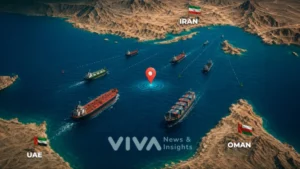
The current state of open warfare traces its roots back to the first quarter of 2026, when long-standing tensions over the management and security of the Strait of Hormuz reached a breaking point. The Strait, a narrow waterway between the Persian Gulf and the Gulf of Oman, serves as the world’s most critical maritime chokepoint. Approximately 20 to 25 percent of the world’s total oil consumption passes through this corridor daily, making it a focal point of global economic stability.
In late January 2026, disagreements regarding navigation rights, environmental regulations, and the presence of Western naval assets led to a series of maritime skirmishes. Tehran’s attempts to assert greater control over the passage of international tankers prompted a swift response from Washington and its regional allies. By February, the situation transitioned from a diplomatic standoff to a kinetic engagement. The United States, alongside Israeli forces, launched a series of coordinated strikes targeting Iranian naval installations, air defense systems, and what intelligence officials described as "dual-use" facilities capable of supporting nuclear research.
The February offensive was characterized by high-precision strikes intended to cripple the Islamic Revolutionary Guard Corps’ (IRGC) ability to project power in the Persian Gulf. However, rather than forcing a surrender, the campaign triggered a decentralized, asymmetrical response from Iran and its network of regional proxies, leading to the broader regional conflagration currently observed.
The Short-Lived June Memorandum of Understanding
By the end of May 2026, the global community, led by intermediaries from the European Union and several Gulf Cooperation Council (GCC) states, pushed for a cessation of hostilities. The result was the mid-June Memorandum of Understanding. The document was designed as a "stop-gap" measure, requiring the United States and Israel to pause their aerial bombardment in exchange for Iran’s commitment to freeze its uranium enrichment levels and allow for renewed international inspections of its nuclear sites.
The MoU also included provisions for a "security corridor" in the Strait of Hormuz, overseen by a neutral international maritime task force. For a brief period of three weeks, it appeared that the region might avoid a total descent into all-out war. However, the agreement was built on fragile foundations. Hardliners in Tehran argued that the MoU was a violation of national sovereignty, while critics in Washington and Jerusalem contended that it gave the Iranian government too much time to relocate its nuclear assets into hardened underground facilities.
The definitive end of the MoU came this week when Tehran officially withdrew, citing "unrelenting economic sabotage" and continued covert operations by Western intelligence agencies. President Trump’s dismissal of this withdrawal suggests that the U.S. administration had already prepared for the failure of the diplomatic track, shifting its focus back to a purely military and prophylactic approach toward Iran’s nuclear ambitions.
Escalation in the Levant: The Jordan Attack and US Casualties
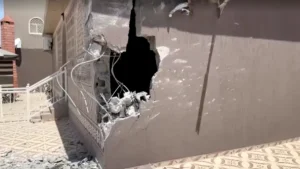
The strategic landscape grew significantly more perilous following a lethal attack on a military installation in Jordan. According to Pentagon officials, a coordinated strike involving ballistic missiles and low-flying suicide drones targeted a facility housing American military personnel near the Jordanian-Syrian border. The attack resulted in the deaths of two U.S. service members and left several others wounded.
Intelligence assessments have directly linked the weaponry used in the attack to Iranian manufacturing, specifically identifying components found in the "Shahed" series of drones and "Fateh-110" short-range ballistic missiles. This incident marks a significant expansion of the war’s geography. Jordan, a long-standing and stable U.S. ally in the region, has historically served as a buffer zone and a logistical hub for Western operations. By striking targets within Jordanian territory, Tehran has demonstrated a willingness to broaden the conflict’s theater, effectively putting the entire Arabian Peninsula on notice.
The deaths of American soldiers have drastically altered the political calculus in Washington. Domestic pressure for a decisive response has mounted, with several members of the Senate Armed Services Committee calling for "disproportionate" retaliation against IRGC command centers. The President’s "I don’t care" remark regarding the peace deal is widely interpreted as a signal that the U.S. is now prioritizing retribution and strategic denial over diplomatic niceties.
The Nuclear Red Line: A Non-Negotiable Objective
Central to President Trump’s rhetoric is the "nuclear red line." Throughout his interview with NewsNation, the President reiterated that the fundamental goal of the U.S. military presence and the ongoing conflict is to ensure that Iran never achieves the status of a nuclear-armed state. "The goal is simple, and it has never changed: No nuclear weapons for Iran," Trump stated.
The U.S. intelligence community has recently updated its estimates, suggesting that Iran’s "breakout time"—the duration required to produce enough weapons-grade uranium for a single nuclear device—has shrunk to a matter of weeks rather than months. This accelerated timeline is believed to be a direct result of Tehran’s decision to activate advanced IR-6 centrifuges at its Fordow and Natanz facilities in response to the February strikes.
For the Trump administration, the nuclear issue is viewed as an existential threat to regional stability and the security of Israel. The White House maintains that any peace deal that does not include the total and verifiable dismantling of Iran’s enrichment capabilities is a "non-starter." This uncompromising stance has created a diplomatic impasse, as Tehran views its nuclear program as its ultimate deterrent against foreign-imposed regime change.
Regional and Global Implications
The collapse of the peace process and the continuation of hostilities have sent shockwaves through the global economy and international political corridors.
-
Energy Markets: Oil prices have surged to their highest levels since the 2022 energy crisis, with Brent Crude briefly touching $140 per barrel following the news of the Jordan attack. Analysts warn that a sustained conflict in the Strait of Hormuz could lead to a global recession as shipping insurance rates skyrocket and supply chains are disrupted.
-
The Role of Regional Powers: Countries like Saudi Arabia and the United Arab Emirates find themselves in a precarious position. While they share the U.S. goal of curbing Iranian influence, they are also vulnerable to retaliatory strikes on their own energy infrastructure. The "spillover" of the war into Jordan suggests that no nation in the Semenanjung Arab (Arabian Peninsula) is truly safe from the reach of the conflict.
-
International Diplomacy: The United Nations Security Council remains deeply divided. While the U.S., UK, and France have called for increased sanctions and a formal condemnation of the Jordan attack, Russia and China have urged "maximum restraint," accusing Washington of being the primary provocateur in the region. The failure of the June MoU is seen by many in the UN as a failure of the international system to provide a credible alternative to war.
Analysis: The Shift to a Post-Diplomatic Strategy
President Trump’s latest comments reflect a broader trend in his administration’s foreign policy: the pivot toward a post-diplomatic strategy. By openly stating his lack of concern for the MoU, the President is effectively signaling that the era of "strategic patience" or "incremental diplomacy" with Tehran is over.
This approach carries immense risks. Without a diplomatic off-ramp, both sides are locked into an escalatory ladder where the only way to "win" is to apply more force than the opponent. For the United States, this may mean a deeper involvement in a protracted regional war, requiring a surge of troops and resources to the Middle East at a time when the American public is weary of "forever wars." For Iran, the strategy involves a high-stakes gamble that it can inflict enough pain on U.S. interests and the global economy to force a withdrawal.
As of July 19, 2026, the situation remains fluid and highly dangerous. With two American soldiers dead, the Strait of Hormuz in a state of semi-blockade, and the only viable peace agreement in tatters, the Middle East faces its most significant security crisis in decades. The President’s focus remains singular: the neutralization of Iran’s nuclear potential. Whether that can be achieved without a full-scale ground war remains the most pressing question for the international community.