Socio Today
The global automotive landscape continues to experience rapid transformation as traditional automakers and emerging EV specialists alike push the boundaries of design, battery technology, and performance efficiency. Amidst this fiercely competitive environment, Chinese automotive giant Geely is preparing a substantial mid-cycle refreshment for its flagship compact electric SUV, the Galaxy E5—widely recognized in international markets as the EX5. Ahead of its official market debut scheduled in China, industry analysts, environmental vehicle enthusiasts, and prospective buyers are closely examining the comprehensive upgrades packed into this latest iteration. While the aesthetic revisions maintain the vehicle’s modern design philosophy, the fundamental engineering changes beneath the sheet metal represent a monumental leap forward for the compact crossover platform.
Main Facts of the Upcoming Geely EX5 Facelift
According to preliminary disclosures and reports from regional automotive publications such as Paultan, Geely is positioning the Galaxy EX5 facelift to capture a larger share of the fiercely contested global electric vehicle segment. The vehicle is slated for its official unveiling in China on September 23, 2026. Rather than relying solely on superficial cosmetic updates, Geely’s engineering division has focused heavily on structural adjustments, powertrain enhancements, and dynamic handling characteristics.
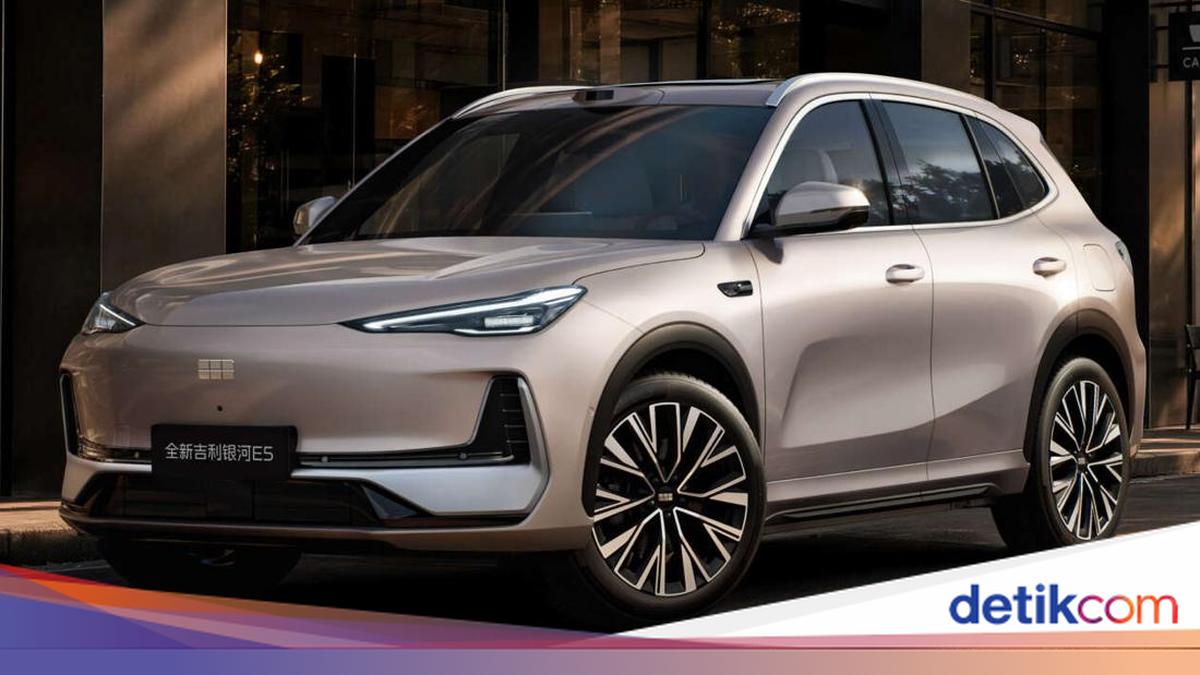
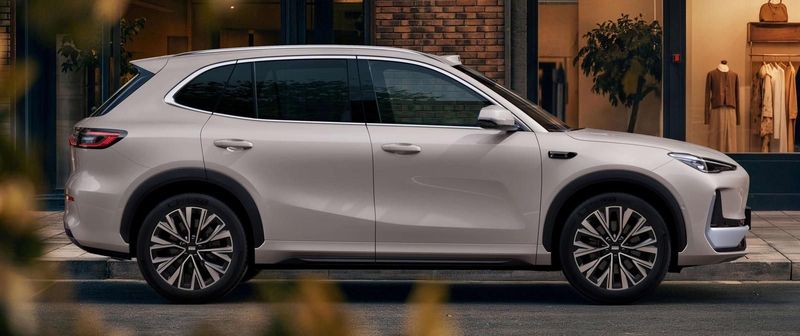
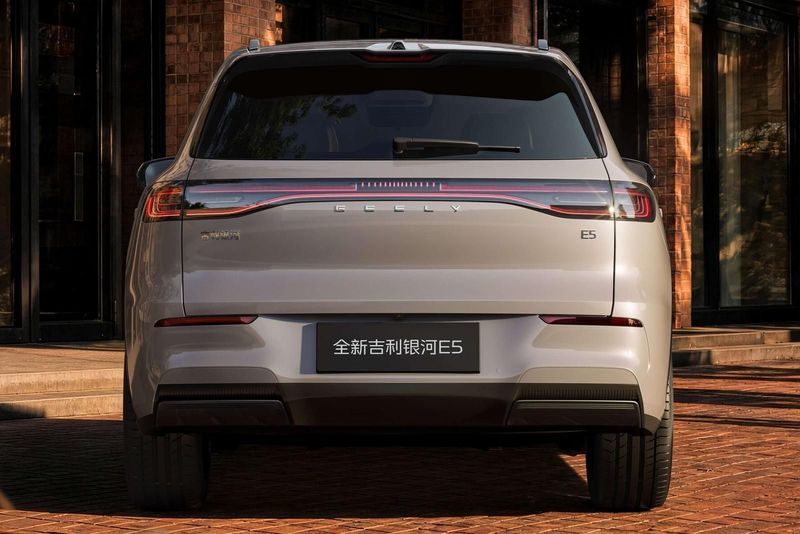
The exterior modifications, though understated at first glance, introduce a distinct visual identity for the updated model. The front fascia adopts a redesigned bumper featuring a prominent, sweeping black accent line that runs horizontally beneath the curved headlamp clusters, seamlessly connecting with the integrated air curtains. Directly below this element, a substantial silver chin accent serves a dual purpose, functioning both as an aesthetic splitter and housing for the primary lower air intake. To complement the updated front profile, Geely has curated a fresh selection of alloy wheel designs available in 18-inch and 19-inch configurations, enhancing the vehicle’s athletic stance on the road.
Dimensional adjustments also accompany the facelift. The revised Galaxy EX5 measures 4,636 millimeters in length and 1,920 millimeters in width, marking an incremental increase of 21 millimeters and 19 millimeters, respectively, compared to its predecessor. Meanwhile, the vehicle’s height remains unchanged at 1,670 millimeters, anchored by a stable 2,750-millimeter wheelbase. These modest dimensional expansions translate to a slightly more commanding road presence without sacrificing the nimble handling dynamics expected of a compact urban crossover.
Chronology and Development Timeline
The trajectory of the Geely Galaxy E5 series reflects the brand’s aggressive product lifecycle management and responsiveness to consumer feedback in the rapidly evolving new-energy vehicle (NEV) market. Following the initial rollout of the Galaxy E5, which quickly established itself as a cornerstone of Geely’s electrified portfolio in both domestic and export markets, the automaker began formulating a comprehensive upgrade strategy.
By late summer 2026, initial teaser images and homologation filings revealed the impending arrival of the EX5 facelift. Industry insiders note that development cycles for Chinese EV manufacturers have compressed significantly compared to legacy western automakers, allowing brands like Geely to introduce major powertrain and structural revisions within a relatively brief window after a model’s initial launch. The upcoming official reveal on September 23, 2026, marks the culmination of months of engineering refinement, paving the way for regional rollouts throughout late 2026 and into the 2027 calendar year.
Interior Refinements and Technological Ecosystem
Stepping inside the cabin of the updated Geely EX5, occupants are greeted by a refined interior environment that balances minimalist design with ergonomic functionality. While the overarching layout retains the familiar futuristic aesthetic of the outgoing model, notable adjustments have been made to enhance driver engagement and comfort.
Most prominently, the unconventional two-spoke steering wheel found in the predecessor has been replaced with a more conventional three-spoke design, aligning with mainstream ergonomic preferences while offering a secure and tactile grip. Additionally, Geely has introduced updated upholstery patterns and color schemes to elevate the perceived quality of the cabin materials.
Despite these revisions, the core technological ecosystem that earned the original model widespread acclaim remains firmly intact. The cabin is anchored by a high-resolution 10.2-inch digital instrument cluster paired with a sprawling 15.4-inch central infotainment touchscreen. Comfort features such as zero-gravity passenger seats complete with integrated ottomans, a panoramic glass sunroof, a comprehensive head-up display (HUD), wireless smartphone charging pads, and a tactile multi-functional control knob continue to provide a premium passenger experience.
Furthermore, for the domestic Chinese market, the facelifted EX5 is anticipated to incorporate Geely’s advanced G-Pilot H5 driver assistance system. This sophisticated suite leverages roof-mounted lidar sensors and an array of high-definition external cameras to deliver enhanced semi-autonomous navigation and safety features, positioning the vehicle competitively against domestic rivals equipped with cutting-edge autonomous driving software.
Under the Skin: Powertrain Revolution and Performance Metrics
Undoubtedly, the most significant transformation of the Geely EX5 facelift resides beneath the body panels. Geely’s powertrain engineers have executed a complete overhaul of the vehicle’s propulsion architecture, resulting in staggering performance gains.
The electric motor’s output has experienced a dramatic surge, with maximum power climbing from the previous iteration’s 218 PS to an impressive 333 PS. While the current model delivers respectable acceleration—completing the 0 to 100 km/h sprint in 6.9 seconds—the facelifted variant is projected to slash this benchmark down to the mid-five-second range, transforming the family-oriented crossover into a remarkably punchy performer.
Beyond the raw horsepower figures, the fundamental layout of the drivetrain has been re-engineered. The electric drive unit has been relocated to the rear axle, signaling a definitive structural shift toward a rear-wheel-drive (RWD) configuration. This architectural modification not only improves weight distribution and driving dynamics—offering sharper cornering and enhanced traction—but also frees up valuable space under the hood, resulting in a significantly larger front trunk (frunk) for additional cargo storage.
Energy Storage and Fast-Charging Innovations
To support the elevated performance capabilities of the upgraded motor, Geely has integrated its latest generation of lithium iron phosphate (LFP) battery technology. While exact capacity figures have not yet been officially finalized for all trim levels, automotive analysts anticipate that the battery packs will benefit from improved energy density and thermal management.
Crucially, industry reports suggest that the updated EX5 may transition to an 800-volt electrical architecture. Such an upgrade would revolutionize the vehicle’s charging capabilities, unlocking ultra-fast charging speeds capable of exceeding 200 kW. This technological leap would drastically reduce roadside charging times, allowing drivers to replenish significant battery capacity during long-distance journeys in a matter of minutes, thereby mitigating range anxiety and enhancing the overall utility of the electric SUV.
Implications for International Markets and Indonesia
As Geely continues its aggressive global expansion, the fate of the EX5 facelift in international territories remains a subject of intense market speculation. The pre-facelift version of the Geely EX5 has already established a commercial footprint in various export markets, including Indonesia, where it serves as a critical volume driver for the brand’s electric vehicle strategy in Southeast Asia.
The introduction of a rear-wheel-drive layout, substantially increased power, and potential 800V architecture significantly elevates the competitive positioning of the EX5 on the global stage. However, local market introductions will depend heavily on regulatory approvals, local manufacturing strategies, and regional consumer preferences.
For the Indonesian market, where electric vehicle adoption is accelerating rapidly amid supportive government incentives and expanding charging infrastructure, the current EX5 has already garnered a loyal following. While official confirmation regarding the timeline for bringing the facelifted model to Indonesian showrooms has not yet been provided by local brand representatives, the introduction of these advanced updates underscores Geely’s long-term commitment to maintaining a cutting-edge product portfolio in emerging markets.
Broader Industry Impact and Market Analysis
The comprehensive nature of the Geely EX5 facelift highlights a broader trend within the global automotive industry: the acceleration of mid-cycle updates to counter intense market rivalry. As new-energy vehicle manufacturers contend with compressed product lifecycles, brands must continually innovate to maintain consumer interest and technological parity.
By pivoting toward a rear-wheel-drive layout, substantially boosting output to 333 PS, and exploring ultra-fast charging architectures, Geely is effectively blurring the lines between mass-market compact SUVs and performance-oriented electric crossovers. This strategy not only strengthens the brand’s competitive edge against domestic Chinese rivals but also poses a formidable challenge to established global automakers operating in the compact EV segment.
Ultimately, the official debut of the Geely EX5 facelift on September 23, 2026, will serve as a definitive litmus test for the company’s engineering ambitions. As the automotive world transitions irrevocably toward electrification, vehicles like the updated EX5 demonstrate that performance, efficiency, and advanced driver assistance technologies are increasingly becoming accessible within mainstream, practical vehicle categories.