Developments in Israeli domestic politics, escalating rhetoric between Washington and Tehran, and critical geopolitical warnings from the Indonesian Foreign Ministry at the G20 dominated international headlines over the weekend. As political realignments take shape in the Middle East and global economic stability faces mounting threats from ongoing regional conflicts, world leaders and diplomats are navigating an increasingly fragile international landscape.
Israeli Coalition Dynamics: The Strategic Calculus of the Arab Joint List
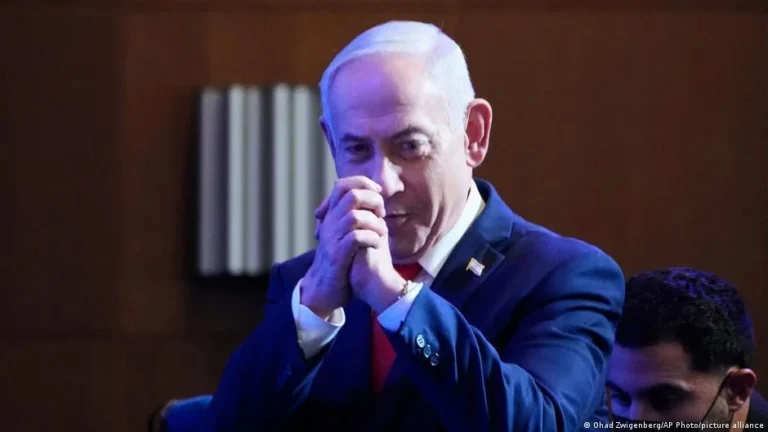
The complex architecture of Israeli politics has entered a new phase following recent electoral outcomes, marked by strategic maneuvering involving opposition figures and minority parties. The Arab political alliance known as the Joint List has announced its decision to remain outside the formal governing coalition led by opposition figure Gadi Eisenkot. Despite opting out of ministerial portfolios and direct coalition membership, the alliance has signaled a pragmatic willingness to support the bloc from the external opposition benches.
The primary objective behind this calculated external backing is singular: preventing long-serving Prime Minister Benjamin Netanyahu from securing another term in office. Ahmad Tibi, leader of the Joint List, articulated the rationale behind the decision during an interview on Meet the Press. According to Tibi, the inclusion of Arab parties directly within a governing coalition often triggers fierce resistance from right-wing factions within the Israeli political spectrum, potentially paralyzing the formation process.
"We will not be part of the government. We want the coalition process to be easier, not harder," Tibi stated, explaining that avoiding formal integration removes a primary rhetorical weapon used by right-wing politicians to derail opposition unity. By offering external parliamentary support—often referred to in Israeli politics as a blocking majority—the Joint List hopes to facilitate the ouster of Netanyahu while shielding the fledgling coalition from premature collapse driven by internal sectarian friction.
Political analysts note that this tactical approach reflects a pragmatic shift within Arab representation in the Knesset. Rather than demanding immediate policy concessions that could alienate centrist or right-of-center Zionist partners within the Eisenkot bloc, the Joint List is prioritizing regime change and institutional stabilization. However, maintaining this delicate balance will require rigorous coordination behind the scenes, as right-wing elements within the broader opposition coalition remain deeply resistant to any form of political reliance on Arab factions.
Tehran Warns of Extended Conflict Following Fresh US Warnings
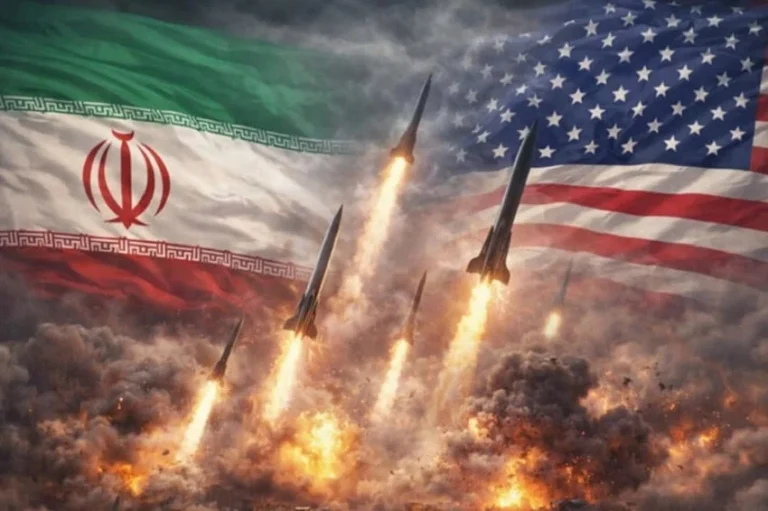
Geopolitical tensions in the Persian Gulf have experienced a sharp upward trajectory following renewed warnings from Washington and a corresponding defiant response from Iranian military leadership. The friction intensified after United States President Donald Trump suggested that several unresolved strategic objectives regarding Iran still required decisive action, keeping the option of heightened pressure firmly on the table.
In response to the American rhetoric, senior Iranian military officials issued explicit cautions regarding the potential nature of any future armed conflict. Mohammad Akraminia, a high-ranking military spokesperson, delivered a stern warning via Iranian state television, asserting that a renewed war between the two nations would not follow the predictable trajectories of past engagements.
"The war that may happen in the future could last much longer than previous conflicts. The President of the United States will not be in a position to determine the time or the conditions for the end of that war," Akraminia declared.
This exchange underscores the deepening strategic impasse between Washington and Tehran. Despite intermittent diplomatic backchannels and economic sanctions designed to curb Iran’s regional influence and nuclear ambitions, mutual distrust remains deeply entrenched. Defense analysts point out that Iran’s asymmetric warfare capabilities, combined with a vast network of regional proxies spanning Lebanon, Iraq, Yemen, and Syria, mean that any direct military confrontation could rapidly engulf the broader Middle East, severely disrupting global energy markets and maritime security.
The explicit warning regarding the open-ended nature of a potential conflict serves as a strategic deterrent, signaling to Washington that any military adventure would carry catastrophic economic and human costs. As both sides posture defensively, international diplomatic actors have expressed growing concern that miscalculations in vital waterways could trigger an unintended escalation.
G20 Foreign Ministers Meeting: Arrmanatha Nasir Links Global Economy to Geopolitical Peace
While political and military maneuvers dominated the Middle East, the intersection of geopolitics and global economic health took center stage at the G20 Foreign Ministers Meeting (FMM) in Atlanta, United States. Indonesian Foreign Minister Arrmanatha Nasir delivered a forceful address during the opening plenary session, asserting that sustainable global economic growth is entirely dependent on international peace and regional stability.
"In the first plenary session of the G20 Foreign Ministers Meeting in Atlanta, I emphasized that there is no economic growth without peace and stability," Arrmanatha stated through an official social media communication.
The Indonesian diplomat drew direct connections between ongoing armed conflicts and systemic disruptions to international commerce. He specifically highlighted critical maritime chokepoints and trade corridors—including the Strait of Hormuz, the Black Sea, and the Red Sea—where geopolitical hostilities have severely impeded the free flow of goods.
The disruption of maritime traffic in these vital arteries has had immediate ramifications for global supply chains. Commercial vessels navigating the Red Sea and the Gulf of Aden have faced persistent security threats, forcing shipping companies to reroute vessels around the African continent. This logistical detour has substantially increased freight costs, extended delivery timelines, and exerted upward pressure on global inflation. Furthermore, instability in the Black Sea region continues to cast a shadow over agricultural commodities and global food security, disproportionately impacting developing nations reliant on consistent grain exports.
Arrmanatha’s intervention at the G20 reflects Jakarta’s consistent foreign policy stance emphasizing multilateralism, economic resilience, and peaceful dispute resolution. By placing geopolitical conflict at the heart of economic discussions, Indonesia sought to rally G20 economies—which represent the vast majority of global GDP—to adopt a more cohesive approach toward de-escalation and diplomatic engagement.
Broader Implications and Interconnected Crises
The events unfolding across Israel, the Persian Gulf, and the G20 platform are far from isolated; rather, they represent interconnected facets of a shifting global order characterized by heightened volatility.
The potential restructuring of Israel’s government could fundamentally alter diplomatic dynamics in the Middle East, influencing everything from normalization agreements to regional security architectures. Concurrently, the unyielding standoff between the United States and Iran poses a perennial threat to global energy supplies. Any kinetic escalation in the Persian Gulf directly threatens the Strait of Hormuz, through which a significant portion of the world’s petroleum passes.
When viewed alongside Foreign Minister Arrmanatha’s warnings at the G20, these regional flashpoints illuminate the vulnerability of the contemporary globalized economy. Modern supply chains, financial markets, and energy grids are deeply sensitive to localized conflicts. As political realignments continue in Jerusalem, military rhetoric hardens in Tehran, and international diplomats deliberate in Atlanta, the international community faces a compounding set of challenges requiring careful diplomacy, institutional resilience, and a renewed commitment to multilateral cooperation.