Socio Today
The geopolitical landscape of the Middle East has entered a volatile new chapter as Iran launched a series of sophisticated military strikes against United States allies in the Persian Gulf, signaling a dramatic escalation in regional hostilities. The Islamic Revolutionary Guard Corps (IRGC) confirmed that its forces targeted key strategic locations in Kuwait and Jordan, framing the operations as a direct response to a sustained week-long aerial campaign by the United States military against Iranian territory. This sudden intensification follows the total collapse of a short-lived ceasefire, marking a transition from localized proxy skirmishes to direct kinetic engagements involving sovereign states and critical global infrastructure.
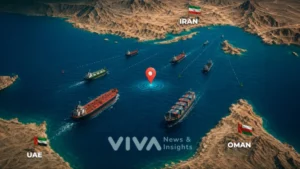
The recent wave of violence was precipitated by seven consecutive nights of American airstrikes that targeted various military and logistical hubs within Iran. According to reports from the Iranian Ministry of Health, these operations have resulted in a significant humanitarian toll, with at least 50 fatalities and over 500 injuries recorded over the past three weeks. The US strikes specifically focused on degrading Iran’s internal infrastructure, including transport bridges, electrical power grids, and strategic command centers, particularly in the coastal province of Hormozgan, which sits adjacent to the vital Strait of Hormuz.
Detailed Chronology of the Escalation
The current crisis can be traced back to the dissolution of a diplomatic truce that had briefly stabilized the region. For twenty-one days, tensions simmered before boiling over into the current state of open conflict. The timeline of the escalation reveals a calculated pattern of action and reaction:
Three weeks ago, the initial breakdown of the ceasefire led to sporadic exchanges between US-aligned forces and regional militias. However, the situation transformed significantly seven days ago when the United States began a systematic bombing campaign within Iranian borders. Washington defended these actions as "preemptive and retaliatory," aimed at neutralizing threats to international shipping and US personnel in the region.
The turning point occurred on Saturday morning when the IRGC shifted its focus toward the "logistical backbone" of the US presence in the Gulf: Kuwait. By targeting a nation that hosts thousands of American troops and serves as a primary transit hub for Western military assets, Tehran has effectively expanded the theater of war, forcing regional neighbors to choose between their security alliances and the risk of further Iranian aggression.
The Impact on Kuwaiti Infrastructure and Security
Kuwait, long considered a stable intermediary and a key host for Western military forces, bore the brunt of the most recent Iranian retaliatory strikes. The assault was multi-pronged, utilizing a combination of high-precision ballistic missiles and unmanned aerial vehicles (UAVs).
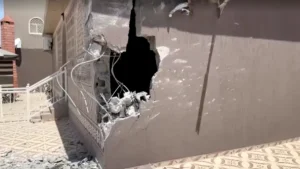
One of the most critical targets hit was a major water desalination facility. In a nation where potable water is almost entirely dependent on industrial desalination, the disruption of this plant represents a significant threat to civilian welfare. Local authorities reported that the facility’s operations were severely compromised, leading to immediate concerns regarding water security in the capital and surrounding districts.
Simultaneously, the Iranian aerospace forces targeted Kuwait International Airport. The threat of incoming missile fire and the presence of "suicide drones" in the vicinity forced aviation authorities to suspend all commercial and cargo flights. This grounding of air traffic not only stranded thousands of travelers but also severed a primary artery for regional commerce and emergency logistics.
The IRGC officially claimed responsibility for strikes on Camp Arifjan, a massive US Army installation that serves as the primary forward logistics base for US Central Command (CENTCOM) in the region. Furthermore, the IRGC reported the successful destruction of radar arrays at the Ali Al Salem Air Base, an installation used by both the Kuwaiti Air Force and the US Air Force for regional surveillance and strike missions.
The energy sector, the lifeblood of the Kuwaiti economy, was also caught in the crossfire. The Kuwait Petroleum Corporation (KPC) confirmed that one of its primary oil production facilities sustained structural damage following repeated drone strikes. Several petroleum workers and emergency responders were reportedly injured while attempting to contain fires sparked by the explosions. While the full extent of the production loss remains under assessment, global energy markets reacted sharply to the news, reflecting fears of a broader disruption to the Gulf’s oil supply.
Statements from the Islamic Revolutionary Guard Corps
The IRGC’s official communique, released shortly after the Saturday strikes, characterized the operations as an "inevitable necessity." The statement emphasized that Iran felt compelled to act due to what it described as the "impotence" of international organizations to restrain American military actions.
"Because no international institution or global body has the will or the power to halt the brutality of the United States military, we are left with no alternative but to respond in kind," the IRGC statement read. The message served as both a justification for the current strikes and a stern warning to other Gulf Cooperation Council (GCC) member states. Tehran explicitly warned that any nation providing "soil, airspace, or logistical facilitation" for American strikes against Iran would be viewed as a legitimate military target in future waves of retaliation.
The rhetoric suggests that Iran is adopting a "total defense" posture, aiming to create a deterrent by demonstrating that the cost of hosting US forces will be direct and devastating damage to national infrastructure. This strategy places countries like Kuwait, Qatar, and the United Arab Emirates in an increasingly precarious position, as they balance their defense treaties with Washington against the immediate threat of Iranian missiles.
The US Military Campaign and Iranian Casualties
While Iran’s strikes on Kuwait have dominated recent headlines, the scale of the American campaign inside Iran remains extensive. The Pentagon has maintained that its operations are focused on "denying the IRGC the ability to project power" and protecting the freedom of navigation in the Strait of Hormuz.
The most recent American sorties have focused on Hormozgan Province. This area is of immense strategic value as it overlooks the world’s most important oil transit chokepoint. By targeting bridges and power facilities in this region, the US military appears to be attempting to isolate IRGC naval bases from their inland supply chains. However, the Iranian Ministry of Health’s report of 500 wounded civilians and military personnel suggests that the "surgical" nature of these strikes is being contested by the reality on the ground. The destruction of power plants has left large swaths of southern Iran without electricity, complicating medical efforts and exacerbating the humanitarian crisis.
Geopolitical Analysis and Regional Implications
The expansion of the conflict to include Kuwait and Jordan marks a failure of regional de-escalation efforts. For years, the "shadow war" between Washington and Tehran was fought through proxies in Yemen, Iraq, and Syria. The shift to direct strikes on sovereign soil and critical civilian infrastructure (like desalination plants and oil refineries) indicates that the traditional "rules of engagement" have been discarded.
-
Economic Instability: The Persian Gulf accounts for a significant portion of the world’s daily oil and gas transit. Direct hits on Kuwaiti oil facilities and the ongoing tension in the Strait of Hormuz could lead to a sustained spike in global energy prices, threatening the stability of the global economy.
-
The Fragility of the GCC: The attacks on Kuwait put immense pressure on the Gulf Cooperation Council. While these nations are traditionally aligned with the US, the physical vulnerability of their infrastructure to Iranian drone and missile technology may lead to internal debates about the long-term viability of hosting large-scale US military footprints.
-
Humanitarian Concerns: The targeting of life-sustaining infrastructure—water in Kuwait and electricity in Iran—suggests a shift toward a "gray zone" of warfare where civilian populations are increasingly used as leverage. The rising death toll in Iran will likely harden domestic support for the IRGC’s retaliatory posture, making a diplomatic off-ramp more difficult to achieve.
-
Risk of Total War: With both sides now striking targets deep within the other’s sphere of influence or territory, the margin for error has narrowed significantly. A single miscalculation—such as a missile hitting a high-density civilian area or a US warship—could trigger a full-scale regional war that would involve multiple nations and potentially draw in other global powers.
Official Responses and the Search for a Diplomatic Solution
International reactions have been swift but largely divided. The United Nations Secretary-General has called for an immediate cessation of hostilities, warning that the Middle East "cannot afford another full-scale conflict." However, without a robust enforcement mechanism or a willingness from either Washington or Tehran to blink first, these calls have largely fallen on deaf ears.
Kuwaiti officials, while condemning the violation of their sovereignty, have focused on domestic recovery and bolstering their air defense systems. The Kuwaiti military reported that their Patriot missile batteries and other defense systems successfully intercepted a significant number of Iranian projectiles, preventing what could have been a much higher casualty count.
In Washington, the administration faces mounting pressure from both sides of the political aisle. Some argue for a further escalation to "restore deterrence," while others warn that the current strategy is leading the United States into another "forever war" in the Middle East.
As the smoke clears over Camp Arifjan and the desalination plants of Kuwait, the region remains on a knife-edge. The IRGC has made it clear that its "patience has reached its limit," while the US military shows no signs of halting its campaign in Hormozgan. The coming days will determine whether the international community can find a way to reinstate a ceasefire or if the Middle East is destined for a protracted and devastating conflagration.