Socio Today
The geopolitical landscape of the Middle East has reached a critical inflection point following the publication of a provocative "revenge list" by Hamshahri, a prominent media outlet closely affiliated with the Iranian government and the municipality of Tehran. The publication, which features thirteen high-profile international political figures and military officials, identifies these individuals as primary targets for retribution following the reported death of Iran’s long-standing Supreme Leader, Ayatollah Ali Khamenei. This development occurs against a backdrop of unprecedented regional instability, marked by direct military confrontations between the Islamic Republic of Iran, the United States, and the State of Israel.
The list was disseminated via a sophisticated infographic that portrays leaders from the United States, Israel, and several European nations in a manner designed to incite and signal intent. Each figure is depicted wearing an orange jumpsuit—a visual trope historically associated with prisoners or those awaiting execution—and several key individuals, including former U.S. President Donald Trump and Israeli Prime Minister Benjamin Netanyahu, are shown with illustrative crosshairs superimposed over their images. The publication of this list is not merely a media event but is being viewed by international observers as a calculated move in a broader psychological warfare campaign orchestrated by elements within the Iranian establishment.
The Succession of Power and the Vow of Retribution
The emergence of this list follows a seismic shift in the Iranian leadership hierarchy. Following the death of Ayatollah Ali Khamenei, which reportedly occurred during a coordinated military operation involving American and Israeli assets, his son, Ayatollah Mojtaba Khamenei, has ascended to the position of Supreme Leader. In his inaugural address to the nation, Mojtaba Khamenei struck a defiant and uncompromising tone, signaling that his tenure would be defined by a commitment to the "revolutionary principles" of his father and a relentless pursuit of justice for his death.
During his speech, the new Supreme Leader emphasized that the "blood of the martyr" demands a response that resonates globally. While he did not explicitly name the individuals listed in the Hamshahri publication, his assertion that "avenging the death of the Leader is a national demand of the Iranian people" provided the ideological framework for the media’s subsequent actions. This transition of power is particularly significant as Mojtaba Khamenei has long been viewed as a more hardline figure than his predecessors, with deep ties to the Islamic Revolutionary Guard Corps (IRGC) and the country’s security apparatus.
Analysis of the Targeted Individuals
The thirteen individuals identified by Hamshahri represent a cross-section of Western political and military leadership, reflecting Iran’s perception of a global "coalition of aggression." The list includes:
- Donald Trump (United States): Identified as the primary architect of the "Maximum Pressure" campaign and the individual who ordered the 2020 assassination of Qasem Soleimani. His inclusion signifies Iran’s enduring focus on the former and potentially future U.S. president.
- Benjamin Netanyahu (Prime Minister of Israel): Iran’s most vocal regional adversary, viewed by Tehran as the central figure behind sabotage operations and strikes against Iranian nuclear and military infrastructure.
- Israel Katz (Defense Minister of Israel): Targeted for his role in overseeing the strategic military operations that have directly impacted Iranian interests in Syria and Lebanon.
- Pete Hegseth (Designated U.S. Secretary of Defense): His inclusion reflects Iran’s monitoring of the incoming U.S. administration’s cabinet picks, specifically those perceived as having a hawkish stance toward Tehran.
- Marco Rubio (Designated U.S. Secretary of State): A long-time critic of the Iranian regime, Rubio is viewed as a key figure in the diplomatic and economic isolation of the Islamic Republic.
- Emmanuel Macron (President of France): His presence on the list indicates a shift in Iranian rhetoric toward European leaders who have supported sanctions or criticized Iran’s ballistic missile program.
- Keir Starmer (Prime Minister of the United Kingdom): Targeted due to the UK’s historical role in the region and its continued military cooperation with the United States and Israel.
- Friedrich Merz (German Political Leader/Chancellor Candidate): Reflecting Germany’s hardening stance against Iranian influence in Europe and its support for Israel’s security.
- Giorgia Meloni (Prime Minister of Italy): Representing the broader European alignment against Iranian proxy activities in the Mediterranean and Middle East.
- Mike Huckabee (Designated U.S. Ambassador to Israel): Seen as a symbol of the ideological and religious ties between the U.S. and Israel that Iran seeks to dismantle.
- Brad Cooper (Commander of CENTCOM): As the head of U.S. Central Command, Cooper is the face of American military presence in Iran’s immediate neighborhood.
- Gideon Sa’ar (Foreign Minister of Israel): Recognized for his role in the diplomatic offensive against Iran on the world stage.
The inclusion of multiple European leaders suggests that Tehran is no longer distinguishing between the United States and its NATO allies in its rhetoric of "resistance." This collective targeting signals a departure from previous strategies that attempted to drive a wedge between Washington and Brussels.
Chronology of Escalation
The current crisis is the culmination of a series of events that have systematically dismantled the fragile status quo in the Middle East:
- Phase One: The Breakdown of Diplomacy: Following the collapse of efforts to revive the Joint Comprehensive Plan of Action (JCPOA), Iran accelerated its uranium enrichment, leading to increased Western sanctions and heightened maritime tensions in the Persian Gulf.
- Phase Two: The Shadow War Intensifies: Throughout 2024 and 2025, a series of cyberattacks, assassinations of high-ranking IRGC officials, and strikes on Iranian-linked facilities in the Levant brought the two sides closer to open conflict.
- Phase Three: The Joint Strike: The pivotal moment arrived with a massive, multi-domain military operation conducted by the U.S. and Israel. This operation, which targeted high-value command centers in Tehran, resulted in the death of Ayatollah Ali Khamenei.
- Phase Four: The Succession: Within hours of the confirmation of Ali Khamenei’s death, the Assembly of Experts convened to confirm Mojtaba Khamenei as the new Supreme Leader, ensuring a rapid and stable transfer of power to the hardline faction.
- Phase Five: The Propaganda Offensive: The publication of the "13 Targets" list by Hamshahri serves as the opening salvo of the new leadership’s psychological response, intended to mobilize domestic support and intimidate foreign adversaries.
Official Responses and International Reaction
While the list has dominated headlines, the official Iranian government has maintained a degree of strategic ambiguity. No formal document from the Ministry of Foreign Affairs or the Supreme National Security Council has officially designated these thirteen individuals as state-sanctioned targets. Analysts suggest this allows the regime to gauge international reaction while maintaining "plausible deniability" on the diplomatic stage.
In Washington, the State Department issued a stern warning, noting that any threat to U.S. officials, whether current or former, would be met with "severe and decisive consequences." A spokesperson for the National Security Council stated, "We are aware of the inflammatory reports in Iranian state-affiliated media. Such rhetoric is dangerous and only serves to further isolate the Iranian regime from the international community."
In Jerusalem, Israeli officials dismissed the list as "desperate propaganda from a crumbling regime." However, security protocols for the mentioned individuals have reportedly been heightened. European capitals have responded with a mixture of concern and condemnation, with French and British officials calling for a de-escalation of rhetoric to avoid a broader regional conflagration.
Broader Implications and Strategic Analysis
The publication of this list carries significant implications for regional and global security. Firstly, it indicates that the new Iranian leadership is likely to rely heavily on asymmetric warfare and the targeting of individuals rather than traditional state-on-state military engagements. By personalizing the conflict, Tehran seeks to create a sense of insecurity among Western decision-makers.
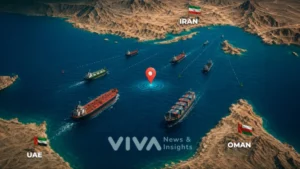
Secondly, the focus on the Strait of Hormuz remains a critical component of Iran’s leverage. Recent reports suggest that Iran’s parliament is considering new regulations that would further restrict transit through the vital waterway, linking maritime security to the "behavior of Western powers." Given that approximately 20% of the world’s petroleum passes through the strait, any disruption would have an immediate and catastrophic impact on global energy markets.
Thirdly, the inclusion of European leaders on the list effectively ends the era of "constructive engagement" that some European nations had hoped to maintain with Tehran. The alignment of France, Germany, the UK, and Italy in the crosshairs of Iranian propaganda suggests that the Islamic Republic now views the entirety of the West as a singular hostile entity.
From a domestic perspective, the list serves to consolidate the power of Mojtaba Khamenei. By positioning himself as the avenger of his father’s "martyrdom," he can marginalize more moderate voices within the Iranian political system and demand absolute loyalty from the security forces. This internal consolidation is essential for a leader who is still establishing his legitimacy in the eyes of a public that has shown increasing signs of unrest in recent years.
Conclusion
The "13 Targets" list published by Hamshahri is more than a provocative infographic; it is a manifesto for the new era of Iranian foreign policy under Ayatollah Mojtaba Khamenei. While it functions as propaganda, its roots are in a very real and escalating conflict that has seen the removal of one of the 21st century’s most influential religious and political figures. As the international community watches the transition of power in Tehran, the threat of targeted retaliation hangs over the diplomatic landscape, complicating any future attempts at de-escalation and ensuring that the shadow of the "Great Game" in the Middle East continues to darken. The world now waits to see if this rhetoric will manifest into action, or if it will remain a potent tool of psychological warfare in an increasingly volatile world.