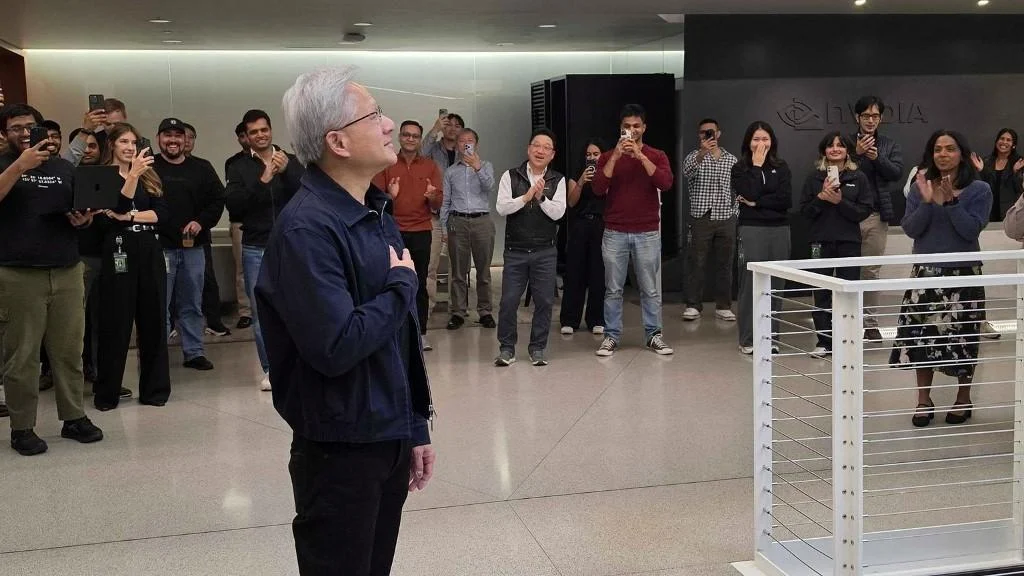
In a move that has sent shockwaves through the global technology sector, Jensen Huang has officially resumed his role as Chief Executive Officer of Nvidia, just eleven days after his sudden resignation. The reinstatement, finalized by a unanimous decision from the Nvidia board of directors, marks the beginning of a precarious new chapter for the semiconductor giant. On Tuesday, in a highly anticipated all-hands meeting at the company’s Santa Clara headquarters, Huang addressed the workforce, delivering a candid and emotional apology for what he described as "very serious personal mistakes."
The atmosphere in the room was reportedly heavy, as the leader of the world’s most valuable chipmaker grappled with the fallout from a series of personal scandals that have challenged the company’s internal culture and governance standards. According to reports from Bloomberg and Wired, Huang characterized the event as the second most difficult meeting of his life, surpassed only by a personal conversation with his wife.
A Chronology of the Crisis
The turbulence began on November 12, when Jensen Huang shocked the industry by announcing his resignation as CEO. This move followed intensifying reports regarding his personal life, most notably his involvement with Alice Huang, a former executive at Singapore-based cloud firm Megaspeed. The situation was further complicated by public speculation and reports suggesting potential security concerns, including allegations that the individual in question had ties to intelligence activities in China.
Following the initial revelation, the situation spiraled as further allegations surfaced. Among these were claims of an inappropriate relationship with Kimberly Powell, Nvidia’s Vice President of Healthcare. As the internal and external scrutiny intensified, reports emerged alleging that Huang had engaged in multiple undisclosed relationships, including several with subordinates within the company.
On November 18, in the immediate vacuum left by Huang’s departure, CFO Colette Kress—who had been serving as the interim CEO—conducted a company-wide meeting aimed at stabilizing the firm’s operations and addressing employee morale. The board of directors convened on Sunday to deliberate on the future of the company’s leadership, eventually deciding that despite the personal conduct violations, the strategic continuity provided by Huang was essential to Nvidia’s ongoing dominance in the artificial intelligence market.
Addressing the Board and the Workforce
During Tuesday’s address, Huang provided a rare window into his private efforts to reconcile his actions, revealing that he has been participating in daily, 90-minute therapy sessions. While the specific nature of his clinical support remains private, Huang suggested that his commitment to this process is part of an effort to address the behavioral patterns that led to the current crisis.
Perhaps the most controversial aspect of his return is his interpretation of Nvidia’s corporate code of conduct. During the meeting, Huang offered a nuanced and somewhat contentious stance on the rules governing workplace behavior. He emphasized that while the company maintains a strict stance on integrity, the violation of a code of conduct does not necessitate an automatic termination.
"That does not mean that once you violate the code of conduct, we immediately throw you out," Huang stated. He argued that the company must weigh each case based on the specific facts, the surrounding circumstances, and a holistic evaluation of the individual’s contributions and potential for rehabilitation. This perspective has drawn criticism from governance experts who suggest that such a policy creates a "two-tiered" system, potentially exempting high-ranking executives from the standards applied to the rank-and-file workforce.
Corporate Governance and the Conflict of Interest
Nvidia’s official code of conduct explicitly prohibits relationships that result in a conflict of interest, specifically those between supervisors and subordinates. These policies are designed to mitigate risks regarding power dynamics, professional favoritism, and potential litigation. By engaging in relationships with individuals under his direct or indirect influence, Huang fundamentally breached these established protocols.
The board’s decision to reinstate him implies a calculation that the risk of a leadership vacuum during the current AI boom outweighs the reputational risk of keeping a compromised CEO. However, this decision places the board in a difficult position regarding future enforcement. If the company is perceived as shielding its CEO from the consequences of policies that would result in the termination of other employees, it risks significant damage to its internal culture and long-term talent retention.
Broader Economic and Industry Implications
Nvidia is currently the linchpin of the global artificial intelligence infrastructure. With its H100 and Blackwell-series GPUs forming the backbone of data centers for companies like Microsoft, Meta, and Alphabet, any instability at the executive level is viewed as a systemic risk to the tech industry.
The company’s market capitalization has experienced unprecedented growth over the past twenty-four months, largely driven by the demand for generative AI hardware. Investors have largely reacted with a "wait and see" approach, prioritizing the company’s financial performance and supply chain stability over the personal conduct of its leadership. However, institutional investors, particularly those governed by strict Environmental, Social, and Governance (ESG) mandates, may find the board’s decision to overlook these violations problematic.
The Path Forward
As Jensen Huang resumes his duties, he faces the dual challenge of restoring his personal credibility and repairing the internal fabric of a company that prides itself on high-performance engineering culture. His admission that he had more relationships than previously reported suggests that the company—and the public—may not yet have the full scope of the situation.
The next few quarters will be critical for Nvidia. Analysts will be monitoring the company’s internal turnover rates and the performance of the executive team. Furthermore, the board of directors will likely face mounting pressure to formalize a more robust set of governance oversight mechanisms to ensure that the "holistic evaluation" mentioned by Huang does not devolve into a mechanism for executive impunity.
Ultimately, the case of Jensen Huang serves as a poignant case study in the intersection of corporate power and personal accountability. While the technological innovations spearheaded by Nvidia remain vital to the global economy, the company’s recent events highlight the inherent fragility of organizations that become synonymous with a single individual. Whether Nvidia can successfully navigate this crisis of confidence depends on its ability to demonstrate that its institutional values are, in fact, stronger than the actions of any one person, even its own CEO.
For now, the technology sector remains in a state of cautious observation. The company has yet to release a formal policy change regarding the enforcement of its code of conduct, leaving many to wonder if the recent events will lead to a stricter, more transparent framework for workplace ethics, or if the status quo will prevail under the shadow of the company’s immense market success. As Huang returns to the helm, the eyes of Silicon Valley remain fixed on Santa Clara, waiting to see if the "difficult meeting" on Tuesday was merely the beginning of a broader transformation or a temporary reprieve from a brewing storm of corporate governance challenges.