The aspirations of the Indonesian national football team to secure a definitive victory in the group stages of the FIFA ASEAN Cup 2026 faced a formidable roadblock on Monday evening, September 28, 2026. Playing in front of a roaring, capacity crowd at the iconic Stadion Utama Gelora Bung Karno (SUGBK) in Jakarta, the Garuda squad was forced to settle for a hard-fought 0-0 draw against arch-rivals Malaysia.
The high-stakes encounter, which captured the attention of millions across Southeast Asia, was defined by tactical shifts, early dominance, and a pivotal disciplinary incident that completely altered the trajectory of the match. Following the conclusion of the tense 90 minutes, Indonesian central defender Justin Hubner addressed the media, pointing directly to a first-half red card issued to influential midfielder Thom Haye as the single most critical turning point of the fixture.
According to Hubner, the red card disrupted a tactical masterclass that had initially seen Indonesia completely dictate the tempo of the game, leaving head coach John Herdman’s side with no choice but to absorb relentless pressure for more than an hour of regulation time. Despite the unfavorable numerical disadvantage, the defensive resilience displayed by the remaining ten men ultimately salvaged a valuable point, keeping Indonesia’s qualification hopes alive as the tournament enters its decisive final group-stage fixtures.
Tactical Dominance and Early Momentum Frustrated
From the opening whistle, the atmosphere inside the Gelora Bung Karno Stadium was electric, charged with the historic rivalry that always accompanies encounters between Indonesia and Malaysia. Under the tactical guidance of head coach John Herdman, the Indonesian side deployed an aggressive, high-pressing strategy designed to catch the visiting Harimau Malaya off guard.
The strategy yielded immediate dividends. Indonesia’s midfield, anchored by Thom Haye, quickly established control of the center of the pitch, starving Malaysia of possession and forcing unforced errors in their defensive third. The Garuda squad’s relentless pressure resulted in wave after wave of attacks, forcing the Malaysian backline into desperate clearances.
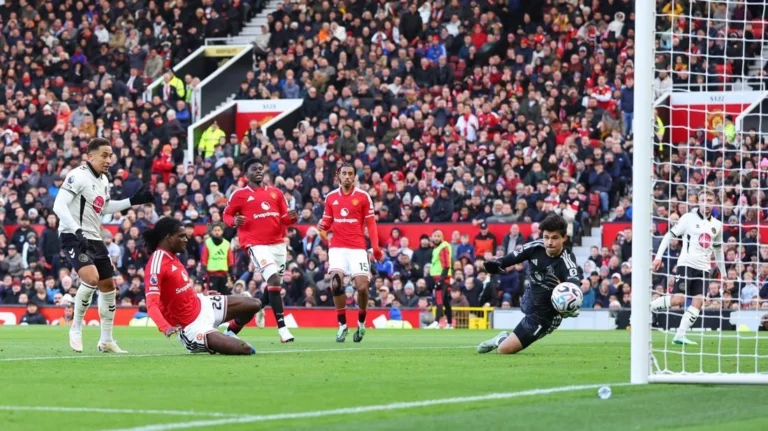
Just four minutes into the match, the home crowd erupted in celebration when Justin Hubner found the back of the net following a well-executed set-piece routine. The young center-back rose above his marker to direct the ball past the Malaysian goalkeeper, sending the SUGBK into absolute jubilation. However, the celebrations were cut short. Following a brief consultation and a review, the officiating crew disallowed the goal, ruling that an infringement had occurred during the build-up.
Despite the psychological blow of the disallowed goal, Indonesia maintained their composure and continued to dominate proceedings. They persistently tested the Malaysian defense through probing passes from midfield and dangerous crosses from the flanks. For the first third of the match, it appeared to be only a matter of time before the deadlock would be broken in favor of the hosts.
The Turning Point: Thom Haye’s Red Card
The entire complexion of the match shifted dramatically in the 37th minute. In a contested challenge in the middle of the park, influential midfielder Thom Haye was penalized by the match referee. Following a review of the challenge, the referee brandished a straight red card, sending Haye off the pitch and reducing Indonesia to 10 men with more than half of the game still to play.

The loss of Haye—who serves as the creative engine and defensive shield for the national team—was an immense blow. Up to that point, Haye had dictated the pace of the game and successfully stifled Malaysian counter-attacks. With his departure, the tactical blueprint prepared by John Herdman had to be drastically rewritten on the fly.
Malaysia, recognizing their sudden numerical superiority, immediately altered their approach. Shifting from a cautious posture to an aggressive offensive stance, the visitors began to monopolize possession and launch sustained waves of attacks targeting the flanks of the depleted Indonesian defense.
Reflecting on the incident after the final whistle, Justin Hubner did not shy away from acknowledging the profound impact the red card had on the team’s tactical approach.
"The match today, I think we dominated until the red card happened. When we got the red card, it felt very difficult for us to get out and attack," Hubner stated candidly in the post-match press conference.
Defensive Resilience and Tactical Adaptation
With the team forced to play with a man down for over 50 minutes, the onus fell heavily upon Indonesia’s backline and defensive structure. Coach John Herdman immediately adjusted his formation, pulling his lines deeper into a compact, low-block defensive shape designed to deny space to the advancing Malaysian attackers.
The remaining players demonstrated exceptional tactical discipline, communication, and physical stamina. Justin Hubner, operating at the heart of the defense, marshaled his teammates with maturity beyond his 23 years, cutting out crosses, blocking goal-bound shots, and clearing danger from the box.
Malaysia threw everything they had at the Indonesian goal, utilizing their numerical advantage to create several promising scoring opportunities in the second half. However, the combination of brilliant last-ditch tackles, coordinated defensive shifting, and crucial saves by the Indonesian goalkeeper ensured that the visiting side was repeatedly frustrated.
Despite the mounting physical fatigue, the Indonesian players maintained their defensive shape until the final whistle. The scoreless draw was secured through sheer willpower, collective sacrifice, and an ironclad backline that refused to buckle under pressure.
Praise for Character and Team Mentality
Speaking after the match, Justin Hubner was quick to deflect individual praise, choosing instead to highlight the collective mental fortitude and fighting spirit displayed by his teammates. He emphasized that grinding out a clean sheet under such adverse circumstances was a testament to the resilience of the squad.

"Of course, it is always difficult to play with ten men, but if you look at how we defended in the end, I think huge praise must be given to the team," Hubner remarked. "I think everyone wanted to see us win, but if we can defend like this, then no team will be able to score against us."
Hubner’s sentiments were echoed by other figures within the Indonesian football ecosystem, including prominent coaching staff and analysts. Observers noted that the ability to adapt to a severe tactical disadvantage without conceding a goal demonstrates a level of maturity and defensive organization that has often been missing in past iterations of the national team. Securing a point while playing a man down for the majority of the match is widely viewed not as two points dropped, but as a hard-earned point gained against a formidable regional rival.
Implications for Group A in the FIFA ASEAN Cup 2026
The scoreless draw leaves the standings in Group A of the FIFA ASEAN Cup 2026 finely balanced and intensely competitive. With every team in the group having played two matches, the margins for error in the final round of group fixtures have evaporated.
The stalemate means Indonesia remains firmly in the hunt for a coveted spot in the tournament’s knockout stages, but the ultimate decision on qualification will now hinge entirely on the final group-stage fixtures. The defensive foundation built against Malaysia provides a strong psychological and tactical springboard, but the team will need to rediscover its attacking fluency if it hopes to advance deep into the tournament.
Looking Ahead: The Decisive Clash Against Bangladesh
The drama of Group A will reach its climax on Thursday, October 1, 2026. In the final round of group matches, Indonesia is scheduled to face Bangladesh, while their regional rivals Malaysia will square off against Singapore.
Both crucial matches will be played simultaneously, kicking off at 19.30 Western Indonesia Time (WIB). For Indonesia, the equation is clear: a victory against Bangladesh will significantly bolster their chances of securing progression to the next round, potentially topping the group depending on the goal difference and the outcome of the Malaysia-Singapore fixture.
Coach John Herdman and his technical staff face a brief turnaround to address squad fatigue and formulate a winning strategy for the Bangladesh encounter. Compounding the challenge is the enforced absence of Thom Haye, who will be suspended for the upcoming match due to his red card. The coaching staff will need to rely on squad depth and tactical flexibility to fill the void left by the influential midfielder.
Nevertheless, the resilience shown against Malaysia has galvanized the squad and the nation. As the team prepares for the showdown in Jakarta, the Garuda faithful will be hoping that the defensive grit displayed on Monday night can be paired with clinical finishing, steering Indonesia closer to ultimate glory in the FIFA ASEAN Cup 2026.