Socio Today
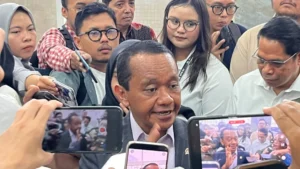
Jakarta, VIVA – Indonesia’s Minister of Agriculture, Andi Amran Sulaiman, on Monday, July 20, 2026, vehemently refuted allegations circulating regarding the acquisition of community land in Papua for an unusually low price of Rp 100,000 per hectare. Speaking from Jakarta, Minister Amran declared these claims to be "cruel slander" aimed at discrediting government programs, asserting unequivocally that agricultural land developed under state initiatives in Papua remains the rightful property of the local communities. His strong denial comes amidst a broader effort to clarify information and counter what he described as widespread misinformation concerning agricultural development efforts in the country’s easternmost region.
The Minister’s statement was delivered during his attendance at the 65th Milad (Anniversary) Reception and National Working Meeting (Rakernas) of the Ikatan Pelajar Muhammadiyah (IPM), or Muhammadiyah Student Association, held at the Universitas Muhammadiyah Jakarta. The event, themed "Resonansi Algoritma Pelajar Berdampak" (Resonance of Impactful Student Algorithms), gathered approximately 2,000 IPM cadres from across Indonesia, providing a significant platform for the Minister to address critical national issues. The specific question regarding land acquisition in Papua was raised by Muhammad Tamim Setiaji, an IPM delegate from South Tangerang City, Banten, who sought clarification on the widely circulating information, emphasizing the need for young people to assess such issues rationally in an era saturated with diverse narratives.
Addressing the Misinformation and Government’s Stance
Minister Amran’s direct response aimed to dismantle the narrative that land in Papua was being unjustly seized or purchased at exploitative rates. He emphasized that the government’s approach to agricultural development in Papua is fundamentally collaborative and empowering, rather than extractive. Far from dispossessing indigenous communities, the government’s programs are designed to enhance their agricultural capabilities and improve their livelihoods while preserving their land ownership. "That is slander that is very cruel to the government, including to us who are running the program. The fact is not like that at all," Minister Amran stated emphatically.
He elaborated that the agricultural development initiatives in Papua do not involve the transfer of land ownership from communities to the state or any other party. Instead, the government actively facilitates the development of paddy fields and other agricultural areas, which are then fully owned by the local people. This commitment extends to providing comprehensive support, including crucial infrastructure and essential agricultural machinery, all without charge to the communities. The objective is to boost productivity and foster the welfare of local farmers, ensuring that the benefits of agricultural modernization directly accrue to those who traditionally own and work the land.
Scale of Development and Investment
Providing concrete figures to substantiate his claims, Minister Amran revealed that the government has, to date, developed approximately 137,000 hectares of agricultural land across Papua. This significant undertaking underscores the scale of the government’s commitment to transforming the region’s agricultural landscape. Crucially, he reiterated that every single hectare of this developed land remains under the ownership of the local communities. The government’s role is strictly that of a facilitator and provider of resources, not an acquirer of land.
The financial commitment behind these initiatives is substantial, with the Minister noting that the value of assistance provided to Papuan communities runs into trillions of rupiah. This extensive investment covers a wide array of support mechanisms designed to ensure the success and sustainability of the agricultural programs. "The rice fields belong to the people. None of them belong to the state. We provide agricultural machinery for free. We build irrigation. Even the aid provided reaches trillions of rupiah. All of that is for the community," Amran underscored, highlighting the non-repayable nature of the government’s support.
Broader Context of Papua’s Development Challenges
The issue of land ownership in Papua is deeply sensitive, rooted in historical grievances, complex customary land rights (hak ulayat), and the legacy of resource extraction activities that have sometimes sidelined indigenous communities. Papua, a region rich in natural resources, has long been a focus of national development efforts, often accompanied by debates over the equitable distribution of benefits and respect for local customs and land tenure systems. Allegations of unfair land acquisition, even if unsubstantiated, can quickly inflame tensions and erode trust between the government and local populations.
Against this backdrop, the government has been pursuing various development strategies for Papua, including special autonomy status aimed at empowering local governance and fostering economic growth. Agricultural development plays a critical role in these broader strategies, not only for food security but also as a pathway to economic diversification and poverty reduction in a region where a significant portion of the population still relies on subsistence farming. The Minister’s emphatic denial serves to counteract narratives that could undermine these efforts and exacerbate existing sensitivities.
Comprehensive Support Mechanisms for Papuan Farmers
Beyond the development of new agricultural lands and the provision of machinery, Minister Amran detailed a multi-faceted approach to supporting Papuan agriculture. This includes the deployment of hundreds of units of agricultural machinery, aimed at mechanizing farming processes and increasing efficiency. The establishment of a "Brigade Pangan" (Food Brigade) signifies a structured effort to ensure food security, likely involving logistical support, distribution networks, and emergency response capabilities for agricultural needs.
Furthermore, significant investments have been made in constructing and improving irrigation networks, which are vital for enhancing agricultural productivity, especially in regions prone to variable rainfall or with specific water management challenges. Recognizing the unique ecological and cultural landscape of Papua, the government’s programs also actively support the development of indigenous commodities that align with local wisdom ("kearifan lokal"), such as sago and coconut. Sago, a staple food source in many parts of Papua, and coconut, a versatile cash crop, represent sustainable agricultural pathways that respect traditional practices while offering economic opportunities. This approach not only leverages existing local knowledge and resources but also ensures that development initiatives are culturally appropriate and community-led.
Impact and Implications of Agricultural Development
The government’s commitment to developing 137,000 hectares of agricultural land, with land ownership firmly remaining with local communities, carries significant implications for Papua’s future.
- Food Security: By increasing local agricultural output, these programs contribute directly to regional and national food security. Enhanced production of staple crops like rice and sago can reduce reliance on external food supplies and build resilience against market fluctuations.
- Economic Empowerment: The provision of free land development, infrastructure, and machinery empowers local farmers economically. It reduces their initial investment costs, improves productivity, and potentially increases their income through better yields and market access. This can be a powerful driver for poverty reduction and improved living standards in rural areas.
- Social Cohesion and Trust: Actively countering misinformation and demonstrating a clear commitment to community ownership and benefit is crucial for building trust between the government and Papuan communities. Addressing historical grievances and ensuring transparent, equitable development processes are vital for long-term social cohesion.
- Sustainable Development: Focusing on local wisdom and indigenous commodities like sago and coconut promotes sustainable agricultural practices that are well-adapted to Papua’s unique environment. This approach supports biodiversity and ecological balance, contrasting with potentially disruptive monoculture expansions.
- Capacity Building: The introduction of modern agricultural techniques and machinery, coupled with irrigation infrastructure, contributes to the capacity building of local farmers. This transfer of knowledge and technology can lead to more efficient and productive farming practices in the long run.
However, the implementation of such large-scale programs in Papua is not without its challenges. The diverse topography, ranging from coastal areas to highlands, presents logistical hurdles. The varied cultural contexts and customary land laws across different ethnic groups require sensitive and inclusive engagement strategies. Furthermore, climate change poses risks to agricultural productivity, necessitating adaptive farming practices and resilient infrastructure. The government’s ongoing efforts must therefore continually address these complexities to ensure the sustained success and equitable impact of its agricultural development agenda.
The Role of Youth in Discerning Information
The question posed by the IPM delegate, Muhammad Tamim Setiaji, highlighted a crucial contemporary issue: the prevalence of misinformation in the digital age and the imperative for critical thinking, especially among the youth. Minister Amran’s detailed response served not only to clarify government policy but also to educate the next generation of leaders on how to discern facts from falsehoods. In a landscape where "fitnah" can spread rapidly, direct and transparent communication from public officials becomes even more vital. The engagement at the IPM event underscored the government’s recognition of the youth’s role in shaping public discourse and the importance of equipping them with accurate information to make rational judgments.
The Minister’s appearance at the IPM event, a gathering of young intellectuals and future leaders, was strategically significant. It provided an opportunity to directly engage with a critical segment of society, addressing their concerns and clarifying government policies in a setting that encourages dialogue and inquiry. By openly discussing sensitive issues like land ownership in Papua, Minister Amran aimed to foster a better understanding of the government’s development agenda and reinforce its commitment to inclusive growth and community welfare.
Future Outlook for Papuan Agriculture
Looking ahead, the Indonesian government remains committed to its long-term vision for Papua’s agricultural sector. This vision encompasses not only expanding cultivated areas and improving productivity but also enhancing post-harvest management, developing value-added agricultural products, and strengthening market access for Papuan farmers. The aim is to transform Papua into a regional food basket, contributing significantly to national food security while simultaneously elevating the economic status of its indigenous communities. This comprehensive strategy, rooted in respect for local land rights and traditions, seeks to ensure that development in Papua is both equitable and sustainable, delivering tangible benefits to its people and fostering a sense of shared prosperity. The Minister’s robust denial of land seizure claims is a critical component of building the trust necessary to achieve these ambitious goals.