Socio Today
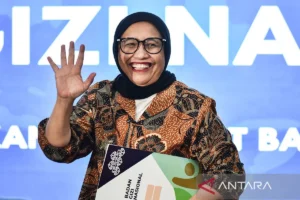
Jakarta, Indonesia – Nanik Sudaryati Deyang has officially resigned from her position as the Head of the National Nutrition Agency (BGN), citing health reasons that necessitate intensive medical treatment. The decision, conveyed directly to President Prabowo Subianto, marks a significant transition for the nascent agency and its crucial mandate, including the ambitious Free Nutritious Meal Program (MBG), a cornerstone initiative of the new administration. Her departure, while brief in tenure, underscores the personal sacrifices inherent in high-level public service and prompts a swift leadership succession to ensure program continuity.
The news of Ms. Deyang’s resignation was confirmed by Dirgayuza Setiawan, Special Assistant to the President for Communication and Policy, on Wednesday in Jakarta. Mr. Setiawan stated that Ms. Deyang had personally bid farewell to President Prabowo, informing him of her need to undergo heart treatment, which subsequently led to her decision to step down from the leadership of the BGN. President Subianto, upon understanding the gravity of her health situation, accepted her resignation with empathy and concern.
The National Nutrition Agency: A Pillar of National Development
The National Nutrition Agency (BGN) was established with a vital mission: to orchestrate and implement comprehensive community nutrition programs across Indonesia. Its primary objective is to combat malnutrition, particularly stunting, which remains a significant public health challenge in the archipelago. Stunting, characterized by impaired growth and development due to poor nutrition, repeated infection, and inadequate psychosocial stimulation, affects approximately 21.5% of children under five in Indonesia, according to the 2023 Indonesian Nutrition Status Survey (SSGI). This figure, while showing a decline from previous years, still places Indonesia above the World Health Organization’s (WHO) threshold for a serious public health problem.
The BGN’s role extends beyond merely providing food; it encompasses a holistic approach to nutritional well-being, including education, policy formulation, and the coordination of various stakeholders from government agencies to local communities. The agency is instrumental in realizing President Prabowo Subianto’s vision of creating a healthy, intelligent, and productive future generation, directly linking national nutrition status to human capital development and long-term economic prosperity. A healthy population is better equipped to learn, work, and contribute to the nation’s growth, making the BGN’s mandate intrinsically tied to Indonesia’s demographic dividend and its aspirations to become a high-income country.
Central to the BGN’s current agenda is the implementation of the Free Nutritious Meal Program (MBG), a flagship initiative championed by President Prabowo. This program aims to provide nutritious meals to millions of school children and pregnant women nationwide, with the dual goals of improving nutritional intake and reducing stunting rates. The MBG program is envisioned as a strategic intervention to break the intergenerational cycle of malnutrition, ensuring that children receive adequate nutrition during critical developmental stages and that pregnant mothers have the necessary sustenance for healthy pregnancies. The scale of this program is immense, requiring meticulous planning, vast logistical coordination, and robust oversight to ensure the quality, safety, and equitable distribution of meals across diverse geographical and socioeconomic landscapes.
Nanik Sudaryati Deyang’s Brief Yet Impactful Tenure
Nanik Sudaryati Deyang’s appointment as the Head of BGN was relatively recent, with her tenure spanning approximately one and a half months. Despite the short period, her leadership was marked by a proactive approach to internal reform and a rigorous evaluation of the nascent MBG program’s implementation. Upon assuming office, Ms. Deyang quickly initiated several critical steps to strengthen the agency’s operational framework and enhance the effectiveness of its programs.
One of her primary focuses was a comprehensive review of the thousands of Nutrition Fulfillment Service Units (SPPGs) responsible for preparing and distributing meals under the MBG program. BGN records indicate that Ms. Deyang spearheaded evaluations of nearly 28,000 SPPGs. This extensive audit was designed to ensure adherence to stringent service standards, quality control protocols, and nutritional guidelines. Her team meticulously categorized these thousands of kitchens based on their quality and operational efficiency.
Furthermore, Ms. Deyang’s leadership led to strategic adjustments in the program’s rollout. She ordered a halt to the expansion of kitchens in certain regions where initial assessments revealed inefficiencies or potential issues. This decisive action underscored her commitment to quality over quantity, prioritizing the program’s integrity and effectiveness. During these evaluations, hundreds of SPPGs were identified as problematic, prompting corrective measures and a re-evaluation of their operational fitness. These findings highlight the significant challenges inherent in scaling a program of this magnitude and the critical need for robust oversight to maintain standards. Her swift actions, though brief, laid important groundwork for ensuring accountability and efficiency within the BGN and the MBG program.
A Personal Battle: Prioritizing Health
In her personal statement, Nanik Sudaryati Deyang conveyed profound regret and apologized to President Prabowo for having to step down from her crucial role. She emphasized that her decision was solely driven by her deteriorating health, specifically a heart condition that requires immediate and comprehensive medical attention. Ms. Deyang disclosed her intention to seek treatment abroad, including obtaining a second medical opinion, to ensure the best possible care and recovery.
"I conveyed to the President with a thousand apologies that it seems I must step down as Head of BGN, for my health, and because the President was concerned and sympathetic towards me, he approved," Ms. Deyang stated, highlighting President Prabowo’s compassionate understanding of her predicament. She further stressed that her resignation was not due to any other issues, dispelling any potential speculation about political or administrative conflicts. Her choice to prioritize her well-being over her demanding public office reflects a difficult but necessary decision for anyone facing serious health challenges.
The President’s acceptance of her resignation, accompanied by a request for her continued involvement in BGN oversight, speaks volumes about the value he places on her expertise and contributions. Ms. Deyang revealed that despite her formal departure, she would remain committed to supporting the agency’s mission. She indicated the possibility of a BGN Supervisory Board being established, and she has been asked to play a role in this oversight structure. This arrangement would allow her to recuperate while still lending her invaluable experience and insights to the critical nutrition programs. Her continued support, even in an advisory capacity, underscores the shared commitment to the MBG program’s success.
Leadership Transition and Program Continuity
The departure of a key figure like Nanik Sudaryati Deyang naturally prompts questions about leadership continuity and the future trajectory of the BGN and the MBG program. The swiftness of the transition is critical, given the program’s national importance and its direct link to the administration’s core promises.
Anticipating this need, discussions regarding a successor have already surfaced. Reports from within the Gerindra party, President Prabowo’s political party, have highlighted Sudaryono, currently serving as Deputy Minister of Agriculture, as a strong candidate for the Head of BGN. Gerindra officials have praised Sudaryono’s performance and capabilities, suggesting he possesses the necessary qualifications to lead the agency. Sudaryono’s background as Deputy Minister of Agriculture could provide valuable cross-sectoral experience, particularly in areas related to food production, supply chains, and rural development, all of which are intrinsically linked to national nutrition and food security. His potential appointment would signal a continuation of the government’s focus on a comprehensive approach to addressing nutrition challenges.
The immediate challenge for the new leadership will be to maintain the momentum established by Ms. Deyang’s initial reforms while simultaneously scaling up the MBG program to reach its full potential. This involves not only ensuring the quality and efficiency of the existing SPPGs but also expanding coverage to new areas, streamlining logistical operations, and fostering stronger collaboration with local governments and communities. The BGN’s effectiveness will depend on its ability to navigate complex administrative hurdles, secure adequate funding, and build a robust, corruption-free delivery system.
Broader Implications for National Development
The BGN’s mission and the MBG program are not merely about feeding children; they are integral components of Indonesia’s long-term national development strategy. Investing in early childhood nutrition has profound and lasting impacts on cognitive development, educational attainment, and future economic productivity. Children who receive adequate nutrition are more likely to perform better in school, secure higher-paying jobs, and contribute more effectively to the economy, thereby creating a virtuous cycle of human capital development.
The success of the MBG program, therefore, has far-reaching implications. It can significantly reduce healthcare costs associated with malnutrition-related illnesses, enhance the nation’s workforce potential, and ultimately contribute to poverty reduction. The program also serves as a critical social safety net, providing essential support to vulnerable populations and promoting greater social equity.
Despite the unexpected leadership change, the government’s commitment to the BGN’s mission and the MBG program remains unwavering. President Prabowo’s personal involvement and his request for Ms. Deyang’s continued advisory role underscore the high priority accorded to these initiatives. As Indonesia continues its journey towards becoming a developed nation, the health and nutritional well-being of its citizens, particularly its youngest generation, will remain a paramount concern and a key determinant of its future success. The transition at the BGN, while challenging, presents an opportunity to reinforce the agency’s foundations and accelerate its efforts in building a healthier, stronger Indonesia.