Socio Today
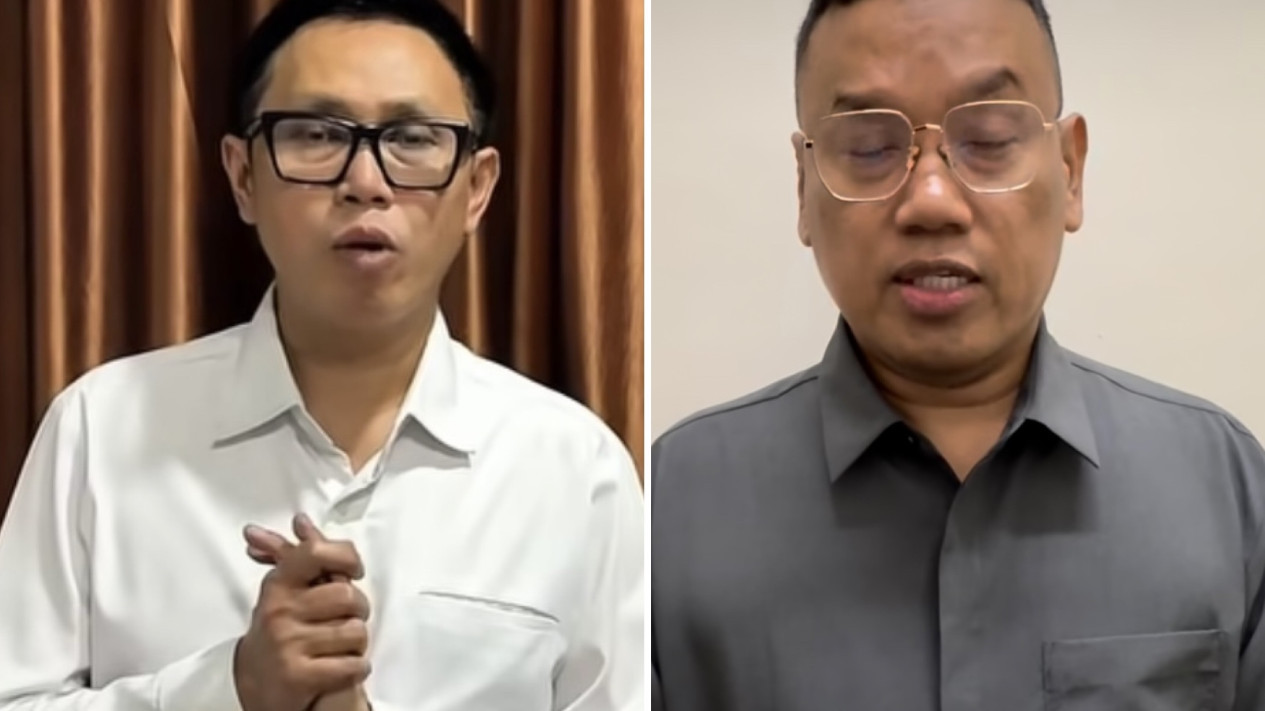
Jakarta, VIVA – The political future of prominent celebrity politicians Eko Hendro Purnomo, widely known as Eko Patrio, and Surya Utama, or Uya Kuya, remains in a state of limbo following confirmation from their party, Partai Amanat Nasional (PAN), that they are still designated as non-active members of the Indonesian House of Representatives (DPR RI). This status, which has largely kept them out of the public eye since its initial announcement, was re-affirmed on Wednesday, October 22, 2025, by Deputy Chairman of PAN, Eddy Soeparno. Soeparno indicated that the decision regarding their ultimate political fate now rests with PAN Chairman Zulkifli Hasan, with further communications expected to be directed to the party’s faction leaders in the DPR. This ongoing period of inactivity has sparked discussions about party discipline, the management of celebrity politicians, and the procedural intricacies of parliamentary membership in Indonesia.
The journey of Eko Patrio and Uya Kuya into the realm of politics reflects a broader trend in Indonesia, where popular entertainers often transition into legislative roles, leveraging their public appeal for electoral success. Eko Hendro Purnomo, a renowned comedian, television personality, and founder of the successful comedy group "Patrio," built a formidable career in entertainment before entering politics. His charisma and widespread recognition made him a significant asset for PAN. Similarly, Surya Utama, better known as Uya Kuya, established himself as a prominent television presenter, illusionist, and media personality with a large following. His foray into the DPR further exemplified the appeal of celebrity candidates to the Indonesian electorate, often seen as relatable figures distinct from traditional political elites. Both individuals successfully secured seats in the DPR, representing PAN and contributing to the party’s legislative contingent. Their initial electoral victories underscored the potent combination of celebrity status and party machinery in Indonesian democratic elections.
Chronology of Events Leading to Non-Active Status
The formal process of Eko Patrio and Uya Kuya’s non-activation began earlier in 2025. On Sunday, August 31, 2025, the Central Executive Board (DPP) of Partai Amanat Nasional issued an official press release announcing its decision to deactivate both Eko Hendro Purnomo and Surya Utama from their positions as members of the DPR RI, representing the PAN faction. The statement explicitly noted that this non-active status would take effect starting Monday, September 1, 2025.
The press release, which carried significant weight, was jointly signed by two of the party’s highest-ranking officials: Chairman Zulkifli Hasan and Deputy Chairman Viva Yoga Mauladi. The involvement of such senior figures underscored the seriousness with which PAN approached the decision. Beyond merely announcing the non-activation, the statement also contained a broader message to the public, urging citizens to "remain calm and patient, and to trust the government of President Prabowo Subianto." It further affirmed PAN’s unwavering commitment to aligning itself with the interests of the people and the government. This inclusion suggests that the party’s decision, while affecting individual members, was also framed within the context of broader political stability and public confidence in the national leadership, particularly given PAN’s role as a member of the ruling coalition.
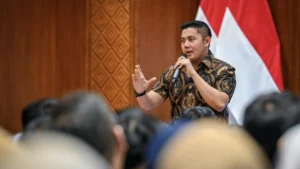
Fast forward to Wednesday, October 22, 2025, nearly two months after the initial announcement, the status of both politicians remains unchanged. Eddy Soeparno, another influential Deputy Chairman of PAN and also the Deputy Chairman of the People’s Consultative Assembly (MPR RI), confirmed to reporters that "As far as the DPP PAN is concerned, the status of our members remains non-active." He elaborated that any further developments or decisions regarding their future would be contingent upon "further direction from the chairman [Zulkifli Hasan]" and would subsequently be "communicated to the leaders of the PAN faction." This update highlights that the non-active status is not necessarily a permanent dismissal but rather an interim measure, with the ultimate resolution awaiting the party chairman’s final directive.
Understanding "Non-Active" Status in Indonesian Politics
The term "non-active" (nonaktif) for a member of the DPR RI carries specific implications within the framework of Indonesian parliamentary procedures and party regulations. Unlike a full resignation, a formal recall (Pengganti Antar Waktu or PAW), or an outright dismissal, a non-active status often implies a temporary suspension of duties or a period during which a member is not expected to perform their legislative functions. The specific reasons for such a designation are not always publicly disclosed but can range from internal party disciplinary actions, a need for the member to focus on other party assignments, or, in some cases, to allow for resolution of personal or legal matters without directly impacting the party or parliamentary proceedings.
During a period of non-active status, a DPR member typically ceases to participate in parliamentary sessions, committee meetings, and other legislative activities. While the exact implications for their remuneration, allowances, and other benefits can vary based on internal party rules and DPR regulations, it generally means a cessation or reduction of these privileges commensurate with their non-participation in legislative duties. Importantly, a non-active status is often reversible, meaning the member can potentially be reinstated if the underlying issues are resolved or if the party leadership decides to lift the suspension. This contrasts sharply with a PAW, where a member is permanently replaced, or a dismissal, which signifies a complete termination of their parliamentary role. The decision to make a member non-active often serves as a flexible tool for political parties to manage internal issues or external pressures without immediately resorting to more drastic and permanent measures.
In the case of Eko Patrio and Uya Kuya, the continued non-active status suggests that the underlying issues that led to the initial decision have either not yet been fully resolved or that the party leadership is still deliberating the most appropriate long-term course of action. The explicit mention of awaiting Chairman Zulkifli Hasan’s directive underscores the centralized authority within PAN in making such critical personnel decisions.
Partai Amanat Nasional (PAN): Context and Position
Partai Amanat Nasional, or PAN, is a significant political force in Indonesia, known for its moderate nationalist-religious ideology. Founded in 1998 during the reform era, PAN has consistently played a role in Indonesia’s democratic landscape, often positioning itself as a pragmatic party willing to engage in various coalitions. Under the leadership of Zulkifli Hasan, who has served as Minister of Trade in the current administration, PAN has solidified its position as a key component of the ruling coalition supporting President Prabowo Subianto.
As part of the government coalition, PAN’s actions and internal disciplinary measures are often viewed through the lens of maintaining political stability and supporting the national agenda. The party’s statement in the August 31st press release, urging public trust in the Prabowo administration and affirming its commitment to the people, reinforces this alignment. This context suggests that decisions regarding its legislative members, especially those with high public profiles like Eko Patrio and Uya Kuya, are not made in isolation but are carefully weighed against their potential impact on the party’s image, its internal cohesion, and its relationship with the broader government coalition. Managing celebrity politicians, while beneficial for electoral campaigns, also presents unique challenges in terms of integrating them into the often-rigorous and less glamorous work of legislation and maintaining party discipline.

Broader Implications and Future Outlook
The prolonged non-active status of Eko Patrio and Uya Kuya carries several implications, both for the individuals involved and for PAN as a political entity. For Eko Patrio and Uya Kuya, this period of political dormancy could significantly impact their careers. While their celebrity status offers a degree of resilience, a prolonged absence from legislative duties could diminish their political capital and public perception as effective representatives. It might also prompt them to consider a full return to their entertainment careers, or to seek alternative roles within the party structure that do not involve active legislative duties. The uncertainty surrounding their future in the DPR could also create anxiety among their constituents, who elected them to represent their interests.
For PAN, the situation highlights the party’s internal governance and its approach to member accountability. The decision to make high-profile members non-active, rather than immediately recalling them, could be interpreted as a strategic move to allow for internal resolution, protect the party’s image from potential negative publicity, or give the members a chance to address any underlying issues. It also demonstrates the authority vested in the party chairman, Zulkifli Hasan, to make ultimate decisions on such matters. How PAN eventually resolves this situation will reflect on its commitment to transparency, internal discipline, and its ability to manage its diverse cadre of members, including those from non-political backgrounds. The party must balance the need for internal order with the public’s expectation of accountability from its elected representatives.
The phenomenon of celebrity politicians in Indonesia continues to be a subject of public and academic debate. While their popularity can galvanize voter turnout and bring fresh perspectives to politics, their transition to legislative roles often exposes them to different standards of scrutiny and expectations. The legislative work of the DPR is complex, requiring dedication to policy-making, committee work, and constituent outreach—tasks that differ significantly from the demands of the entertainment industry. The situation with Eko Patrio and Uya Kuya could serve as a case study in how political parties navigate the integration and management of such figures, ensuring they fulfill their parliamentary duties effectively while adhering to party principles.
Looking ahead, the next steps are entirely dependent on Chairman Zulkifli Hasan’s decision. Possible scenarios include their full reinstatement, which would signal a resolution of the issues that led to their non-activation; a permanent recall, leading to their replacement through the PAW mechanism, which would bring a new PAN representative to the DPR; or perhaps a new assignment within the party structure that does not involve active parliamentary duties. The timing of this decision remains unclear, but it is expected to be a carefully considered move that takes into account internal party dynamics, public perception, and the broader political landscape.
In conclusion, the non-active status of Eko Patrio and Uya Kuya within the DPR RI, as confirmed by PAN’s Deputy Chairman Eddy Soeparno, continues to be a notable development in Indonesian politics. This ongoing situation underscores the complexities of party discipline and member management, particularly for high-profile figures. With the final decision resting with PAN Chairman Zulkifli Hasan, all eyes remain on the party leadership for directives that will determine the future political trajectory of these two prominent celebrity politicians and potentially set a precedent for similar cases within the Indonesian parliamentary system. The resolution of this matter will undoubtedly provide further insight into the operational dynamics of political parties and the evolving role of public figures in the nation’s legislative processes.