Socio Today
Jakarta, Indonesia – The political landscape in Indonesia continues to witness significant shifts, with the latest development reaffirming the non-active status of two prominent public figures, Eko Hendro Purnomo, widely known as Eko Patrio, and Surya Utama, or Uya Kuya, from their positions as members of the House of Representatives (DPR RI). Both individuals, affiliated with the National Mandate Party (PAN), have been noticeably absent from public political discourse since their non-activation, a status that the party has now officially reconfirmed.
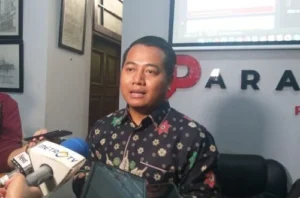
The revelation came from Deputy Chairman of PAN, Eddy Soeparno, who on Wednesday, October 22, 2025, reiterated that the party’s central leadership board (DPP PAN) maintains their non-active status. This confirmation ends, at least for now, any speculation regarding a potential change in their parliamentary standing. Soeparno emphasized the party’s consistent stance on the matter, indicating that the decision remains firm. "As far as the DPP PAN is concerned, their status as non-active members remains," he stated to reporters, underscoring the party’s continued enforcement of its earlier directive.
Background and Context of PAN in Indonesian Politics
Partai Amanat Nasional (PAN) is one of Indonesia’s significant political parties, established in 1998 during the reform era. Known for its moderate, nationalist, and religious-pluralist platform, PAN has consistently played a role in Indonesia’s parliamentary democracy. Over the years, the party has navigated various political coalitions, often positioning itself as a pragmatic force capable of working across different ideological lines. Its electoral performance has seen fluctuations, but it has maintained a consistent presence in the DPR RI, representing a diverse segment of Indonesian society.
PAN has also been notable for its strategy of recruiting public figures and celebrities, leveraging their popularity to garner votes. This approach, common among Indonesian political parties, aims to connect with a broader electorate beyond traditional political bases. Eko Patrio and Uya Kuya exemplify this strategy, having built considerable careers in the entertainment industry before venturing into politics. Their transition from television screens to legislative chambers was met with public interest, highlighting the evolving dynamics of political representation in a celebrity-driven culture. The party’s decision regarding their status, therefore, carries weight not just for the individuals but also for the broader understanding of how political parties manage their public figures and internal discipline.
Eko Patrio and Uya Kuya: From Stardom to Legislative Halls
Eko Hendro Purnomo, better known as Eko Patrio, rose to fame as a comedian and television personality. He was a member of the popular comedy group "Patrio" and has had a long and successful career in entertainment as a presenter, actor, and producer. His entry into politics saw him elected as a member of the DPR RI for multiple terms, representing the electoral district of East Java. Throughout his political tenure, Eko Patrio had been an active voice within PAN’s faction, contributing to legislative discussions and party initiatives. His blend of popular appeal and political engagement made him a recognizable figure in the national legislature.
Surya Utama, or Uya Kuya, similarly built a strong presence in the Indonesian entertainment industry as a magician, presenter, and television personality known for his unique and often controversial talk shows. His transition into politics and subsequent election to the DPR RI was a testament to his widespread popularity. Uya Kuya, like Eko Patrio, brought a different kind of public engagement to the political arena, often leveraging his media savvy to communicate political messages. Both individuals represent a distinct phenomenon in Indonesian politics where the lines between entertainment and governance often blur, attracting significant public attention and scrutiny. Their non-active status marks a notable pause in their political journeys, prompting questions about the future of celebrity involvement in Indonesian legislative affairs.
Chronology of Events Leading to the Non-Activation

The decision to non-activate Eko Patrio and Uya Kuya from their parliamentary roles was not abrupt but followed a specific timeline, indicating a deliberated move by the party leadership.
- August 31, 2025: The initial official announcement regarding the non-activation was made public. A press release from the DPP PAN was circulated to various media outlets, including tvOnenews.com, outlining the party’s decision. This crucial document was signed by none other than the Chairman of PAN, Zulkifli Hasan, and the Deputy Chairman, Viva Yoga Mauladi, signaling the top leadership’s consensus and authority behind the move. The press release explicitly stated that the decision was made "observing the current dynamics and developments," a phrase that often alludes to internal party considerations, broader political strategies, or responses to public sentiment.
- September 1, 2025: The non-active status for both Eko Patrio and Uya Kuya officially took effect. This date marked their formal cessation of duties and privileges as active members of the PAN faction in the DPR RI. From this point onwards, their direct participation in parliamentary proceedings, committee meetings, and other legislative functions would cease.
- October 22, 2025: Wakil Ketua Umum PAN, Eddy Soeparno, publicly reconfirmed the enduring non-active status of both individuals. His statement, delivered to journalists, served to clarify that there had been no change to the initial decision and that the party was holding firm. He further indicated that any future developments or changes would depend on the directives from Ketua Umum PAN, Zulkifli Hasan, and would be communicated to the leadership of the PAN faction in the DPR RI. This suggests that while the current status is fixed, the possibility of future re-evaluation, albeit under strict party control, remains open.
The timing of this decision, coming well into the term of the DPR RI and in the context of the newly established administration under President Prabowo Subianto, suggests a strategic realignment within PAN. The press release from August 31, 2025, also included a call for the public to "remain calm and patient and trust the government of President Prabowo Subianto," further indicating that the non-activation might be part of a broader political strategy to consolidate support for the new administration and project an image of unity and stability.
Official Statements and Party Stance
The official communications from PAN leadership have been consistent in their message regarding Eko Patrio and Uya Kuya’s status. Eddy Soeparno’s recent statement reinforced the party’s position, highlighting the stability of their decision. "Perkembangannya tentu kami menunggu arahan selanjutnya dari ketua umum dan akan nanti dikomunikasikan kepada pimpinan fraksi PAN," he elaborated, indicating a clear chain of command within the party regarding such significant personnel matters. This centralized decision-making process underscores the authority of Zulkifli Hasan as the party chairman in directing the course of PAN’s parliamentary faction.
The initial press release, co-signed by Zulkifli Hasan and Viva Yoga Mauladi, was a strong indicator of the party’s collective decision. Viva Yoga Mauladi, also a prominent figure within PAN and a Deputy Chairman, lending his signature to the document further solidified the party’s united front on the matter. The statement also included an affirmation of PAN’s unwavering commitment to the welfare of the people and its support for the government. "PAN menegaskan bahwa pihaknya bersama pemerintah akan selalu berpihak kepada rakyat," the release stated, positioning the party as a steadfast ally of the administration and a representative of public interest. This aligns with the party’s broader strategy of maintaining its political relevance and influence within the ruling coalition.
Legal and Procedural Aspects of Non-Activation in DPR RI
The concept of "non-active" status for a member of DPR RI is a nuanced aspect of parliamentary procedure and party discipline in Indonesia. While not a full "recall" (Pergantian Antar Waktu or PAW) which results in the permanent replacement of a member, non-active status typically means that the individual is temporarily relieved of their parliamentary duties and privileges. This includes suspension from attending sessions, participating in committee work, and receiving parliamentary emoluments. The decision to impose such a status usually rests with the political party that nominated the member, acting through its central leadership board (DPP).
Under Indonesian law, political parties possess significant power over their elected representatives. The party’s internal regulations and statutes generally outline the grounds and procedures for disciplinary actions against members, which can range from warnings to temporary suspensions or even outright recalls. Common reasons for such actions include:
- Breach of Party Discipline: Failure to adhere to party policies, directives, or ideological lines.
- Underperformance: Not actively participating in legislative duties or failing to meet party expectations.
- Public Scandal or Ethics Violations: Involvement in controversies that damage the party’s reputation.
- Strategic Repositioning: A party may decide to reallocate roles or remove members for broader political or electoral strategies, especially in a dynamic coalition environment.
In the case of Eko Patrio and Uya Kuya, the stated reason of "observing current dynamics and developments" is broad, suggesting that the decision could be a multi-faceted one, potentially encompassing internal party considerations, alignment with the new government’s agenda, or managing public perception. Unlike a PAW, which requires a formal process involving the General Elections Commission (KPU) and the President to formalize the replacement, a non-active status is primarily an internal party matter, though it directly impacts the functioning of the DPR RI faction. This flexibility allows parties to manage their members without immediately triggering a lengthy replacement process, providing room for potential future reinstatements or more permanent decisions.
Implications for Eko Patrio and Uya Kuya

For Eko Patrio and Uya Kuya, the implications of their non-active status are significant. Firstly, it means a temporary halt to their legislative careers, suspending their direct involvement in policy-making and oversight functions. They would cease to receive the salary, allowances, and other privileges associated with being a DPR member. This financial aspect, while not explicitly detailed, is an inherent consequence of such a status.
Politically, it puts their future electoral prospects in question. While a non-active status is not necessarily a permanent end to a political career, it does signal a period of reduced influence and visibility within the party and the legislature. The phrase "jarang terdengar pasca dinonaktifkan" (rarely heard since being non-activated) in the original report suggests that both individuals have largely withdrawn from public political statements, perhaps adhering to party directives or choosing a period of reflection.
Given their strong backgrounds in entertainment, it is plausible that both Eko Patrio and Uya Kuya might return to their respective fields, at least temporarily. Their popularity and established careers outside politics provide them with alternative avenues. However, the experience of being a legislator undoubtedly adds a new dimension to their public profiles, potentially influencing any future endeavors, whether in entertainment or a potential return to politics. The party’s decision places them in a holding pattern, awaiting further instructions from Chairman Zulkifli Hasan, which could determine the long-term trajectory of their political engagement with PAN.
Broader Implications for PAN and Indonesian Politics
The decision to non-activate Eko Patrio and Uya Kuya has broader implications for PAN and the landscape of Indonesian politics. For PAN, it demonstrates the party’s assertion of internal discipline and strategic control over its members, even those with significant public profiles. This move could be interpreted as a signal to other party members about the importance of adhering to party lines and directives, especially in a period of political transition and coalition building under the new administration. It reinforces the idea that even celebrity status does not grant immunity from party disciplinary actions.
The presence of celebrity politicians has been a consistent feature of Indonesian elections, often drawing criticism for prioritizing popularity over legislative expertise. PAN’s handling of Eko Patrio and Uya Kuya could influence public perception of the party. While some might see it as a necessary step to maintain party integrity and focus on governance, others might view it as a party exerting excessive control over its elected representatives.
More broadly, this event highlights the dynamic nature of coalition politics in Indonesia. As a member of the ruling coalition supporting President Prabowo Subianto, PAN’s actions may be viewed through the lens of aligning its parliamentary strength and image with the broader government agenda. The call for public trust in the new administration, included in PAN’s initial statement, suggests a concerted effort to project stability and unity.
The trend of celebrity politicians in Indonesia continues to evolve. While their initial popularity can secure votes, their long-term effectiveness and adherence to party discipline remain critical. This incident serves as a case study in how parties manage the unique challenges and opportunities presented by high-profile figures within their ranks, especially when navigating complex political "dynamics and developments."
Conclusion
The confirmed non-active status of Eko Patrio and Uya Kuya from the DPR RI marks a significant, albeit potentially temporary, pause in their political careers. As reiterated by Eddy Soeparno, the decision remains firm, with any future changes contingent on the directives from PAN Chairman Zulkifli Hasan. This situation underscores the robust internal disciplinary mechanisms within Indonesian political parties and the strategic considerations that drive their decisions, particularly in a dynamic political environment following a presidential election. While the exact "dynamics and developments" that led to this decision remain broadly defined by the party, its implications for the individuals, PAN’s internal governance, and the broader role of celebrity politicians in Indonesia’s legislative landscape are clear. The political community and the public will continue to watch for any further announcements from PAN regarding the future of these two prominent figures.