Socio Today
The Ministry of Social Affairs has taken a significant step toward long-term peace and reconciliation in Central Sulawesi by distributing economic empowerment grants to twenty-one former terrorist prisoners, commonly referred to as eks napiter. Each individual received IDR 5 million, specifically designated to bolster their micro-enterprises and ensure sustainable livelihoods tailored to their respective skills and interests. This targeted financial intervention forms a core component of a broader national strategy aimed at reinforcing family economic resilience, facilitating seamless social reintegration, and preventing recidivism among individuals who have completed their sentences and reaffirmed their allegiance to the Republic of Indonesia.
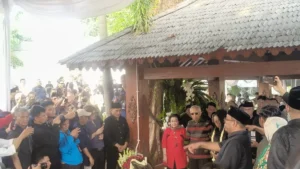
The formal distribution of these grants took place during a high-profile civic engagement event titled the National Dialogue on Strengthening Family Resilience and the Independence of Former Terrorist Prisoners Post-Social Reintegration. The gathering was meticulously organized by the Directorate of Social Rehabilitation for Socially Vulnerable Groups and Victims of Human Trafficking (RSKPO), operating under the auspices of the Ministry of Social Affairs. The event convened in Tamanjeka Hamlet, located within Masami Village, Poso Pesisir District, Poso Regency, Central Sulawesi Province. By hosting the dialogue in Tamanjeka—a region historically impacted by radicalization and security operations—the ministry sought to symbolize healing, civic restoration, and the bridging of historical divides between former extremists and the broader local community.
Contextual Background and the Historical Significance of Poso
To fully comprehend the gravity of the Ministry of Social Affairs’ recent initiative, one must examine the complex socio-political landscape of Poso Regency. Over the past two decades, Poso has endured periods of sectarian conflict and violent extremism that left deep psychological and structural scars on its populace. Tamanjeka Hamlet, in particular, gained notoriety as a logistical sanctuary and operational stronghold for remnants of the East Indonesia Mujahideen (MIT), a terrorist network linked to international radical ideologies. The area’s rugged terrain and remote geography historically provided a shield for extremist cells, creating an environment where radical narratives found fertile ground among marginalized populations.
In the wake of sustained, coordinated counter-terrorism operations by the Indonesian National Police (Polri) and the Indonesian National Armed Forces (TNI)—most notably Operation Tinombala—the security landscape in Poso underwent a profound transformation. Kinetic military and police interventions successfully neutralized key leadership figures within the militant networks, compelling many remaining combatants to either surrender, be captured, or disengage from armed struggle. However, national security stakeholders quickly recognized that military neutralization alone could not guarantee lasting peace. The profound challenge of post-conflict reconstruction shifted toward rehabilitation, deradicalization, and socioeconomic reintegration. Without viable economic alternatives and community acceptance, returning former prisoners faced severe social stigma, economic disenfranchisement, and the constant risk of sliding back into extremist networks.
The Mandate of the Directorate of RSKPO in Post-Conflict Recovery
The involvement of the Ministry of Social Affairs’ Directorate of RSKPO highlights a paradigm shift in how the Indonesian government handles the aftermath of terrorism. Traditionally viewed strictly through a criminal justice and security lens, terrorism is increasingly addressed as a multi-dimensional social phenomenon requiring comprehensive welfare interventions.
According to the statutory framework governing the Ministry of Social Affairs, the Directorate of RSKPO is tasked with the social rehabilitation and restoration of individuals and communities affected by catastrophic social fractures, including victims of human trafficking, victims of violence, and communities fractured by ideological extremism. When social bonds are ruptured by terrorism, the ministry assumes the critical responsibility of executing social recovery programs designed to restore societal harmony, social cohesion, and community resilience.
During the national dialogue in Tamanjeka, the Director of RSKPO, Rachmat Koesnadi, emphasized the sociological dimensions of contemporary security challenges. He noted that rapid socio-cultural transformations significantly influence public worldviews, behavioral norms, and interpersonal relations, occasionally generating ideological fissures that escalate into violent conflict.
"Local wisdom and social resilience are two vital pillars when examining community life amidst the incredibly rapid changes occurring in today’s world," Koesnadi stated during his address to local residents, religious leaders, and the reintegrated individuals. He warned that if mass modernization and cultural shifts are left unmanaged, they can erode social capital, dissolve moral frameworks, and fracture the mutual trust essential for peaceful coexistence.
Chronology of the Reintegration and Empowerment Initiative
The path toward the event on Saturday, September 26, 2026, involved months of meticulous preparation, inter-agency coordination, and trust-building exercises spearheaded by government ministries, local government units, and civil society organizations actively engaged in Poso.
- Phase One: Disengagement and Ideological Assessment (Pre-Reintegration): Prior to receiving social welfare assistance, the twenty-one eks napiter underwent rigorous deradicalization programs managed by the National Counter Terrorism Agency (BNPT) in collaboration with correctional facilities. These programs evaluated the participants’ commitment to the Unitary State of the Republic of Indonesia (NKRI), constitutional democracy, and peaceful civic life.
- Phase Two: Community Readiness and Local Dialogue: Recognizing that reintegration is a two-way street, ministry officials and local leaders initiated confidence-building dialogues within Poso Pesisir. Community elders, religious figures, and local residents were engaged to prepare the grassroots infrastructure for the return of former prisoners, mitigating fear and countering potential stigmatization.
- Phase Three: Economic Needs Assessment: Field social workers deployed by the Ministry of Social Affairs conducted targeted assessments of the twenty-one individuals to identify practical vocational skills, existing micro-business ventures, and immediate economic vulnerabilities. Rather than offering a standardized financial package, the ministry aligned the IDR 5 million grants with specific entrepreneurial pursuits, ranging from agriculture and animal husbandry to small-scale retail and mechanical trades.
- Phase Four: The National Dialogue and Disbursement (September 26, 2026): Cullying months of preparation, the formal event in Tamanjeka marked the simultaneous delivery of financial assistance, public discourse on family resilience, and the symbolic reaffirmation of national unity involving local stakeholders, security representatives, and the beneficiaries themselves.
Financial Mechanics and Targeted Economic Empowerment
The allocation of IDR 5 million per individual is structured not as passive welfare distribution, but as targeted capital seed investment. Ministry officials stressed that continuous monitoring mechanisms will accompany the grants to ensure the funds are utilized productively. Field facilitators from the Ministry of Social Affairs will provide ongoing mentorship, guiding the beneficiaries through basic financial management, market access strategies, and business development.
For many former prisoners, securing formal employment is an insurmountable challenge due to background checks, social stigma, and a lack of formal credentials acquired during years spent in clandestine or penal environments. By fostering self-employment through micro-enterprises, the government aims to establish a reliable legal income stream that insulates these individuals and their families from financial desperation. Economic security is widely recognized by criminologists and counter-terrorism experts as one of the most effective bulwarks against re-engagement in illicit or extremist networks, as financial stability dramatically reduces susceptibility to ideological exploitation and financial recruitment tactics employed by remnant extremist cells.
Broader Societal Impact and Expert Perspectives
The initiative in Poso reflects a broader evolution in Indonesia’s counter-terrorism architecture, transitioning from a reactive security model to a holistic, preventative framework that prioritizes human security, social justice, and community-based reintegration.
Security analysts monitoring Central Sulawesi have frequently noted that sustainable peace in Poso depends heavily on the successful reintegration of the grassroots community, which includes both the victims of historical violence and the perpetrators who have genuinely disengaged from extremism. When former combatants are successfully integrated into the local economy, they cease to be liabilities and can paradoxically become active stakeholders in local peacebuilding efforts. Several former extremists who previously completed reintegration programs in other regions have utilized their personal histories to actively dissuade vulnerable youth from falling prey to online radicalization and extremist propaganda.
Furthermore, the emphasis on "family resilience" during the Tamanjeka dialogue addresses the multi-generational impact of radicalization. Wives and children of eks napiter often bear the brunt of social isolation and economic hardship. By stabilizing the family unit economically, the Ministry of Social Affairs aims to safeguard the psychological and educational development of children growing up in post-conflict zones, ensuring they are insulated from generational transmission of extremist ideologies.
Challenges Ahead and the Road to Permanent Reconciliation
Despite the undeniable progress marked by the event in Tamanjeka, government officials and civil society actors acknowledge that complete reconciliation is a gradual, painstaking process. Challenges persist, including lingering trauma among survivor communities, occasional pockets of skepticism from residents who witnessed the violence firsthand, and the logistical difficulties of monitoring rural micro-enterprises across Poso’s expansive topography.
To address these vulnerabilities, the Ministry of Social Affairs has pledged to maintain an active institutional presence in Poso Pesisir. Future phases of the program are expected to include expanded vocational training partnerships, psychological counseling services for families, and broader community-wide economic development projects designed to ensure that assistance is not perceived as favoring former offenders over law-abiding citizens who may also face economic hardships.
As Indonesia continues to refine its national counter-terrorism and reintegration strategies, the model deployed in Poso—combining civic dialogue, targeted economic grants, and psychosocial support—serves as a notable case study for post-conflict statebuilding. By substituting alienation with empowerment, the state signals that the door to civic rehabilitation remains open to those willing to embrace the constitutional values of a pluralistic, peaceful society.