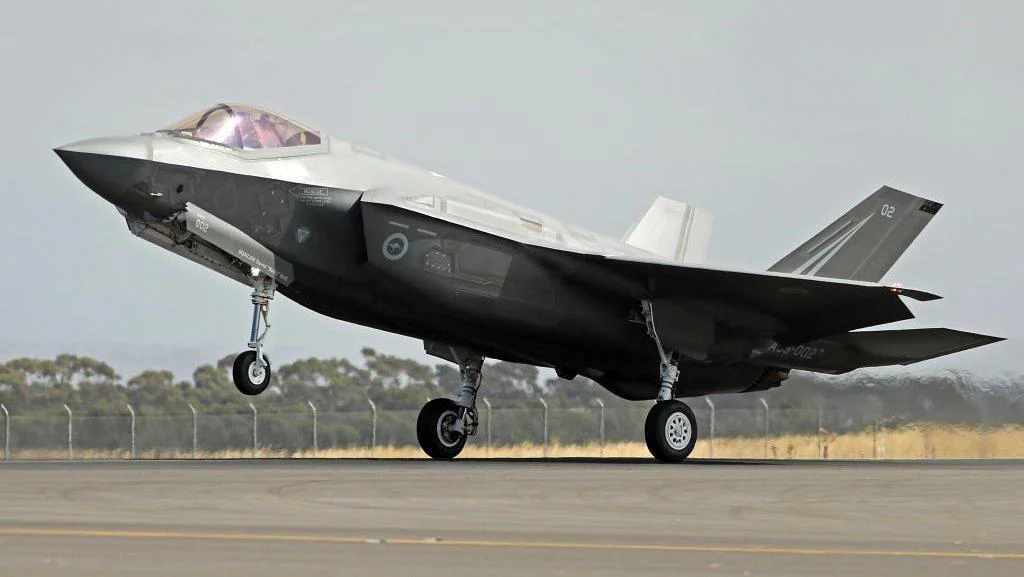
The United States Department of Defense is currently engaged in a high-stakes effort to recover critical, albeit decommissioned, components of the F-35 Lightning II stealth fighter jet after they were intercepted and seized by Chinese authorities in Hong Kong. The incident, which occurred earlier this year, has triggered an urgent internal investigation within the Pentagon and has prompted a stern bipartisan rebuke from lawmakers regarding the security of the global military supply chain.
The components in question—specifically a cockpit canopy and a weapons bay door—were identified as having been sourced from an Australian F-35 aircraft. These parts were being transported via the private logistics carrier UPS, intended for transit from Australia to the United States for either refurbishment or final disposal. The diversion of this cargo to Hong Kong, a Special Administrative Region of China, has raised significant alarms within the intelligence community due to the highly classified nature of the materials involved.
Chronology of the Diversion
The logistical chain of custody for the sensitive military hardware began in Australia. Following standard protocols for the maintenance of the F-35 global fleet, these specific parts were deemed unserviceable and slated for return to the United States for technical evaluation.
- Departure from Australia: The parts were processed and handed over to UPS for international shipping to the United States.
- The Intermediate Stop: The aircraft transporting the cargo made a scheduled stop in South Korea.
- The Unexplained Diversion: Following the departure from South Korea, the flight path was unexpectedly altered, leading the aircraft to land in Hong Kong rather than continuing to its intended destination in the United States.
- Seizure by Authorities: Upon arrival in Hong Kong, Chinese officials intervened, taking custody of the hardware. The Pentagon confirmed that the components remain under the control of local authorities in the territory.
While investigators are still attempting to determine whether the diversion was the result of a logistical error, a mechanical failure, or a calculated act of state-sponsored interference, the result remains the same: highly sensitive aerospace technology has fallen into the hands of a geopolitical rival.
Technical Significance of the Seized Parts
The F-35 Lightning II is widely considered the crown jewel of modern American aerospace engineering. Its effectiveness relies heavily on its stealth capabilities, which are achieved through advanced design and specialized materials.
The cockpit canopy and the weapons bay doors are not merely structural components; they are critical elements of the aircraft’s "low-observable" profile. These parts are coated in sophisticated Radar Absorbent Material (RAM). This material is designed to dissipate radar energy, preventing the aircraft from being detected by enemy air defense systems.
By obtaining these physical components, Chinese military engineers potentially have the opportunity to conduct reverse engineering. Even if the parts are labeled as "unserviceable," the chemical composition of the RAM coatings, the structural integrity of the composite materials, and the precision of the manufacturing tolerances provide invaluable data. Access to these physical samples allows for a level of analysis that cannot be achieved through digital espionage alone, potentially aiding China in the development of its own stealth platforms, such as the J-20 or J-31.
Pentagon and Industrial Response
The F-35 Joint Program Office (JPO), which oversees the multinational development of the fighter jet, has acknowledged the incident. In a formal statement, the Department of Defense emphasized that the components were classified as "unserviceable," suggesting that the risk of compromising operational flight data is minimized. However, the agency stopped short of dismissing the security implications.
"The F-35 Joint Program Office and the Department of Defense are aware of the shipping incident involving unserviceable F-35 Lightning II components," a Pentagon spokesperson noted. "We are actively coordinating with relevant U.S. authorities and our international industry partners to secure the return of these items, investigate the circumstances of the incident, and implement robust corrective measures to ensure that such a breach does not recur."
Lockheed Martin, the primary contractor for the F-35 program, has also been drawn into the investigation. As the manufacturer, the company maintains strict protocols regarding the handling of sensitive military hardware. The incident raises questions about the oversight of private shipping contractors when moving military-grade components across international borders.
Geopolitical Implications and Congressional Scrutiny
The timing of this disclosure has exacerbated existing tensions between Washington and Beijing. The incident surfaced just as high-level diplomatic engagements were scheduled between the two nations, providing a focal point for critics of current U.S.-China relations.
Senator Elissa Slotkin, a prominent voice on national security matters, characterized the event as a failure of oversight and a stark reminder of the risks posed by China’s aggressive pursuit of Western technology. "The contrast of this situation is clear," Slotkin stated. "China is holding some of our most sensitive technology, and we are still navigating the complexities of high-level diplomatic exchanges. When it comes to military intelligence, China is a competitor and an adversary. They are constantly looking for gaps to exploit regarding our sensitive military information."
The incident has reignited debates in Congress regarding the "Global Supply Chain" model used for the F-35 program. Because the F-35 is a multinational program involving partners such as Australia, the United Kingdom, and others, thousands of parts are constantly in transit globally. Ensuring the security of these components during transit is a logistical challenge that critics argue has not received sufficient funding or regulatory attention.
Analysis: A Breach of Security Protocols
From a defense analysis perspective, the seizure of these parts represents a significant counter-intelligence failure. The security of the F-35 program is predicated on the "Total Lifecycle Management" of its parts. If a component is no longer needed, it must be tracked from its point of origin to a secure facility for destruction or recycling.
The fact that these parts were shipped via a commercial carrier—even if standard for low-risk items—highlights a vulnerability in the supply chain. Military-grade hardware, particularly that involving stealth technology, typically requires "secure chain of custody" protocols, which include dedicated military transport or heavily vetted, specialized logistics providers.
The incident also highlights the "Hong Kong factor." Since the implementation of the National Security Law in Hong Kong, the distinction between the territory’s legal autonomy and mainland China’s jurisdiction has blurred. The seizure of the F-35 parts demonstrates that the region is no longer a neutral logistical hub for U.S. military hardware, a reality that the Pentagon will likely have to account for in all future supply chain planning.
Looking Ahead: Policy Adjustments
As the Pentagon continues its efforts to retrieve the components, the focus is shifting toward long-term prevention. Analysts suggest that the Department of Defense will likely move to:
- Restrict Commercial Shipping: Implementing a blanket ban on the use of commercial logistics providers for the transport of any F-35 parts that contain stealth-related coatings or sensitive electronics.
- Enhanced Tracking: Implementing real-time, GPS-enabled tracking for all sensitive cargo, with automated alerts for any unscheduled route deviations.
- Audit of International Partners: Conducting a comprehensive review of the logistics protocols used by allied nations to ensure they meet U.S. security standards.
- Diplomatic Leverage: Utilizing diplomatic channels to pressure Chinese authorities to return the components, though the likelihood of a successful return remains low given the intelligence value of the hardware.
The F-35 program is the most expensive weapon system in history, with a projected lifecycle cost exceeding $1.7 trillion. Maintaining the integrity of its technological advantage is paramount. While the Pentagon downplays the operational risk of these specific "unserviceable" parts, the incident serves as a sobering reminder that in the era of great power competition, the supply chain is as much a battlefield as the skies themselves. The outcome of the investigation into how these parts ended up in Hong Kong will likely dictate defense procurement policies for years to come.