Socio Today
The global snack market is dominated by a few iconic names, but perhaps none are as structurally distinct or as legally scrutinized as Pringles. Known for their uniform shape, satisfying crunch, and the iconic cylindrical canister that protects them, Pringles have long been a staple of the "potato chip" aisle in supermarkets worldwide. However, a deep dive into the manufacturing process, chemical composition, and legal history of this snack reveals a surprising truth: Pringles are technically and legally not "potato chips." This distinction is not merely a matter of semantics; it has been the subject of high-stakes international court battles, complex food engineering projects, and regulatory rulings that have shaped how the snack is marketed and taxed across the globe.
The Compositional Reality: Why 42 Percent Matters
At the heart of the debate over whether Pringles can be classified as potato chips is their ingredient list. Unlike traditional potato chips, which are made by slicing whole potatoes and frying them until crisp, Pringles are a highly engineered product. According to data regarding the product’s formulation, a Pringle contains approximately 42 percent potato content. The remaining 58 percent is a mixture of vegetable oils, corn flour, wheat starch, rice flour, maltodextrin, salt, and various emulsifiers.
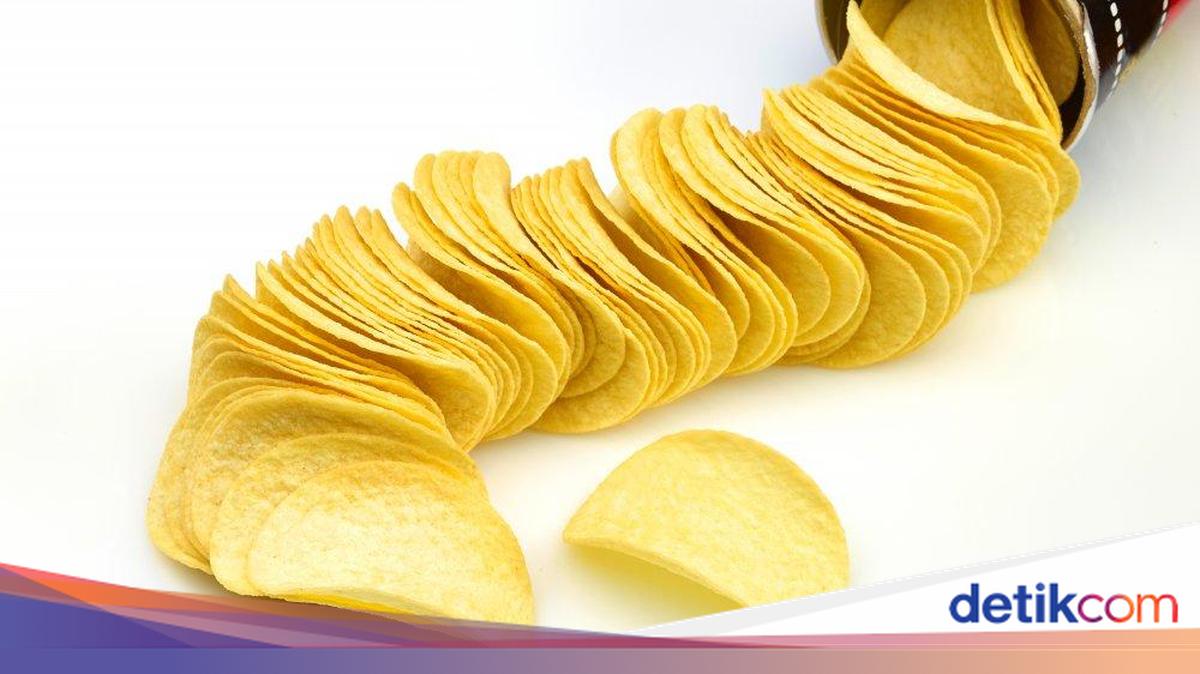
The process begins not with a slicer, but with a "slurry." In the manufacturing plant, dehydrated potato flakes are mixed with water and other grain flours to create a dough-like consistency. This mixture is then pressed into a massive, flat sheet under immense pressure. From this sheet, oval shapes are punched out by a machine, and the excess dough is recycled back into the process. These ovals move along a conveyor belt where they are molded into a specific geometric shape—a hyperbolic paraboloid—before being flash-fried in hot oil.
Because the product is reconstituted from a powder rather than sliced from a vegetable, regulatory bodies have historically taken issue with the "chip" label. In the United States, the Food and Drug Administration (FDA) intervened as early as 1975. The agency ruled that the manufacturer could only call the product "potato chips" if they included a prominent disclaimer stating they were "made from dried potatoes." Rather than accept this clunky labeling, the brand opted to use the term "potato crisps," a designation that remains on the packaging in the American market to this day.
A Chronology of Legal Challenges and Tax Evasion Attempts
The most significant legal chapter in the history of Pringles occurred in the United Kingdom between 2007 and 2009. This battle was not about consumer transparency, but about Value Added Tax (VAT). In the UK, most essential food items are zero-rated for VAT. however, "potato crisps, potato sticks, potato puffs, and similar products made from the potato, or from potato flour, or from potato starch" are subject to a standard VAT rate of 17.5 percent (at the time).
Procter & Gamble (P&G), the original owners of the brand, sought to save millions of pounds by arguing that Pringles were not, in fact, potato crisps. Their legal team presented a fascinating, albeit unusual, defense. They argued that because Pringles were made from a dough, had a uniform shape, and contained less than 50 percent potato, they should be classified as a savory biscuit or a cake rather than a potato snack. They famously argued that the product "does not contain enough potato to have the quality of a potato crisp" and that its "mouthfeel" and "uniform shape" were entirely artificial.
The timeline of the legal proceedings reflects the complexity of the issue:
- 2007: A VAT and Duties Tribunal initially ruled that Pringles were subject to the tax.
- 2008: The High Court overturned that decision. Justice Warren ruled in favor of P&G, stating that to be a potato crisp, a product must be made "wholly or substantially" from potatoes. He agreed that the 42 percent potato content and the use of other flours made Pringles "not made from potato" in the eyes of the tax law.
- 2009: The Court of Appeal ultimately reversed the High Court’s decision. The three presiding judges ruled that there is no requirement for a product to be "wholly" potato to be classified as such. They noted that a product containing 42 percent potato was "made from the potato" in any reasonable sense of the English language. As a result, P&G was forced to pay approximately £100 million in back taxes and continue paying VAT on future sales.
The Engineering of the Hyperbolic Paraboloid
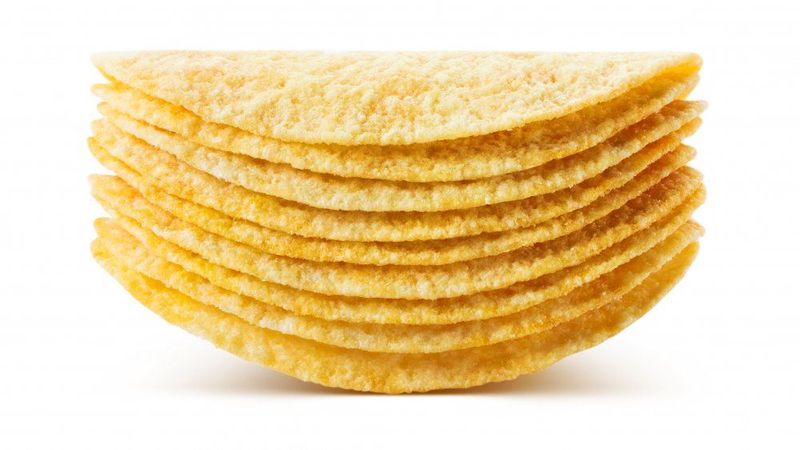
The physical form of a Pringle is not an accident of nature but a triumph of mechanical engineering and mathematics. The shape is known as a hyperbolic paraboloid. This specific geometry was chosen for several functional reasons. First, it allows the snacks to be stacked perfectly on top of one another. This stackability was the solution to a problem that had plagued the snack industry for decades: the "broken chip" syndrome.
In the 1950s, consumers frequently complained that bags of traditional potato chips were mostly air and that the chips inside were often crushed into crumbs during shipping. P&G tasked chemist Fredric J. Baur with developing a snack that wouldn’t break and a container that would protect it. Baur spent years researching the structural integrity of various shapes before settling on the saddle-like curve.
However, while Baur designed the shape, he struggled to make the snack taste good. The project was shelved until researcher Alexander Liepa picked it up in the mid-1960s. Liepa improved the flavor profile and the dough consistency, eventually receiving the patent for the product. To bring the vision to life, Gene Wolfe, a mechanical engineer who later became a world-renowned science fiction author, developed the high-speed frying machine that could mold and cook the dough into its precise shape without it shattering.
The hyperbolic paraboloid shape also serves an aerodynamic purpose. During the manufacturing process, the chips are moved at high speeds on a conveyor belt. The aerodynamic properties of the shape ensure that the chips stay in place and do not fly off the line or flip over, ensuring that every single chip in a can is identical to the next.
The Legacy of Fredric Baur
The dedication to the Pringles brand is perhaps best exemplified by the man who designed the original can and shape. Fredric Baur was so proud of his invention that he requested to be buried in a Pringles container. When he passed away in 2008 at the age of 89, his children honored this request. According to his son, Larry Baur, they stopped at a local Walgreens on the way to the funeral home to buy the container. They briefly debated which flavor to use but ultimately decided on the Original red can. A portion of Baur’s cremated remains was placed inside the can and buried with him in his coffin, a testament to the lasting impact of his engineering feat.
Market Implications and Ownership Transitions
The unique positioning of Pringles as a "processed snack" rather than a "natural chip" has allowed the brand to expand into markets and flavors that traditional chips cannot reach. Because the base is a neutral dough, Pringles can absorb complex seasonings more effectively than a sliced potato. This has led to the creation of hundreds of regional flavors, ranging from Seaweed in Asia to Prawn Cocktail in the UK and Jalapeño in North America.
In 2012, P&G exited the snack business by selling Pringles to the Kellogg Company (now Kellanova) for $2.695 billion. This acquisition was a strategic move by Kellogg to diversify its portfolio away from breakfast cereals and into the global snacks market. Today, Pringles are sold in more than 140 countries.
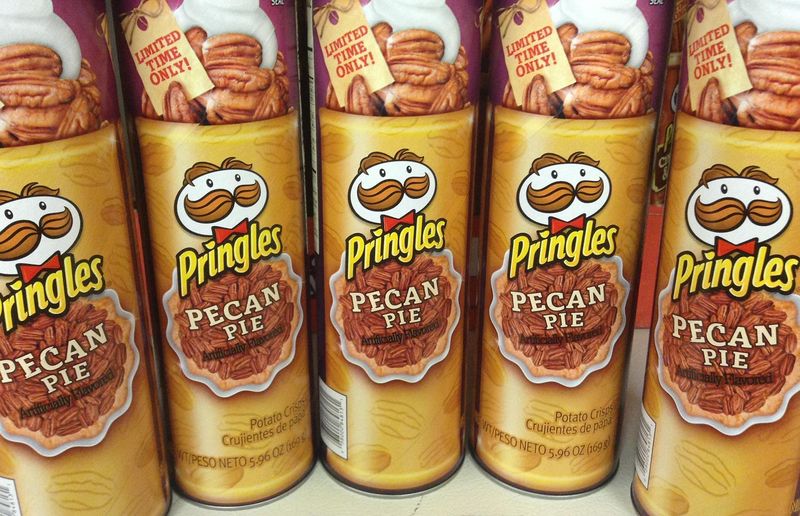
The "not a chip" status also provides a logistical advantage. Because the cans are airtight and the chips are stacked, Pringles have a significantly longer shelf life than bagged chips, which are prone to oxidation and staling. Furthermore, the efficiency of the packaging allows for more product to be shipped in less space, reducing the carbon footprint per unit compared to the bulky, air-filled bags used by competitors like Lay’s.
Broader Impact: The Future of Engineered Foods
The story of Pringles serves as a precursor to the modern era of ultra-processed foods. It demonstrated that a natural product could be deconstructed, mixed with other industrial ingredients, and reconstructed into a more "perfect" and marketable form. While health advocates often point to the high level of processing and the use of additives like maltodextrin as a downside, the commercial success of Pringles is undeniable.
From a regulatory standpoint, the Pringles case set a precedent for how "hybrid" foods are taxed and labeled. It forced courts to define what constitutes the "essence" of a food product. Is a snack defined by its primary ingredient, or by the process used to create it? For Pringles, the answer remains a blend of both. They are a product of the laboratory as much as the farm, a snack that exists in the gray area between a vegetable and a biscuit.
As consumer preferences shift toward "clean labels" and "whole foods," the brand faces new challenges. However, the structural and logistical brilliance of the Pringles design ensures that it remains a dominant force in the snack industry. Whether they are called chips, crisps, or savory biscuits, the facts remain: Pringles are a marvel of 20th-century food science that changed the way the world thinks about snacking.