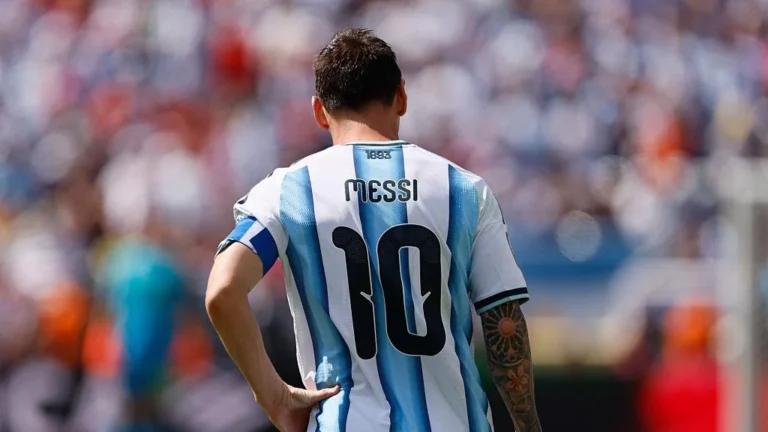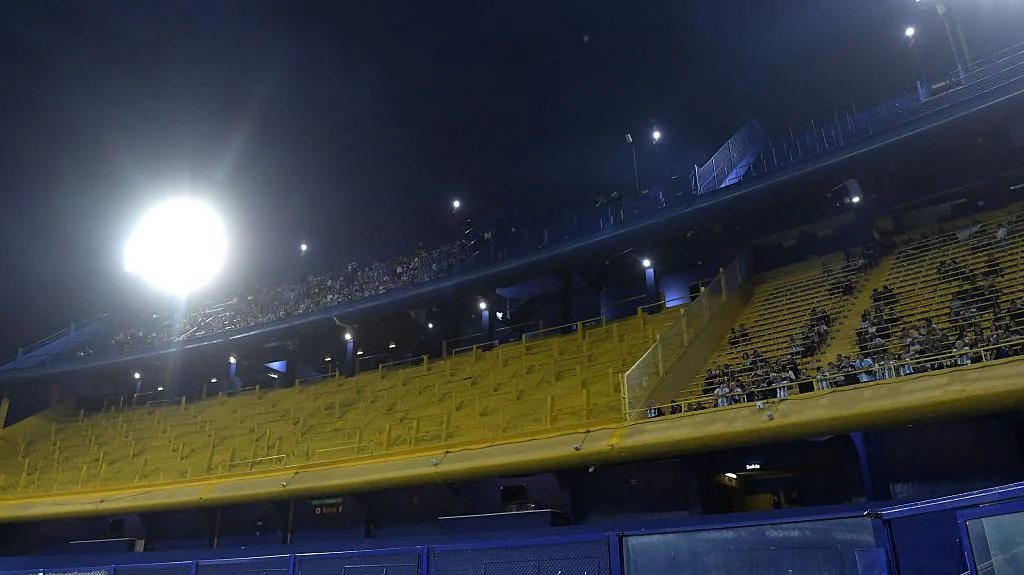
The iconic Estadio Alberto J. Armando, universally known as La Bombonera, presented a rare and sobering spectacle on Saturday morning as thousands of empty yellow and blue seats stared back at the pitch. The occasion was a high-profile international friendly match between South American powerhouses Argentina and Uruguay, a fixture traditionally guaranteed to ignite fierce national pride and fill every available inch of stadium capacity. Instead, the match unfolded against the backdrop of vast expanses of vacant concrete, signaling a profound transitional phase for the reigning world champions.
Beyond the 2-1 defeat suffered by Lionel Scaloni’s side, the prevailing talking point dominating local and international sports media was the alarming lack of attendance. In a nation where football is treated with near-religious fervor, the sight of a half-empty La Bombonera went viral on social media platforms, triggering an urgent debate regarding ticket pricing, distribution inefficiencies, and, most importantly, the existential challenge of sustaining fan engagement in the post-Lionel Messi era.
The Match Chronology and On-Field Struggles
The fixture itself marked Argentina’s first international appearance since the definitive retirement of their talismanic captain and global icon, Lionel Messi, who stepped away from the Albiceleste in October. Without their historic leader orchestrating the attack, the Argentine squad struggled to find its usual rhythm against a well-organized and resolute Uruguayan side.
The breakthrough for the visitors arrived shortly after the interval. In the 48th minute, defensive misfortune struck the hosts when Leonardo Balerdi inadvertently turned the ball into his own net, stunning the sparse home crowd and handing Uruguay a 1-0 advantage. Momentum remained firmly with the visitors as they pressed forward, capitalizing on defensive hesitations. Just five minutes later, in the 53rd minute, Maximiliano Araujo rose above the Argentine defense to deliver a powerful header past the goalkeeper, doubling Uruguay’s lead and silencing the remaining sections of the stadium.
Scaloni attempted to alter the tactical dynamic through a series of substitutions, injecting fresh energy into the midfield and forward line. The tactical adjustments bore temporary fruit in the 73rd minute when Manchester City forward Julian Alvarez showcased his predatory instincts, finding space inside the penalty area to slot home and narrow the deficit to 2-1. Despite a late surge of pressure from the hosts, Uruguay successfully managed the remainder of the match, securing a historic victory on Argentine soil and handing the world champions a stark reality check.
Data and Logistics: Unpacking the Low Attendance
While the sporting defeat was a bitter pill for the home supporters, the logistical and financial factors surrounding the fixture commanded equal attention from analysts and federation officials. According to reports from local Argentine media outlets, only approximately 25,000 spectators passed through the turnstiles at La Bombonera. Given that the stadium boasts a maximum capacity of roughly 57,000, the turnout represented less than 45 percent of the venue’s total capacity.
Industry experts and fan associations quickly pointed to a confluence of economic and administrative missteps as the primary catalysts for the poor turnout. Chief among these was the pricing structure implemented for the friendly. Tickets for the match were subjected to steep pricing tiers, with the cheapest seats starting at 95,000 Argentine pesos—roughly equivalent to 1.1 million Indonesian rupiah or approximately 90 US dollars. Premium seating options soared as high as 3.4 million pesos. For a non-competitive friendly fixture, and crucially one taking place in the immediate aftermath of Messi’s international retirement, these prices were widely perceived as exorbitant by the local populace, many of whom are currently grappling with broader domestic economic pressures.
Compounding the financial barrier was a decidedly outdated and cumbersome ticketing mechanism. Unlike modern international fixtures that rely heavily on streamlined, digital-first distribution platforms, the Argentine Football Association (AFA) and event organizers failed to implement a fully functional online purchasing system for this match. Consequently, supporters were subjected to lengthy, mandatory physical queues to secure their entry passes. This archaic requirement alienated prospective attendees living outside the capital city of Buenos Aires, effectively barring regional fans from making the journey due to the prohibitive combination of travel costs, time commitments, and logistical uncertainty.
The Post-Messi Era and Economic Realities
The empty tiers of La Bombonera serve as a powerful macroeconomic and cultural indicator for Argentine football. For nearly two decades, the presence of Lionel Messi functioned as an infallible economic engine for the national team, guaranteeing sold-out stadiums, unprecedented global television viewership, and an insatiable demand for merchandise, regardless of opponent or ticket cost.
Messi’s retirement has abruptly stripped away this guaranteed commercial cushion. The match against Uruguay demonstrated that the AFA can no longer rely on brand inertia alone to fill legendary venues at premium price points. Football economists note that ticket pricing models must be dynamically adjusted to reflect the transitional value of the squad. When the undisputed face of the sport departs, the product changes, and pricing strategies must adapt accordingly to maintain the connection between the working-class fan base and the national team. Furthermore, the reliance on archaic physical ticketing methods highlights an urgent need for administrative modernization within South American football governance, where digital transformation is no longer a luxury but a fundamental prerequisite for major sporting events.
Broader Implications and Upcoming Fixtures
The ramifications of this poorly attended fixture extend far beyond a single afternoon in Buenos Aires. For the coaching staff, the match provided critical data regarding the team’s tactical resilience and depth in high-pressure scenarios without their historic creator. Scaloni and his technical team now face the complex task of rebuilding the squad’s identity, fostering new leadership on the pitch, and re-establishing an inclusive culture that keeps the stadiums vibrant and supportive.
For the governing body, the visual impact of an empty La Bombonera serves as a severe warning. International friendlies are essential revenue generators, but they also serve as vital touchpoints for fan loyalty. If pricing structures and distribution channels remain disconnected from the economic realities of the domestic population, future fixtures risk alienating the very supporters who form the heartbeat of the sport.
The Albiceleste will not have to wait long to test both their sporting recovery and the organizational apparatus of the federation. Argentina is scheduled to play its second and final friendly fixture of the current international window on Wednesday, facing Costa Rica at the Estadio Mario Alberto Kempes in the city of Cordoba. Kickoff is slated for 06:00 AM Western Indonesia Time.
As the squad travels to Cordoba, all eyes will once again be fixed on two distinct scoreboards: the performance on the pitch as the team attempts to bounce back from defeat, and the attendance figures in the stands, which will reveal whether lessons have been learned from the cautionary tale of La Bombonera.