The Oklahoma City Thunder enter the 2026/2027 NBA season carrying the weight of unfinished business. As the league prepares to tip off on October 20, 2026, the franchise finds itself at a pivotal crossroads: the transition from a dominant regular-season force to a perennial championship contender that can survive the crucible of the postseason. After a 2025 championship run, the team’s inability to clear the Western Conference Finals hurdle last season against the San Antonio Spurs has fueled a narrative of redemption that will define their upcoming campaign.
The Season Opener: A High-Stakes Rematch
The NBA schedule makers have wasted no time in testing the mettle of the Thunder. On Wednesday, October 21, 2026, at 8:30 AM WIB (Tuesday night in the United States), Oklahoma City will travel to the Frost Bank Center in San Antonio to face the very team that ended their title defense. This opening night clash is more than just a regular-season game; it is a psychological test for a core group that witnessed their season evaporate in a grueling seven-game series last spring.
The memories of the 2026 Western Conference Finals remain vivid. Despite finishing the regular season as the top seed in the West with a commanding 64-18 record, the Thunder were unable to overcome the Spurs in the decisive seventh game, falling 111-103. That loss signaled a shift in the hierarchy of the Western Conference, and this opening night encounter serves as the first opportunity for the Thunder to prove that they have identified the tactical flaws that cost them a return trip to the NBA Finals.
Tactical Dominance and the Efficiency Gap
The Thunder’s resume from the 2025/2026 season remains one of the most impressive in recent league history. Finishing with 64 wins is no small feat, and their point differential—scoring 119 points per game while allowing only 107.9—underscores a level of dominance that usually portends a championship. An average margin of victory of 11.1 points per game is historically significant, placing them among the most balanced rosters ever assembled.
However, the contrast between their regular-season efficiency and their playoff struggles is the primary focus for head coach Mark Daigneault. During the 2026 playoffs, the Thunder cruised through the first two rounds, sweeping both the Phoenix Suns and the Los Angeles Lakers. Yet, when faced with the disciplined, high-IQ defensive scheme of the San Antonio Spurs, the offense stalled. Data from that series showed a concerning drop-off in efficiency, with the Thunder averaging only 95.8 points per 100 possessions during their four losses. The implication is clear: in the high-stakes environment of the postseason, raw talent and regular-season pace are secondary to offensive versatility and half-court execution.
The Shai Gilgeous-Alexander Factor
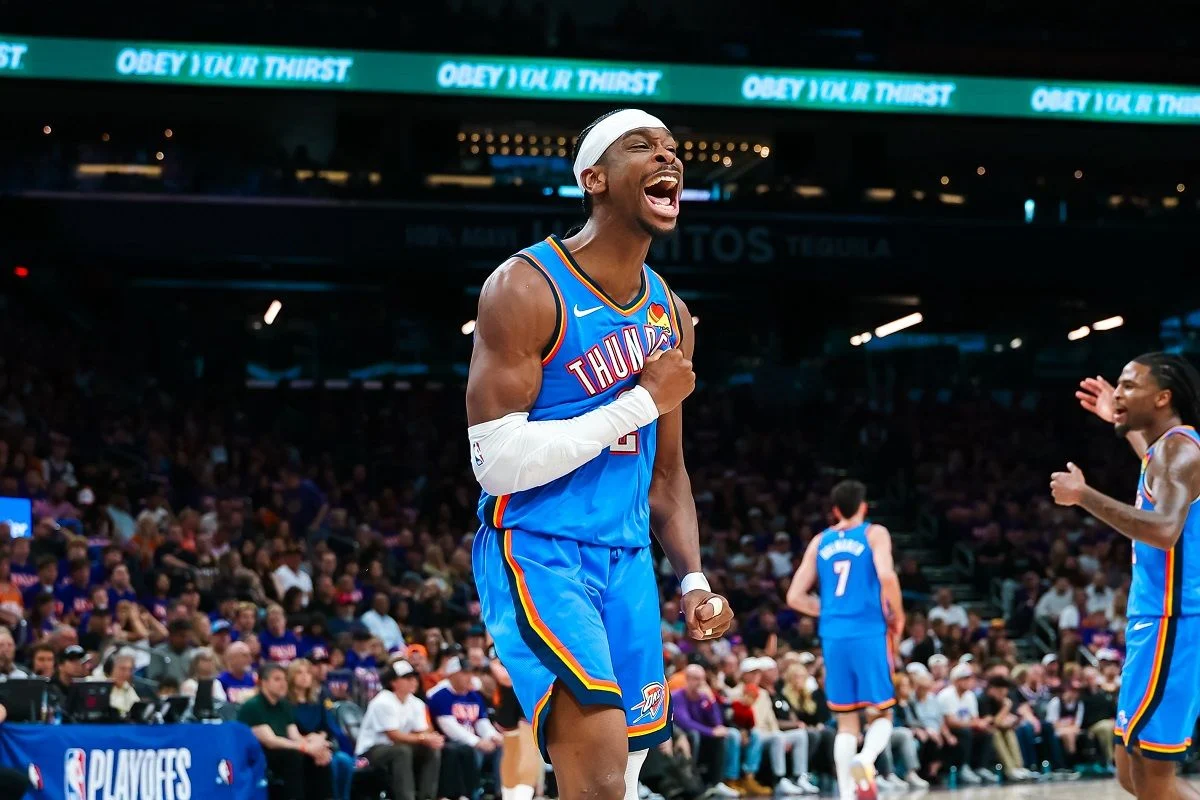
At the heart of the Thunder’s championship hopes is Shai Gilgeous-Alexander, the perennial MVP candidate and the engine of the Oklahoma City system. Gilgeous-Alexander remains one of the most difficult covers in the NBA, possessing a unique combination of elite isolation scoring, rim-pressuring ability, and a high basketball IQ that forces opposing defenses to collapse.
Entering the 2026/2027 season, the challenge for the Canadian guard is to expand his influence beyond his own scoring output. The "gravity" he creates—drawing double teams and forcing defensive rotations—must be better utilized. If the Thunder are to reach their ceiling, Gilgeous-Alexander will need to function not just as the primary scorer, but as the primary orchestrator who can consistently find teammates in the "weak side" corners or the dunker spot when the initial defensive pressure arrives. His experience navigating the physical, grind-it-out nature of playoff basketball will be his most valuable asset as he looks to guide his team through an increasingly crowded Western Conference.
The Return of Jalen Williams
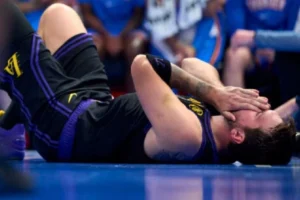
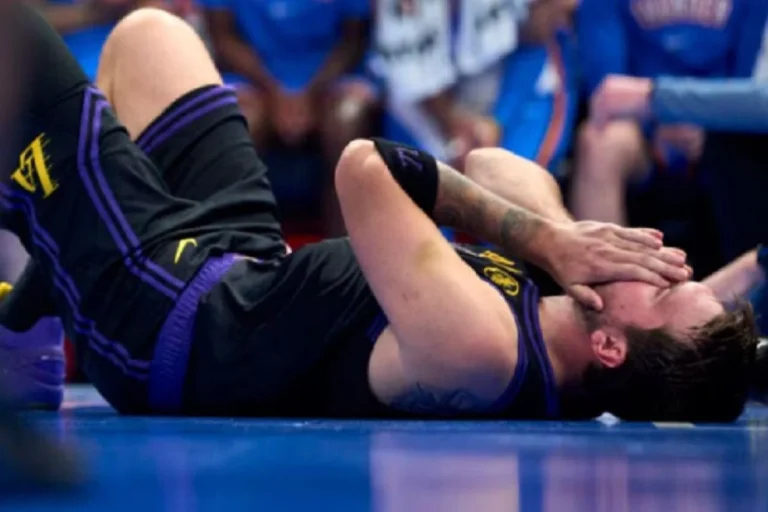
The potential x-factor for the 2026/2027 season is the return of Jalen Williams to full health. His absence during critical stretches of the 2026 postseason significantly hampered the Thunder’s offensive rhythm. Williams provides a secondary scoring option that alleviates the burden on Gilgeous-Alexander; his ability to operate in the mid-range and his versatility as a perimeter defender allow Daigneault to maintain continuity in his rotation.
The medical staff and coaching staff will likely prioritize "load management" for Williams, balancing the need for him to regain his rhythm with the necessity of keeping him fresh for the spring. The team’s success depends on Williams reclaiming his form as a reliable secondary playmaker. If he can maintain the consistency he displayed prior to his injury, the Thunder will once again possess the two-way potency required to challenge for the Larry O’Brien trophy.
Defensive Identity and Roster Depth
Beyond the star power, the Thunder’s identity is built on a defensive philosophy that emphasizes length, agility, and communication. Chet Holmgren continues to be the anchor of this system. His shot-blocking and rim protection allow the perimeter defenders, led by Lu Dort, to play aggressively at the point of attack.
The front office has attempted to augment this core by integrating newcomers like Aday Mara, Otega Oweh, and Bennett Stirtz. While these players provide depth and developmental potential, the team’s defensive floor is already high. The primary task for the coaching staff is ensuring that the integration of new personnel does not disrupt the intricate defensive rotations that made them the top-ranked defensive unit in the West last season. Consistency in defensive communication is what separates elite teams from good ones, and the Thunder have invested heavily in the chemistry required to maintain that standard.
The Evolving Western Conference Landscape
The road to the 2027 NBA Finals is arguably the most difficult in the modern era. The Western Conference has become an arms race of young talent and established superstars. The San Antonio Spurs, bolstered by the maturation of Victor Wembanyama and Stephon Castle, have proven they have the personnel to dismantle top-tier opponents. The Denver Nuggets, led by the incomparable Nikola Jokic, remain a constant threat, while teams like the Minnesota Timberwolves and the Houston Rockets continue to push the boundaries of their respective team-building strategies.
For Oklahoma City, the challenge is twofold: they must secure a high playoff seed to ensure home-court advantage, but they must do so without burning out their core rotation. The competition is so fierce that a slip in the standings could mean a significantly harder path through the play-in tournament or a lower-seeded matchup that lacks the comfort of a seven-game series at the Paycom Center.
Strategic Adjustments for Mark Daigneault
Head coach Mark Daigneault enters the season with a clear mandate: evolve or stagnate. While the Thunder’s system has produced historic regular-season numbers, the coaching staff must devise "Plan B" offensive sets. When the primary penetrations are neutralized, the team must show a greater reliance on off-ball movement, perimeter spacing, and set plays that don’t rely solely on individual brilliance.
The 2026 playoff exit revealed that the team is susceptible to high-pressure defensive schemes that force them into stagnant, isolation-heavy possessions. Daigneault’s ability to implement more varied offensive looks—particularly late in close games—will be the defining metric of his coaching success this season. He has the luxury of a group that has played together for years, which should allow for a faster implementation of these tactical nuances compared to teams undergoing roster overhauls.
A Season of Redemption
The 2026/2027 season represents a critical juncture for the Oklahoma City Thunder. They have moved past the "rebuilding" phase and are now firmly in the "contention" window. The loss to the Spurs was a painful lesson, but it provided the necessary data for the team to understand what it takes to win a seven-game series against a championship-caliber opponent.
The organization’s long-term strategy of prioritizing talent development and defensive structure has paid dividends, resulting in a franchise that is feared by every team in the league. Now, the goal shifts from dominance to endurance. Whether they can translate their 64-win efficiency into a sustained postseason run will depend on their health, their tactical flexibility, and their psychological resilience.
As the team prepares to face the Spurs in San Antonio, the atmosphere will be electric—a reminder of how quickly the tides of the NBA can change. The Thunder are no longer just chasing potential; they are chasing history. Their journey to the 2027 title begins not with a focus on the championship itself, but with a focus on the small, incremental improvements that turn a great team into an unstoppable one.
The upcoming campaign will test every facet of the franchise, from the front office’s depth-building to the players’ conditioning and the coaching staff’s adaptability. For fans and analysts alike, the question remains: does the Oklahoma City Thunder have the mental fortitude to learn from their past and rewrite their future? The opening tip-off on October 21 will be the first step in answering that question.