The dawn of the 2026/2027 NBA season marks a tectonic shift for the Los Angeles Lakers, one of the most storied franchises in professional sports. For the first time in nearly a decade, the purple and gold will take to the hardwood without the presence of LeBron James, who has transitioned his career to the Philadelphia 76ers. This departure signals the conclusion of an eight-year epoch defined by championship aspirations and global superstardom, forcing the Lakers to pivot toward a future centered on Slovenian maestro Luka Doncic and a revamped supporting cast.
A New Chapter: The Doncic-Reaves Era
The organizational strategy has shifted from a veteran-heavy, star-dependent model to a more fluid, offensive-oriented system built around the talents of Luka Doncic. At 27 years old, Doncic enters his prime, having solidified his status as one of the league’s premier playmakers. During the 2025/2026 campaign, he was the heartbeat of the Lakers, securing his second career scoring title and earning All-NBA First Team honors while leading the franchise to 53 regular-season victories.
Beside him, Austin Reaves has evolved from an undrafted success story into a legitimate secondary star. With a career-high average of 23.3 points per game last season, Reaves has demonstrated the capability to shoulder the offensive load when defenses collapse on Doncic. The chemistry between the two guards is statistically significant; when both shared the floor last season, the Lakers posted a 30-11 record, suggesting that the team’s foundation is far from crumbling despite the high-profile exit of James.
Season Opener and the Road Ahead
The 2026/2027 regular season commences on October 20, 2026, with the Lakers set to make their debut on October 21 against the Golden State Warriors at the Crypto.com Arena. Tip-off is scheduled for 7:00 PM Pacific Daylight Time (PDT), representing a high-stakes litmus test for head coach JJ Redick.
This opening matchup serves as more than just a game; it is an ideological statement. Without the gravity of LeBron James to command double teams and facilitate play, the Lakers must demonstrate a brand of "positionless basketball" that relies on rapid ball movement and disciplined defensive rotations. The schedule remains grueling, with the league’s most anticipated reunion set for Christmas Day, 2026, when LeBron James and the 76ers travel to Los Angeles. That fixture will undoubtedly be the most emotionally charged regular-season game in recent memory.
Strategic Overhaul: The Summer of Transformation
Recognizing the need for a more balanced roster, the Lakers’ front office aggressively reconfigured the team during the offseason. The departure of Deandre Ayton, Rui Hachimura, and Jaxson Hayes necessitated an injection of size and perimeter defense.
The acquisition of center Walker Kessler is perhaps the most vital defensive move. Kessler provides the rim protection and rebounding anchor the Lakers lacked last season, allowing the team to effectively mitigate high-percentage shots in the paint. Additionally, the signing of defensive specialist Matisse Thybulle addresses the perimeter gap left by Marcus Smart. Offensive versatility has been bolstered by the arrivals of Collin Sexton, Quentin Grimes, and Jaden Hardy—all of whom provide the spacing necessary to prevent opposing defenses from loading up on Doncic.
Data-Driven Analysis of the 2025/2026 Campaign
To understand the challenges facing the current roster, one must look at the statistical shortcomings of the previous season. The Lakers averaged 116.3 points per game but conceded 114.6, leaving them with a thin margin for error. Their defensive rating, which ranked 19th in the league, was the primary factor in their second-round exit from the playoffs.
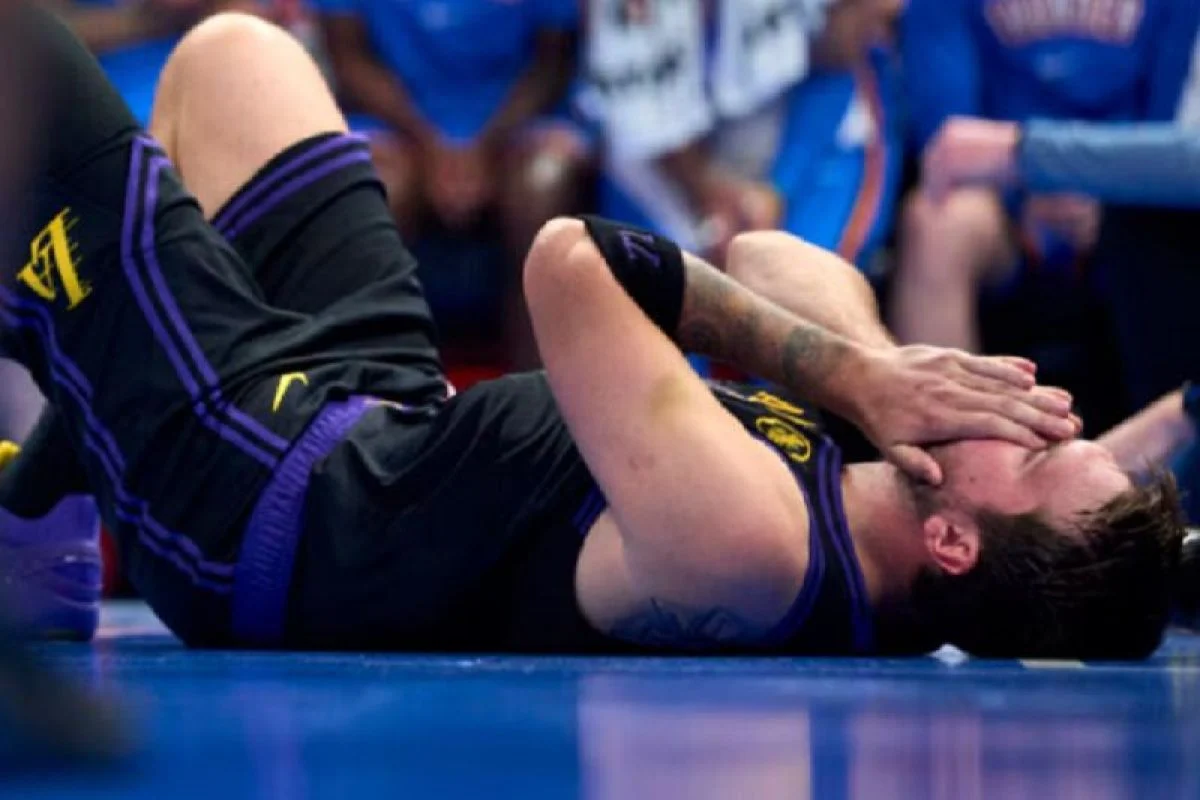
In the 2026 postseason, the Lakers defeated the Houston Rockets in a competitive six-game series but were subsequently swept 4-0 by the Oklahoma City Thunder. The absence of Doncic due to injury during that series exposed the team’s lack of depth and offensive fluidity when their primary creator was sidelined. These metrics have formed the blueprint for the current roster construction: a focus on defensive efficiency and bench reliability to ensure that one injury does not derail the entire postseason campaign.
JJ Redick: Coaching in the Crucible
Head coach JJ Redick faces the most daunting task of his young career. Having transitioned from a high-IQ player and broadcaster to an NBA head coach, Redick is now tasked with managing a team in transition. The "Redick system" is expected to emphasize high-frequency three-point attempts and a sophisticated pick-and-roll offense designed to maximize Doncic’s passing vision.
However, the challenge for Redick is twofold: maintaining the offensive rhythm established last year while integrating eight new players into the rotation. "The goal is not to replicate what we had, but to build something more sustainable," noted internal reports regarding the team’s philosophy. Redick must manage the workloads of Doncic and Reaves carefully; if the team relies too heavily on their star guards during the 82-game marathon, they risk exhaustion and injury before the playoffs begin.
The Landscape of the Western Conference
The path to the NBA Finals remains treacherous, with the Western Conference reaching an unprecedented level of parity. The Oklahoma City Thunder, fresh off a 64-win season, remain the team to beat, backed by the MVP-caliber play of Shai Gilgeous-Alexander. Meanwhile, the San Antonio Spurs have emerged as a legitimate title contender following their 2026 NBA Finals appearance, led by the generational talent of Victor Wembanyama.
Denver continues to be a perennial threat with Nikola Jokic, and the Minnesota Timberwolves have signaled their intent by pairing Anthony Edwards with LaMelo Ball. In such a congested field, every game for the Lakers—from the opening night against the Warriors to the mid-season NBA Cup matches—is critical for playoff seeding. Securing a top-six seed is the explicit goal to avoid the unpredictability of the Play-In Tournament.
Economic and Cultural Implications
The departure of LeBron James is not merely a sports narrative; it is an economic reality for the franchise. The Lakers remain one of the most valuable properties in global sports, and the transition to the Doncic era represents a generational handoff. Sponsorships, television ratings, and ticket sales will be closely watched to see if the fan base maintains its fervor without the league’s most recognizable icon.
Early projections suggest that the excitement surrounding a younger, more athletic squad, combined with the global appeal of Luka Doncic, will keep the Lakers as a top-tier draw. The team’s ability to remain competitive will likely dictate their long-term valuation and influence future free-agent acquisitions.
Conclusion: A Foundation for the Future
The 2026/2027 season is defined by the question of identity. Can the Lakers sustain their status as a championship-caliber organization without the player who defined their previous decade? The answer lies in the collective. By building around the playmaking genius of Doncic and the rising star power of Reaves, the Lakers have positioned themselves to be a formidable, if different, opponent.
Success will be measured not by the shadow of the past, but by the efficiency of their new defensive-minded identity and the health of their core stars. If Kessler, Thybulle, and the incoming shooters can integrate effectively, the Lakers will move from a team in transition to a team in contention. The "LeBron era" has ended, but the "Doncic era" is just beginning, and for the faithful in Los Angeles, the hope is that this new chapter will be just as successful as the one that preceded it. The road to the Larry O’Brien trophy is steep, but the Lakers have signaled that they are not content to wait for a rebuild—they intend to compete, starting now.